Erik Johnson: From No. 1 Draft Pick to ESPN's Top NHL Analyst in One Year
The former defenseman, who played over 1,000 NHL games and won the Stanley Cup in 2022, has seamlessly transitioned to broadcasting, calling first-round playoff series on ABC and ESPN.

UNITED STATES —
Key facts
- Erik Johnson was the No. 1 overall pick in the 2006 NHL Draft.
- He played more than 1,000 NHL games, primarily for the Colorado Avalanche.
- Johnson won the Stanley Cup with the Avalanche in 2022, the first teammate to receive the Cup from captain Gabriel Landeskog.
- He retired from playing after 18 NHL seasons at age 38.
- Johnson now works as a top national color analyst for ESPN and ABC.
- He will call Game 6 of the Utah-Vegas series on ESPN with Bob Wischusen on Friday.
- Johnson previously did TV and radio work with Altitude Sports in Colorado.
- He grew up in Bloomington, Minnesota, idolizing broadcasters Gary Thorne, Bill Clement, and Barry Melrose.
A Natural Behind the Microphone
Erik Johnson never assumed that television analysts simply showed up at 7:08 p.m., put on a headset, and started talking. The former defenseman, who went No. 1 in the 2006 draft and played more than 1,000 NHL games, had long harbored a desire to become an announcer. Growing up in Bloomington, Minnesota, he idolized play-by-play men like Gary Thorne and color analysts Bill Clement and Barry Melrose. Whenever his father, Bruce, flooded their backyard rink, Johnson would narrate every play he made on the ice in his head. Now, barely a year after preparing to play in Game 1 of the Avalanche-Stars series, Johnson finds himself between the benches in Dallas, calling what may be the NHL's best first-round playoff series — Minnesota vs. Dallas — on ABC. On Friday, he will be in Salt Lake City for Game 6 of the Utah-Vegas series alongside Bob Wischusen on ESPN. His rapid ascent has impressed veteran analysts, who note the difficulty of the transition.
The Challenges of Live Analysis
Being a good color analyst involves far more than making interesting comments during the game. With an earpiece in, analysts talk and listen to the producer often more than the play-by-play partner. They discuss which replays to show, what to illustrate with the telestrator, and must make intelligent, coherent points in 10 to 12 seconds without stepping on the play-by-play — all while not missing a thing on the ice. Longtime ESPN play-by-play man Steve Levy recalled the first game of Hall of Famers Mark Messier and Chris Chelios: “We took the headsets off after the first period and both of their heads were just spinning. … They had no idea. Imagine how many games those guys had seen on TV and played in, and they couldn’t even get out of the way for a replay.” Johnson, however, has made the transition look seamless. Ray Ferraro, a veteran color analyst, said: “Erik’s an absolute natural. … He just stepped right in and made it look easy.”
Between the Benches in Dallas
Working between the benches presents unique physical challenges. In Dallas, the space is like a phone booth, with the Stars' spare goalie sitting at the analyst's feet. The visitor's bench has a small glass door that trainers constantly use. A wooden bar separates the analyst from the ice to prevent leaning over the boards. There is no room for equipment, and the monitor is tiny — Ferraro noted he does not even know its size. Johnson benefits from his playing experience, having faced stars like Connor McDavid. That familiarity helps him anticipate plays and provide insight. His background also includes being the first teammate to receive the Stanley Cup from Avalanche captain Gabriel Landeskog in 2022, after being the longest-serving Denver pro athlete to win a championship.
A Career Built on Preparation
Johnson's broadcasting career began with TV and radio work for Altitude Sports in Colorado while he was still playing. After retiring from an 18-year NHL career at age 38, he quickly became one of ESPN and ABC's top national color analysts. His preparation includes studying game footage and understanding the nuances of each team's strategy. His journey from No. 1 draft pick to Stanley Cup champion to broadcaster reflects a deep understanding of the game. Johnson recalls wanting to be an announcer more than a hockey player as a child, a dream that has now been realized sooner than expected.
The Road Ahead
Johnson's schedule this week includes calling Game 6 of the Utah-Vegas series on Friday, following his work on the Minnesota-Dallas series. The playoffs are in full swing, with the Sabres winning their first series since 2007, the Golden Knights and Mammoth shaking hands after Game 6, and Goncalves forcing a Game 7 with an overtime winner. Johnson will continue to be a key voice for ESPN and ABC throughout the postseason. His rapid rise suggests a long future in broadcasting. As one colleague put it: “Erik’s been a pleasure and is a major star. He’s the complete package, and he'll be in sports broadcasting for as long as he wants to.”
The bottom line
- Erik Johnson transitioned from an 18-year NHL career to become a top ESPN/ABC analyst in just one year.
- He was the No. 1 pick in 2006, played over 1,000 games, and won the Stanley Cup in 2022 with Colorado.
- Johnson's childhood dream of being an announcer prepared him for the demanding role of color analyst.
- The physical and technical challenges of broadcasting between the benches are significant, but Johnson has adapted seamlessly.
- He will call Game 6 of the Utah-Vegas series on ESPN this Friday, continuing his coverage of the 2026 Stanley Cup Playoffs.
- Veteran analysts and colleagues praise Johnson as a natural talent with a long future in sports media.



Jack Della Maddalena and Carlos Prates Clash in Perth Welterweight Headliner
Patrik Schick Hat-Trick Propels Bayer Leverkusen to 4-1 Victory Over RB Leipzig
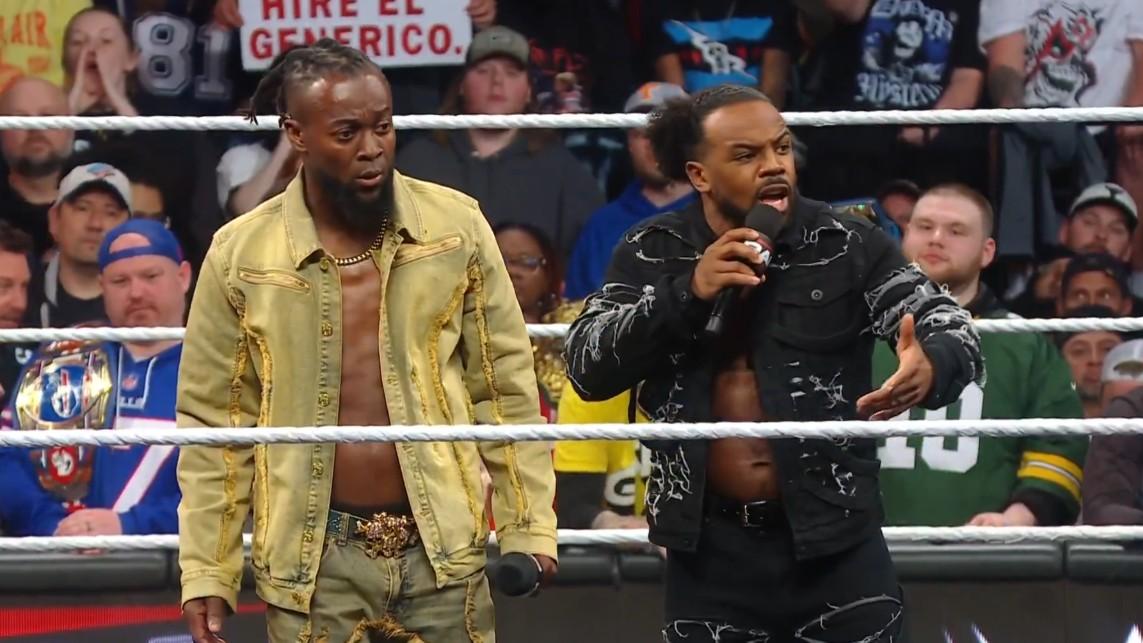
Kofi Kingston and Xavier Woods Depart WWE in Mutual Decision
/https%3A%2F%2Fsportsmole-media-prod.s3.gra.io.cloud.ovh.net%2Fuploads%2F2026%2F04%2Ficonsport-365292-0112-1-1-1-69f110b7d72e5848322987.jpg)