Sixers' Bench Woes Highlight Jared McCain Trade Regret
Philadelphia's lack of depth in playoffs fuels debate over trading the promising young guard to Oklahoma City.
UNITED STATES —
Key facts
- Jared McCain is averaging 5.3 minutes and 3 points per game in the playoffs for the Oklahoma City Thunder.
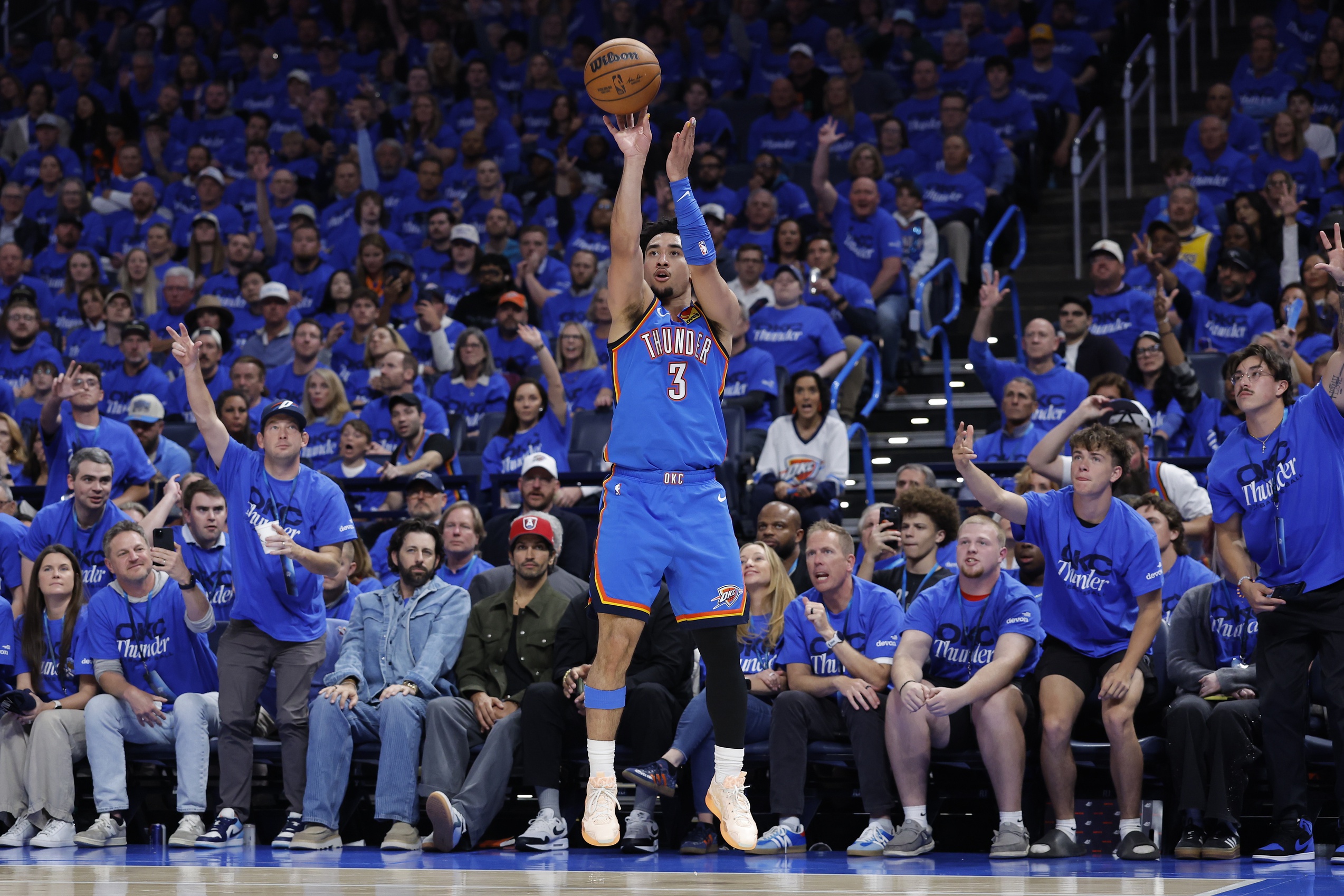
- McCain scored 12 points on 4-of-5 three-point shooting in 15 minutes during OKC's Game 1 win against the Lakers.
- The Philadelphia 76ers traded McCain to the Thunder before the February deadline.
- The Sixers' bench scored poorly throughout the season, a problem exacerbated in the playoffs.
- Tyrese Maxey played 47 minutes in Game 2 against the Knicks, with minimal support from the bench.
- Quentin Grimes is the Sixers' de facto sixth man, playing 22.4 minutes per game in the playoffs.
- McCain stated he is "definitely watching them and always rooting for them, no matter what" regarding the Sixers.
A Bench Thin as Winter Ice
The Philadelphia 76ers are facing an uphill battle against the New York Knicks in the Eastern Conference Semifinals, a task made considerably more difficult by a glaring lack of production from their bench players. This deficiency has reignited discussions about the team's decision to trade promising young guard Jared McCain to the Oklahoma City Thunder before the February trade deadline. In the absence of Joel Embiid for Game 2 on Wednesday night, and with the team shooting a dismal 21% from the floor in the fourth quarter, the Sixers' bench depth was exposed as critically insufficient. Their primary reserve, Quentin Grimes, serves as the de facto sixth man, averaging 7.1 points in 22.4 minutes per playoff game. Beyond him, the team relies on Andre Drummond or Adem Bona to spell Embiid, a strategy that proved problematic due to foul trouble in Game 2, forcing the Sixers to turn to Dominick Barlow for unexpected high-energy minutes. The stark reality is that the Sixers possess few other viable options to turn to. While Nick Nurse might consider giving Justin Edwards playing time, the immediate need for reliable contributors off the bench has pushed the narrative surrounding Jared McCain back to the forefront. The team's bench has been one of the league's lowest-scoring units all season, a weakness that has only been amplified in the high-stakes environment of the second round of the playoffs.
McCain's Quiet Impact in Oklahoma City
Jared McCain, now with the Oklahoma City Thunder, is currently averaging a modest 5.3 minutes and 3 points per game in the playoffs. However, his limited playing time is a reflection of the Thunder's own formidable depth, a stark contrast to the Sixers' struggles. OKC boasts a deep rotation that includes Cason Wallace, Alex Caruso, Jaylin Williams, Isaiah Joe, and Aaron Wiggins, alongside McCain. Despite his reduced role, McCain has shown flashes of his scoring ability. He played 15 minutes in Game 1 of the Western Conference Semifinals against the Los Angeles Lakers, contributing 12 points on an efficient 4-of-5 shooting from three-point range, helping the Thunder pull away from the visitors. This performance offered a glimpse of the offensive firepower that the Sixers' second unit has sorely missed. His transition to Oklahoma City has been described as seamless, with McCain fitting in as a bench scorer. This development stands in contrast to his experience in Philadelphia, where injuries, including a torn meniscus in December and a torn thumb ligament in training camp, hampered his progress and buried him on the depth chart behind Tyrese Maxey and VJ Edgecombe. The Sixers ultimately opted to trade him for a handful of low-quality draft picks, a decision that now appears increasingly questionable.
Lingering Affection for the Old Squad
From afar, Jared McCain remains a staunch supporter of his former team, the Philadelphia 76ers, even amidst the ongoing NBA playoffs. He expressed his continued allegiance, stating, "I'm definitely watching them and always rooting for them, no matter what." McCain closely followed the Sixers' first-round series comeback against the Boston Celtics, a success story in recent years for the franchise. Despite the abrupt trade deadline move that sent him to Oklahoma City, McCain has not let the situation tarnish his relationship with his former teammates and the Philadelphia fanbase. His supportive comments, however, have been met with a sense of bittersweetness among Sixers fans, who remain frustrated with their front office's decision to part ways with the 22-year-old guard. McCain himself has acknowledged that he "felt like he never got a fair chance in Philadelphia." After a promising start to his NBA career last season, a series of injuries derailed his momentum. The team's subsequent emergence of VJ Edgecombe may have served as the catalyst for the decision to trade McCain, a move that, while understandable from a roster management perspective, has not benefited the Sixers in their current playoff run.
The Trade Deadline Decision Under Scrutiny
The decision by the Philadelphia 76ers' front office to trade Jared McCain to the Oklahoma City Thunder before the February deadline is now under intense scrutiny, particularly as the team grapples with its bench's lack of offensive output. The returns on that trade have yet to materialize in Philadelphia's favor, leading many to view it as a lopsided victory for the Thunder, even with McCain's modulated playing time. Daryl Morey and his colleagues allowed a player with significant scoring ability and shooting prowess to depart, a move that continues to haunt the team. Even before McCain's departure, the Sixers' second unit was among the league's least productive. Dealing him away at the deadline was a deliberate choice by the front office, one that has compounded their depth issues. While McCain admittedly struggled at times with the Sixers, largely due to injury-related setbacks and the steeper learning curve for young guards, his potential was evident. Missing nearly a full calendar year due to injury presented a formidable challenge. The Sixers' current struggles on the bench suggest that acquiring additional depth, rather than trading away a developing scorer, might have been a more prudent strategy.
A Glimpse of What Could Be
The contrast between the Sixers' bench struggles and McCain's effective contributions for the Thunder highlights the potential that Philadelphia relinquished. The Knicks, a team known for exploiting opponent weaknesses, are expected to relentlessly target Philadelphia's shallow rotation. Tyrese Maxey, the Sixers' star guard, played an exhausting 47 minutes in Game 2 against the Knicks, yet struggled to find his rhythm in the crucial fourth quarter. Even Paul George, playing 43 minutes in another game, received minimal support from his team's reserves. The Sixers' coaching staff, under Nick Nurse, has been forced to trim rotations significantly in the second round, but Philadelphia's bench is exceptionally thin, described as "slimmer than a Hollywood celebrity on Ozempic." Even a player like Cam Payne, had he remained healthy, could have provided a few minutes of relief for Maxey. The Sixers' inability to address their bench depth at the trade deadline, choosing instead to "punt" on improving the team, has left them vulnerable. Whether McCain would have been the definitive solution is debatable, but his scoring ability and shooting are precisely the kind of assets the Sixers desperately need, underscoring the regret surrounding his departure.
Future Implications and Unanswered Questions
As the Sixers navigate their playoff series against the Knicks, the question of how they will address their persistent lack of bench production looms large. The team has considerable time to devise strategies, but the Knicks' ability to exploit this weakness is a clear and present danger. The trade that sent McCain to Oklahoma City, while yielding some draft picks, has so far proven to be a short-term loss for Philadelphia. The long-term impact of these picks remains to be seen, but the immediate on-court consequences are undeniable. Ultimately, the Sixers are left to ponder a critical decision made at the trade deadline. While the team's front office may have seen VJ Edgecombe's emergence as a reason to move McCain, the current reality suggests that sacrificing a developing offensive talent for future, uncertain assets may prove to be a costly miscalculation.
The bottom line
- The Philadelphia 76ers' bench has been a significant weakness throughout the season and in their current playoff series against the New York Knicks.
- Jared McCain, traded by the Sixers to the Oklahoma City Thunder, has shown flashes of scoring ability and efficiency, particularly from three-point range.
- Injuries hampered McCain's development in Philadelphia, leading to inconsistent playing time before his trade.
- Sixers fans and observers express regret over the team's decision to trade McCain, citing his scoring potential as a missing piece for the bench.
- McCain maintains a positive relationship with his former team and fanbase, expressing continued support for the Sixers.
- The Thunder's depth has limited McCain's minutes, but his performance in limited action highlights his potential value.



Carrington Acquires Valon Mortgage, Bolstering Ginnie Mae Servicing

Ticketmaster Cuts 350 Jobs Amid Push for Future Growth

Micron Stock Surges 50% as Structural Memory Deficit Expected Through 2027