Angels Face Reckoning: Why Trading Mike Trout Now May Be the Only Sensible Move
At 34 and finally healthy, Trout is producing at an MVP level again—but the Angels' farm system is barren, contention is a distant hope, and his contract still carries $178 million in risk.

UNITED STATES —
Key facts
- Mike Trout, 34, has a no-trade clause and about $178 million remaining over four-plus years on his contract.
- Trout has a 50% hard-hit rate in 2026, his highest since 2023, and career-best Barrel/PA rates.
- The Angels' farm system ranked worst in MLB in February 2026, with no top-100 prospects.
- Trout has not played a full, healthy season since 2022 and has not been a two-win player since 2023.
- The Tigers are considered a top landing spot for Trout, but finding a trade partner and package is extremely difficult.
- Trout's bat speed in 2026 is the fastest recorded in the three seasons Statcast has tracked the metric.
A Resurgent Star, a Fading Window
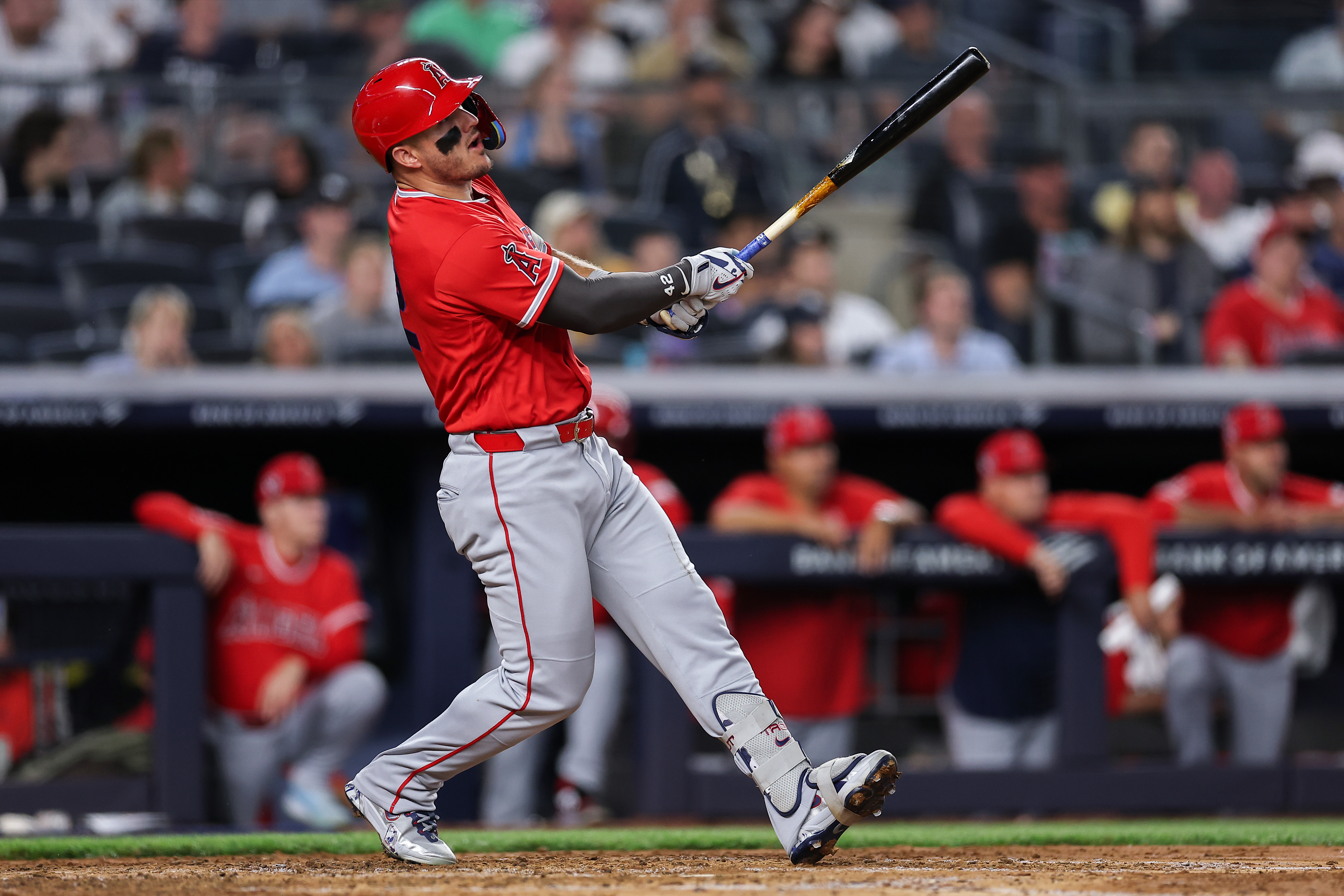
Mike Trout is hitting like the MVP he once was. Through 33 games in 2026, the Los Angeles Angels center fielder has posted a hard-hit rate of 50 percent—his highest since 2023—and career-best marks in Barrel percent and Barrel per plate appearance. He is whiffing less on fastballs and breaking balls than he has in years, and Statcast data, though imperfect, shows he is swinging the bat faster than at any point in the three seasons the metric has been tracked. Yet for the Angels, this resurgence presents a painful paradox. Trout, now 34, has not played a full season since 2022 and has not been a two-win player since 2023. His $427 million contract still carries roughly $178 million over four-plus years, a deal that just last fall looked like a sunk cost. The team has never built a contender around him, even when it rostered arguably the two best players in baseball simultaneously. Now, with the worst farm system in the sport and no top-100 prospects, the path to contention is narrower than ever.
The Case for a Trade, Before the Window Closes
The logic for trading Trout is stark: his value will never be higher. A healthy, productive Trout could command a significant return from a contender willing to absorb most of his salary. But the Angels need prospects more than payroll relief. Owner Arte Moreno has shown a willingness to spend, but not to wait; the team's inability to develop young talent has left the major-league roster thin and the future bleak. If Trout stays healthy and continues to produce, his contract becomes justifiable—a four-win player is worth $37 million to a team on the bubble. But the history of players in their mid-30s, combined with Trout's own recent injury record, suggests he is likely to get hurt again. Once that happens, the opportunity to trade him vanishes. The Angels must act now, even if it means paying down some of the remaining salary to secure one or two real prospects in return.
A No-Trade Clause and a Thin Market
Any trade faces two major hurdles: Trout's no-trade clause, which gives him veto power over any deal, and the sheer size of his contract. Finding a partner willing to take on the financial commitment and offer a meaningful prospect package is extremely difficult. FanSided's Chris Landers identified the Detroit Tigers as a top landing spot, noting their need for a center fielder and potential payroll flexibility after losing ace Tarik Skubal to elbow surgery. But Landers himself cautioned that even for the Tigers, the deal would be hard to structure. The Tigers, like most teams, would want Trout but may not be able to afford the haul the Angels would demand. The market for a 34-year-old superstar with an injury history, even one performing at an elite level, is inherently limited. The Angels may need to be creative—perhaps absorbing some of the contract themselves to get a better prospect return.
The Numbers Behind the Comeback
Trout's 2026 performance is not just a hot streak; it represents a fundamental shift in his approach and execution. His hard-hit rate of 50 percent is his highest since 2023, and his Barrel percent and Barrel/PA rates are the best of his career. He is swinging faster than ever, which covers only the past three seasons. He is also making more contact on fastballs and breaking balls, reducing his whiff rates across the board. By the time this analysis was published, Trout had already accumulated more plate appearances than he did in either 2021 or 2024, and more bWAR than in all but two seasons since 2019. If he maintains this pace, he will break three personal single-season records in 2026. The question is whether his body will hold up.
A Franchise at a Crossroads
The Angels have been here before. They locked up Trout multiple times to deals that likely left money on the table for the player, yet never built a sustainable winner around him. The farm system, ranked dead last in baseball in February 2026, offers no immediate help. The team is further from contention now than when Trout signed his most recent extension. Trading Trout would be an admission of failure—a recognition that the franchise's best player could not lead it to the postseason. But keeping him, with the risk of injury and the weight of a massive contract, may be even more damaging. The Angels must decide whether to hold onto the face of the franchise or to finally, painfully, look toward the future.
What Comes Next for Trout and the Angels
The trade deadline is August 3, 2026. Between now and then, the Angels will have to gauge the market for Trout and weigh offers. If he stays healthy and productive, the return could be substantial. If he gets hurt, the opportunity is lost. For Trout, the decision may ultimately rest with him. His no-trade clause means he can choose his destination, likely a contender where he can finally play October baseball. For the Angels, the path forward is clear: trade him now, while his value peaks, and begin the long process of rebuilding. Anything else risks repeating the mistakes of the past.
The bottom line
- Mike Trout is performing at an MVP level in 2026, with career-best hard-hit and barrel rates, but his age and injury history make his long-term value uncertain.
- The Angels have the worst farm system in MLB and no realistic path to contention during Trout's remaining contract.
- Trout's no-trade clause and $178 million remaining salary severely limit the trade market, with the Tigers emerging as a possible but difficult fit.
- The Angels must trade Trout before he gets hurt again, or risk losing all trade value and being saddled with a massive contract for a declining player.
- A successful trade would require the Angels to absorb some salary in exchange for meaningful prospect capital, a move owner Arte Moreno has historically resisted.



Secret Service Shoots Armed Man Near White House; Bystander Wounded

Nelly Korda Matches Annika Sorenstam’s Historic Start, Wins Third Title of 2026 at Riviera Maya Open

Elizabeth Smart on Bodybuilding: 'I Can Be More Than Just One Thing'
