US Gas Prices Hit Record $4.23 as Iran War and Strait Blockade Tighten Global Oil Supply
A dual blockade of the Strait of Hormuz and refinery outages in the Great Lakes region are driving the sharpest price increases since the pandemic.
UNITED STATES —
Key facts
- Average US gas price hit $4.23 per gallon on Wednesday, a new record, per AAA.
- Brent crude stands at $114.60, up nearly 25% from April 17 low and near $118 high.
- AAA recorded a $0.07 single-day increase, the largest in over a month.
- Gas prices have climbed $1.25 per gallon (over 40%) since the war with Iran began in late February.
- A power outage at the BP refinery in northwest Indiana, the region's largest, is causing supply issues.
- GasBuddy predicts a 40-80 cent per gallon jump in the Great Lakes region by April 29.
- only lower-income households are significantly impacted so far.
- Consumer confidence remains below pre-pandemic and post-2024 election levels.
Record Prices Amid Dual Blockade and Refinery Outages
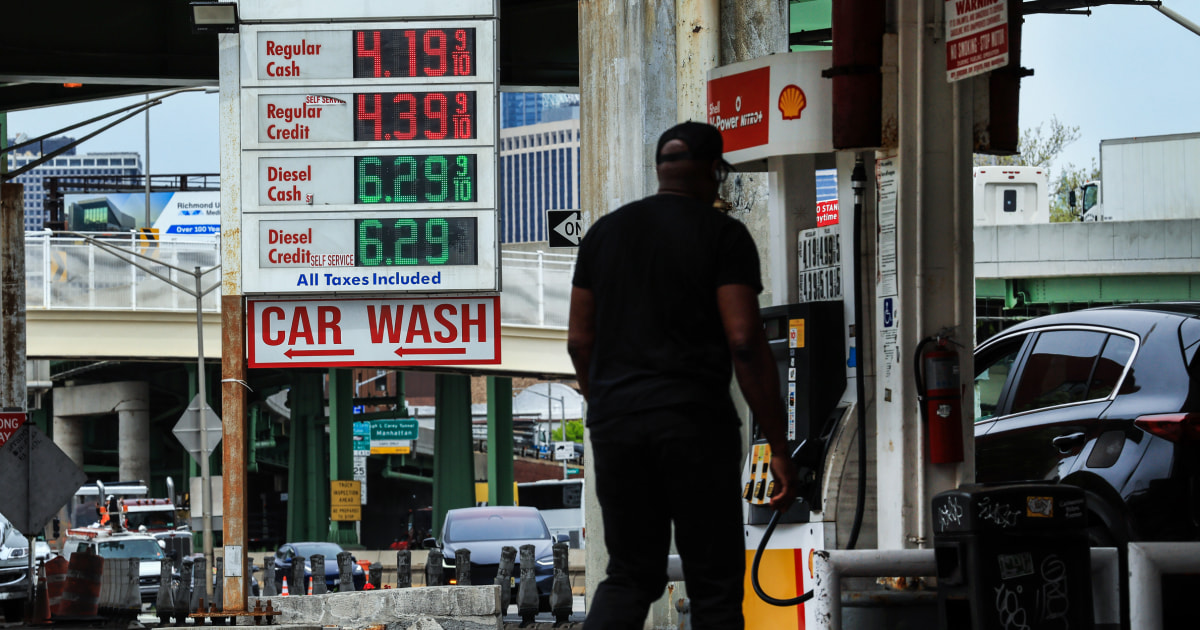
U.S. gas prices have reached a fresh record average of $4.23 per gallon, as the war with Iran enters its third month with peace talks stalled. The milestone comes as oil prices have surged over the past week due to a dual blockade by the United States and Iran of the Strait of Hormuz, the key chokepoint for crude and petroleum products from the Persian Gulf. Brent crude, the international benchmark that influences U.S. gasoline prices, now stands at $114.60, up nearly 25% from its recent low on April 17 and just a few dollars shy of the recent high of $118. The price surge compounds typical seasonal increases as refineries undergo maintenance and the spring-summer driving season begins.
The Largest Single-Day Increase in Over a Month
A day earlier, AAA recorded the biggest single-day increase in more than a month, with prices rising $0.07. Gasoline prices have climbed $1.25 a gallon, or more than 40%, since before the war's start in late February. Many gas stations have sought to keep prices below the $4 threshold by reducing their own profit margins, said Tom Kloza, chief energy adviser to Gulf Oil. But they can only stomach lower margins for so long. “This is the most serious squeeze, in terms of margin suppression, we’ve seen for retailers since 2020,” he said.
Refinery Outage Threatens Great Lakes Region
In the Great Lakes region, drivers could soon see a sharp spike in gas prices. GasBuddy’s head of petroleum analysis, Patrick De Haan, says prices could jump between 40 and 80 cents per gallon on Wednesday, April 29, potentially pushing some areas close to $5 per gallon. The increase is largely tied to refinery issues, including an unplanned power outage at the BP refinery in northwest Indiana. The facility is the largest in the area and supplies much of the gasoline used in Michigan and surrounding states. De Haan says the outage, along with other ongoing refinery maintenance, has already driven wholesale gas prices to levels not seen since 2022.
Wholesale Spike Yet to Reach Drivers
Those increases have not fully reached drivers yet. “The wholesale price of gasoline spiked Monday and again [Tuesday], and retailers have not yet passed it along,” there is typically a one- to two-day delay before higher wholesale costs show up at the pump, meaning prices could rise quickly. De Haan adds that multiple factors are contributing to the increase, including rising oil prices and global concerns that could impact supply. “Any different issue, anything that can impact the supply and demand of gasoline there are many, many different factors that can impact prices all at the same time,” he said.
Household Budgets Under Strain, Especially for Lower-Income
whose data was largely compiled before the recent run-up, Bank of America analysts found that so far, only lower-income households were seeing a significant impact on their budgets from higher gas prices. Despite the price surge, households are still spending less of their budgets on gasoline than during peaks in 2008, 2011 and 2012. However, those buffers will start to erode, especially if higher fuel costs show up in household staple goods. “A significantly bigger risk arises if higher gasoline and oil prices leak into other necessities such as grocery and utility prices — though so far there is little evidence for this,” the analysts wrote. They continued, “While there may be capacity for some to ‘ride out’ a gasoline shock by relying more on credit card borrowing, this appears somewhat limited — particularly for lower-income households.”
Consumer Confidence Remains Subdued
Consumer confidence continues to remain subdued. On Tuesday, an uptick in its principal index, likely tied to the Iran ceasefire announced earlier in the month that sent stock prices to record levels. However, the index remains well below both its pre-pandemic levels and the readings seen in the weeks following President Donald Trump’s second electoral victory in November 2024. De Haan warns that while prices could eventually stabilize once refinery operations return to normal, drivers may see “sticker shock” in the short term. He also says there is a possibility prices could approach or exceed record levels seen in 2022 if supply issues persist.
Outlook: Sticker Shock and Potential for Record Levels
The convergence of geopolitical turmoil, refinery disruptions, and seasonal demand is creating a perfect storm for gasoline prices. The dual blockade of the Strait of Hormuz shows no sign of resolution, and the BP refinery outage in Indiana could take time to resolve. For now, drivers in the Great Lakes region face the most immediate pain, with potential jumps of up to 80 cents per gallon. Nationally, the record $4.23 average may be tested further if oil prices continue to climb. The Bank of America analysts caution that the full impact on household budgets may not yet be felt, especially if higher energy costs spill over into other necessities.
The bottom line
- U.S. gas prices hit a record $4.23 per gallon, driven by the Iran war and a dual blockade of the Strait of Hormuz.
- Brent crude is up nearly 25% from its April 17 low, approaching $118.
- A power outage at the BP refinery in Indiana threatens to push Great Lakes prices near $5 per gallon.
- Wholesale gas prices have spiked but have not yet fully reached consumers, with a 1-2 day delay.
- Lower-income households are most affected so far, but broader budget impacts may emerge if costs leak into groceries and utilities.
- Consumer confidence remains below pre-pandemic and post-2024 election levels despite a recent uptick tied to a ceasefire announcement.



Rotten Tomatoes Unveils 2026 TCM Classic Film Festival Lineup, 'Devil Wears Prada 2' Details
Two Tickets Split $143 Million Powerball Jackpot as Dozens of Smaller Winners Emerge Across US

Phillies Sweep Doubleheader with Back-to-Back Walk-Offs, First Time Since 1998