Weather Tomorrow : ce qu'il faut savoir
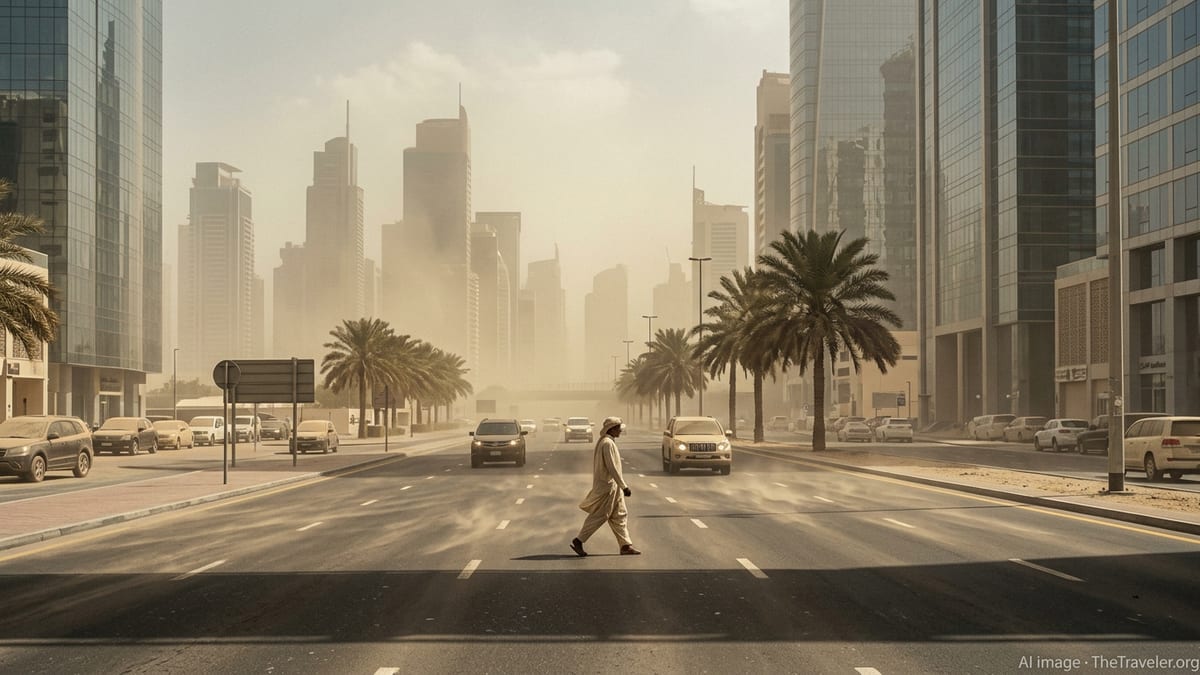
Are respiratory conditions like asthma a significant concern during sandstorms?Yes.
Analytical briefing on the UAE’s extreme heat, sandstorms, and the practical lifestyle adjustments required for long‑term residents and relocating professionals. Weather Tomorrow s'impose comme l'un des sujets qui mobilisent l'attention en Algeria ce jeudi.
Les faits
- Analytical briefing on the UAE’s extreme heat, sandstorms, and the practical lifestyle adjustments required for long‑term residents and relocating professionals.
- The United Arab Emirates offers a highly urbanized environment in a hyper-arid desert climate that is increasingly shaped by extreme heat, humidity, and recurrent dust and sandstorms.
- For potential long-term residents, these climate characteristics are not a background detail but a core relocation factor that influences health risk, mobility, working patterns, and daily living conditions for much of the year.
- Understanding how temperature, airborne dust, and climate variability interact with modern infrastructure is essential for assessing whether a move to the UAE is personally and professionally sustainable.
- For individuals considering multi-decade residence, factoring in an incremental increase in heat stress and potential changes in air quality and extreme weather frequency is a prudent component of relocation planning.
L'essentiel
Dans le détail, the United Arab Emirates offers a highly urbanized environment in a hyper-arid desert climate that is increasingly shaped by extreme heat, humidity, and recurrent dust and sandstorms.
Sur le fond, For potential long-term residents, these climate characteristics are not a background detail but a core relocation factor that influences health risk, mobility, working patterns, and daily living conditions for much of the year.
Concrètement, Understanding how temperature, airborne dust, and climate variability interact with modern infrastructure is essential for assessing whether a move to the UAE is personally and professionally sustainable.
Au-delà de ce constat, For individuals considering multi-decade residence, factoring in an incremental increase in heat stress and potential changes in air quality and extreme weather frequency is a prudent component of relocation planning.
Reste à préciser que From roughly May to September, daytime maximum temperatures in many inland areas often exceed 40°C, with peak summer afternoons frequently rising towards or above 45°C in some locations.
Les chiffres
À noter par ailleurs : Relative humidity along the coast can climb beyond 70 percent during the hottest months, resulting in very high heat indices and wet-bulb temperatures that limit the body’s ability to cool through sweating.
Plus précisément, Winters, roughly December to February, are generally dry and mild, with daytime highs commonly between the low 20s and high 20s Celsius.
Dans la foulée, UAE authorities operate a recurring summer “midday break” system for outdoor workers, typically from 15 June to 15 September, restricting work under direct sunlight from approximately 12:30 p.m. to 3:00 p.m.
À ce stade, while these measures reduce exposure at the most hazardous hours, they do not remove substantial heat exposure in the surrounding morning and late-afternoon periods, which still frequently occur above 40°C.
Le contexte
Reste à préciser que the UAE has a hot desert climate characterized by very long, intensely hot summers and short, mild winters.
À noter par ailleurs : Coastal cities such as Dubai and Abu Dhabi combine high temperatures with elevated humidity from the Arabian Gulf, amplifying perceived heat stress even when air temperatures are similar to inland zones.
Plus précisément, International occupational health research increasingly identifies the Gulf as one of the regions where combined heat and humidity are reaching or approaching physiological limits for extended outdoor exertion, especially in poorly shaded or unventilated environments.
Dans la foulée, However, the seasonal contrast should not obscure the fact that, on an annual basis, the UAE is among the world’s hotter populated regions, with a trend of gradual warming over recent decades associated with broader climate change signals in the Middle East.
À ce stade, Rapid urbanization has created pronounced urban heat island effects in major cities, where built-up areas can remain several degrees warmer than nearby less-developed zones, particularly at night.
Recherches associées
Plusieurs requêtes connexes accompagnent ce sujet : Vidéo. Weather Europe Tomorrow (2026/04/27) • Vidéo. Weather Europe Tomorrow (2026/04/26) • Vidéo. Weather World Tomorrow (2026/04/26) • Vidéo. Weather World Tomorrow (2026/04/25) • Vidéo. Weather Europe Tomorrow (2026/04/19) • Vidéo. Weather World Tomorrow (2026/04/18).
À retenir
- The United Arab Emirates offers a highly urbanized environment in a hyper-arid desert climate that is increasingly shaped by extreme heat, humidity, and recurrent dust and sandstorms.
- While these measures reduce exposure at the most hazardous hours, they do not remove substantial heat exposure in the surrounding morning and late-afternoon periods, which still frequently occur above 40°C.
- The UAE has a hot desert climate characterized by very long, intensely hot summers and short, mild winters.
- Recherches qui explosent : Vidéo. Weather Europe Tomorrow (2026/04/27), Vidéo. Weather Europe Tomorrow (2026/04/26), Vidéo. Weather World Tomorrow (2026/04/26), Vidéo. Weather World Tomorrow (2026/04/25).