Attenborough receives new genus of wasp for 100th birthday
A previously unknown genus of parasitic wasp, Attenboroughnculus tau, has been named in honour of the broadcaster's centenary.
SOUTH AFRICA —
Key facts
- Sir David Attenborough celebrates his 100th birthday on Friday, May 8.
- A new genus of parasitic wasp, Attenboroughnculus tau, has been named in his honour.
- The specimen for the new wasp was collected in Chile in 1983.
- A special concert celebrating Attenborough's life will be held at the Royal Albert Hall.
- The concert will feature performances and reflections from guests including Sir Michael Palin and Steve Backshall.
- Attenboroughnculus tau measures just 3.5mm long and has a T-shaped marking on its abdomen.
- A critically endangered echidna, Zaglossus attenboroughi, was also named after him in 1998.
A Centenary Marked by Scientific Honour
As Sir David Attenborough approaches his 100th birthday, a remarkable scientific tribute has emerged: the naming of an entirely new genus of parasitic wasp in his honour. The veteran broadcaster and environmentalist, who marks his centenary on Friday, has been inundated with messages from well-wishers worldwide, but this latest recognition comes from the Natural History Museum in London. Scientists have described Attenboroughnculus tau, a tiny insect that had lain undiscovered for decades, as a fitting tribute to a life dedicated to revealing the wonders of the natural world. This honour arrives just as a special concert is set to celebrate Sir David's enduring legacy at the Royal Albert Hall. The event promises to be a grand affair, reflecting the profound impact his work has had on global understanding and appreciation of wildlife. The naming of the wasp genus underscores the deep connection between Attenborough's extensive broadcasting career and the scientific community he has inspired.
An Enigmatic Wasp Emerges from the Archives
The newly identified genus, Attenboroughnculus tau, comprises a single, enigmatic ichneumon wasp measuring a mere 3.5 millimetres in length. Its specific name, 'tau', derives from a distinctive T-shaped marking adorning its abdomen. This particular specimen was originally collected in the Valdivia province of Chile in 1983. However, it languished in an unsorted drawer at the Natural History Museum for years, its unique characteristics overlooked until recently. Augustijn De Ketelaere, a volunteer with a keen eye for detail, stumbled upon the specimen during a comprehensive examination of the museum's ichneumonid collections. Its unusual morphology immediately set it apart, prompting a deeper scientific investigation. The discovery highlights how much remains unknown within even well-established museum archives, with potentially significant species awaiting identification.
Scientists Inspired by a Lifetime of Exploration
Dr Gavin Broad, principal curator for insects at the Natural History Museum, spearheaded the study that formally described Attenboroughnculus tau. He noted that the wasp is so evolutionarily distinct from its closest known relatives that it could not be placed within any existing genus. Dr Broad himself credits Sir David's seminal "Life on Earth" series with igniting his own passion for taxonomy at a young age. "When I was far too young, I learnt about taxonomy from David Attenborough’s Life on Earth series and resolved to be a taxonomist," Dr Broad stated. "Amazingly, I ended up a taxonomist, so I have Sir David to thank for that." The naming of the genus represents a profound honour, a testament to Attenborough's far-reaching influence beyond the television screen and into the realm of scientific classification.
Life Cycle and Legacy of a New Discovery
Details regarding the habits and life cycle of Attenboroughnculus tau remain largely unknown, beyond the fact that its eggs are deposited within another animal. Dr Broad speculates that, like some of its relatives in Australia which target spider egg sacs, this new species might engage in similar parasitic behaviour. However, confirming this hypothesis will be a considerable challenge, given the difficulty of finding specific wasps in the diverse ecosystems of Chile. "I am sure it will still be found in Chile, where there are some weird and wonderful species, but trying to find particular wasps is the proverbial needle in a haystack," Dr Broad explained. "The vast majority of ichneumonid wasps are undescribed still, and even in Britain we’re describing new species every year." This discovery serves as a powerful reminder of the ongoing biodiversity exploration and the potential for further scientific revelations hidden within natural history collections.
A History of Naming Conventions
This is not the first time a species has been named in honour of the esteemed broadcaster. In 1998, a critically endangered echidna, Zaglossus attenboroughi, was named after him, following the collection of a single specimen in the Indonesian province of Papua in 1961. For decades, there were no further sightings of this long-beaked echidna until 2023, when the first video footage of a living individual was captured, marking a significant conservation success. Dr Broad expressed hope that Sir David would be particularly pleased with the honour of having an entire genus named after him, though he wryly noted it might not elicit quite the same excitement as the echidna. The Natural History Museum holds a special place in Attenborough's affections, having been described by him as one of his favourite buildings. The discovery of Attenboroughnculus tau is expected to encourage further scrutiny of existing collections, potentially leading to the identification of more unique species requiring scientific description and naming.
A Star-Studded Centenary Celebration
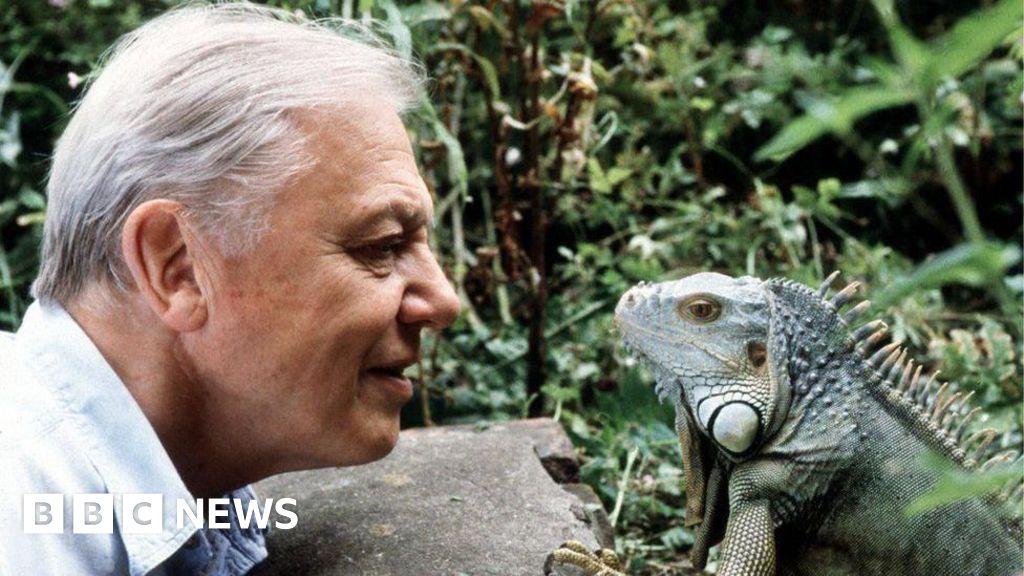
The scientific honour coincides with a major public celebration of Sir David's life and career. On Friday evening, the Royal Albert Hall in London will host a special 90-minute concert dedicated to the broadcaster. Presented by Kirsty Young, the event will feature a host of distinguished guests, including fellow presenters Sir Michael Palin, Steve Backshall, Liz Bonnin, and Chris Packham, who will share reflections on his remarkable legacy. The concert programme is set to showcase iconic wildlife moments from Attenborough's extensive television series, accompanied by live music from the BBC Concert Orchestra. Pieces associated with his most famous works, such as the 'snakes and iguanas chase' from Planet Earth II and the 'wave-washing orcas' from Frozen Planet II, will be performed. Contemporary artists will also contribute, with Bastille frontman Dan Smith performing the band's hit 'Pompeii' (featured in Planet Earth III) and Sigur Rós playing 'Hoppípolla' (used in Planet Earth and Planet Earth II promotions). Singer Sienna Spiro and harpist Francisco Yglesia are also scheduled to perform.
The bottom line
- Sir David Attenborough is celebrating his 100th birthday on May 8.
- A new genus of parasitic wasp, Attenboroughnculus tau, has been named in his honour by scientists at the Natural History Museum.
- The specimen for the new wasp genus was collected in Chile in 1983 and remained unidentified until recently.
- A special concert at the Royal Albert Hall will feature guests and music celebrating Attenborough's career.
- Attenborough's influence extends to scientific classification, with multiple species previously named after him, including an echidna.
- The discovery of the wasp genus highlights the potential for new scientific findings within existing museum collections.


Sunrisers Hyderabad Ascend to IPL 2026 Summit After Thrilling Victory

South Africa's Daily Lotto: A Daily Draw with No Rollover and Odds of 1 in 8.40

De Zerbi's Tottenham Outclass Aston Villa to Climb Out of Relegation Zone