Satellite Imagery Confirms Demolition of Two Armenian Churches in Stepanakert
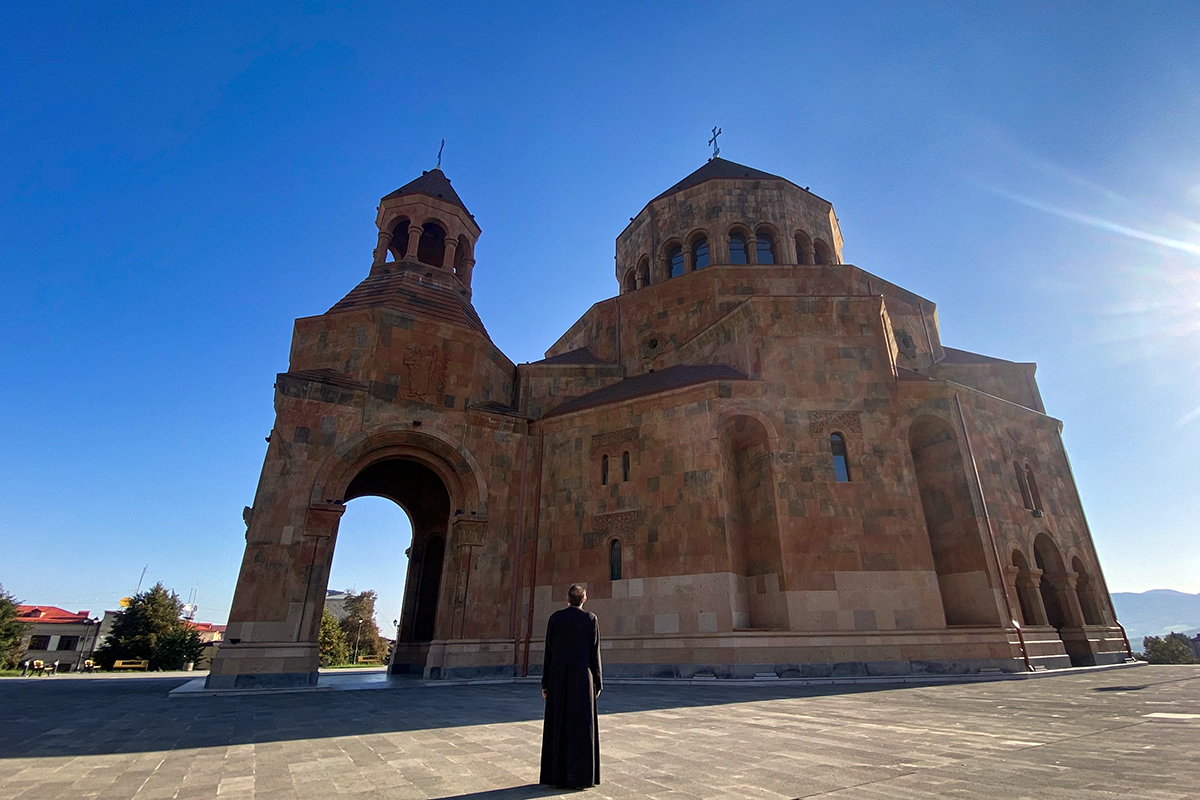
Azerbaijan razes Holy Mother of God Cathedral and Church of St. Jacob, escalating a cultural erasure campaign amid stalled peace talks.
SOUTH AFRICA —
Key facts
- Satellite imagery confirms the demolition of the Holy Mother of God Cathedral and the Church of St. Jacob in Stepanakert, known as Khankendi to Azerbaijanis.
- The cathedral, consecrated in 2019, was used as a bomb shelter during Azerbaijani offensives in the 2020s.
- The Church of St. Jacob, completed in 2007, was funded by an Armenian-American philanthropist in memory of his son.
- The Caucasus Muslims Board, affiliated with the Azerbaijani government, confirmed the state-planned demolition, calling the churches 'illegally constructed'.
- Armenia's Mother See of Holy Etchmiadzin accused Azerbaijan of deliberately targeting Armenian Christian holy sites to erase Armenian presence.
- Nagorno-Karabakh was recaptured by Azerbaijan in September 2023, causing 120,000 ethnic Armenians to flee.
- Four Armenians were killed in a border flare-up, the deadliest since peace talks began.
Churches Reduced to Rubble: Satellite Evidence
Satellite imagery has confirmed the demolition of two historic Christian churches in Stepanakert, the main city of the Nagorno-Karabakh region now under Azerbaijani control since September 2023. The Holy Mother of God Cathedral, the principal site of Christian worship in the city, and the Church of St. Jacob have been razed, according to photos published by Radio Free Europe. The cathedral, whose construction began in 2006 and was consecrated in 2019, served as a bomb shelter for residents during Azerbaijani military offensives in the 2020s. A social media post from early February showed a construction-type fence surrounding the building, and it is believed to have been demolished by early April. The Church of St. Jacob, completed in 2007 and funded by an Armenian-American philanthropist in memory of his deceased son, was also destroyed in recent weeks, with cross stones in its grounds demolished as well.
Azerbaijan Justifies Demolition as Removal of 'Illegal' Structures
The Caucasus Muslims Board, a religious body affiliated with the Azerbaijani government, confirmed the state-planned demolition of both churches.ures had been 'illegally' constructed during what it called the Armenian occupation of Azerbaijani territory, and stated that the demolition 'cannot be distorted in any way as the destruction of religious or cultural heritage.' It added that Azerbaijanis who returned to the city had urged authorities to remove structures that did not exist there before the period it described as 'occupation.' Elnare Akimova, a member of Azerbaijan’s parliament, called reports of the churches’ destruction 'a provocation by revanchist forces' and said Azerbaijan 'has preserved religious and historic monuments on its territories as a state policy.' The Azerbaijani government has consistently maintained that the region is internationally recognized as its territory.
Armenian Church Condemns 'Deliberate Erasure' of Heritage
The Mother See of Holy Etchmiadzin, the governing authority of the Armenian Apostolic Church, accused Azerbaijan of 'deliberately target[ing] Armenian Christian holy sites, seeking to erase the Armenian presence' in Nagorno-Karabakh, Middle East Eye reported. The Caucasus Muslims Board dismissed that statement as 'a manifestation of hostility and disinformation.' Lernik Hovhannisyan, chairman of the Artsakh Diocesan Council, the administrative body of the Armenian church in the region Armenians call Artsakh, disputed the Azerbaijani government’s framing. He noted that Armenians had always been the predominant population of Stepanakert, and that Azerbaijanis were brought to the city’s upper Krkzhan district in the 1960s to change demographic conditions in what was then the Nagorno-Karabakh Autonomous Oblast.
Wider Destruction and Unanswered Questions
Hovhannisyan questioned why the Azerbaijani justifications made no mention of the Green Hour and Mokhrenes churches, built in the 18th and 19th centuries, which were destroyed in the nearby city of Shushi. He said it was inconsistent with how Azerbaijan presents itself as a tolerant country where, in its own telling, 'a church, a mosque, and a synagogue operate side by side.' He asked where the 27,000 monuments of Nakhichevan and the monuments of northern Artsakh now stood. Hovhannisyan argued the demolitions were incompatible with international standards on self-determination. The destruction comes amid a broader exodus: after Azerbaijan recaptured Nagorno-Karabakh in September 2023, some 120,000 ethnic Armenians fled the region, leaving it nearly empty of its former inhabitants.
Stalled Peace Talks and Rising Tensions
The church demolitions have occurred against a backdrop of fragile peace negotiations between Armenia and Azerbaijan. In recent months, the two neighbors have been working towards a peace deal to end their decades-long conflict over Nagorno-Karabakh. However, a border flare-up that killed four Armenians marked the deadliest incident since talks began, fueling fears of another war among ethnic Armenians who lost their homes. Armenian separatists remain jailed in Azerbaijan, a source of anger in the Republic of Armenia. Among them is Ruben Vardanyan, a billionaire ethnic Armenian whose fortune is of little use as he faces a possible life term. The peace deal being discussed risks leaving him behind, as Azerbaijan shows no sign of releasing high-profile detainees.
Cultural Cleansing or Legal Restoration? The Stakes Ahead
The destruction of the two churches crystallizes the deep divisions between Armenia and Azerbaijan over the region’s heritage. For Armenians, the demolitions are part of a systematic campaign to erase their historical presence. For Azerbaijan, they are a lawful removal of structures built during an illegal occupation. As satellite imagery continues to document the scale of demolition, the international community faces pressure to respond. The Azerbaijani government has paraded its military in Nagorno-Karabakh, signaling its control is absolute. Yet the unresolved status of Armenian detainees and the destruction of cultural sites threaten to derail any lasting peace. The question remains whether the two sides can reconcile their competing narratives, or whether the region is headed for another cycle of conflict.
The bottom line
- Satellite imagery confirms the demolition of two Armenian churches in Stepanakert, with Azerbaijan justifying it as removal of illegal structures.
- The Armenian Apostolic Church condemns the demolitions as a deliberate campaign to erase Armenian heritage from Nagorno-Karabakh.
- The destruction occurs amid stalled peace talks and a deadly border flare-up that killed four Armenians.
- Over 120,000 ethnic Armenians fled Nagorno-Karabakh after Azerbaijan recaptured the region in September 2023.
- Armenian separatists, including billionaire Ruben Vardanyan, remain jailed in Azerbaijan, complicating peace negotiations.
- The demolitions raise questions about Azerbaijan's commitment to preserving religious and cultural heritage, as it claims to do.





South Africa's May Day 2026: Workers 'Drowning' as Unemployment Hits 41.1% and Labour Rights Stagnate

Two Tickets Split $143.4 Million Powerball Jackpot in Wednesday Drawing

PowerBall Draw on 28 April 2026: Winning Numbers Released Amid High Stakes