JPMorgan executive Lorna Hajdini accused of sexually abusing junior colleague in lawsuit
A 37-year-old executive director allegedly drugged, racially harassed, and threatened a junior male employee's career over months.

SOUTH AFRICA —
Key facts
- Lorna Hajdini, 37, is an executive director at JPMorgan Chase's Leveraged Finance division.
- The lawsuit was filed on April 27 in New York County Supreme Court by a junior colleague identified as 'John Doe'.
- Doe alleges abuse began in spring 2024 after they started working together.
- Hajdini is accused of drugging Doe with Rohypnol and an erection-enabling substance.
- She allegedly used racial slurs like 'Brown boy Indian' and 'little Arab boy toy'.
- Doe claims Hajdini threatened to sabotage his promotion if he refused sex.
- A witness in an adjacent room allegedly overheard Doe's protests during one encounter.
- Hajdini denies all allegations, stating she never engaged in inappropriate conduct and was never at the alleged location.
A lawsuit filed in New York accuses a JPMorgan executive of serial abuse
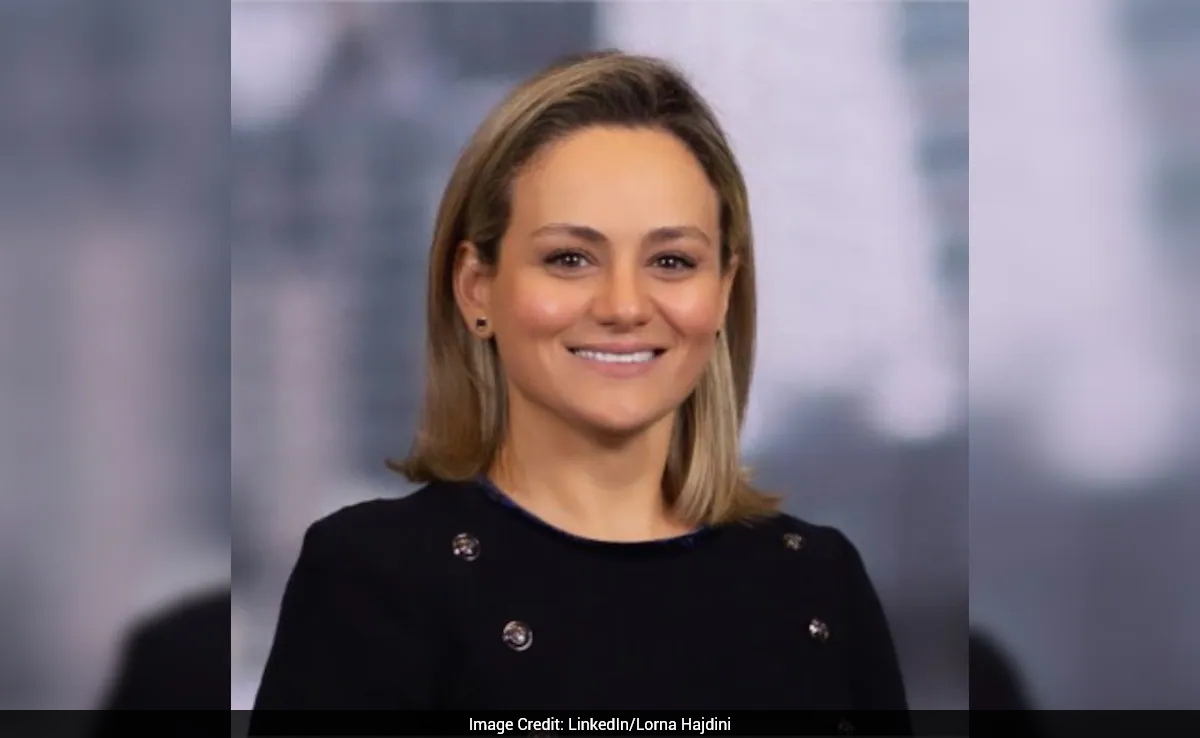
Lorna Hajdini, a 37-year-old executive director at JPMorgan Chase's Leveraged Finance division, has been accused in a lawsuit of sexually abusing, harassing, and racially vilifying a junior male colleague over several months. The complaint, filed on Monday in the New York County Supreme Court by a plaintiff identified only as 'John Doe', alleges that Hajdini used her senior position to coerce him into non-consensual sexual acts, drugged him, and threatened his career when he resisted. The lawsuit paints a picture of escalating predation that began almost immediately after the two started working together in the spring of 2024. Doe claims that Hajdini, who is married, subjected him to a campaign of psychological manipulation and physical assault that left him feeling trapped and powerless.
The alleged pattern of coercion and assault
According to the lawsuit, the first incident occurred in early May 2024 when Hajdini dropped her pen near Doe's desk. As she bent to retrieve it, she rubbed his leg and squeezed his calf, remarking, 'Oh, you did play basketball in college? I love basketball players, they get me so wet.' The advances quickly became more explicit. When Doe declined an invitation for drinks, Hajdini allegedly threatened him, saying, 'If you don't fk me soon, I'm going to ruin you, never forget, I fking own you.' Over the following months, the suit alleges that Hajdini repeatedly propositioned Doe for oral sex, using degrading language such as 'Birthday BJ for the brown boy?' and 'my little Arab boy toy.' She is accused of groping his groin under a table and spitting on her hands before rubbing his neck and head. In September 2024, she allegedly told him, 'I fking own you! I will make you pay. Do you think you're going to be in good standing if you do not have me in your corner. You really think [management] want some Brown boy Indian leading originations? If you don't fk my brains out tonight, I'm going to sabotage your promotion.'
Drugging and racial abuse detailed in complaint
The lawsuit further alleges that Hajdini admitted to drugging Doe with Rohypnol, commonly known as 'roofies' or the date-rape drug, as well as an erection-enabling pharmaceutical substance, to ensure he could perform during coerced encounters. During one assault, Doe claims Hajdini forcibly performed oral sex on him; when he began to cry, she admonished him for failing to sustain an erection and made a racist remark about his genitals. Doe also alleges that Hajdini racially insulted his wife, referring to her as 'your little Asian, fish head, wife' while fondling her own breasts. The complaint states that Hajdini used racial slurs throughout the period, calling Doe 'Brown boy Indian' and 'my little brown boy,' and that she threatened his career by invoking his ethnicity, suggesting management would not want a 'Brown boy Indian' in a leadership role.
A witness and the victim's fear of retaliation
during one encounter, Doe's initial protests were allegedly overheard by a witness staying in an adjacent room. Despite his reluctance, Doe says he submitted to the encounter out of fear that Hajdini would follow through on her threats to destroy his career. 'Afraid that Ms. Hajdini would act on her threats to retaliate against him, [Doe], embarrassed and humiliated, complied with her demands,' the complaint states. Doe's position as a junior employee on a work visa, with his professional future tied to JPMorgan, made it nearly impossible to walk away, according to the suit. The plaintiff's legal team argues that the power imbalance was central to Hajdini's ability to maintain control over him.
Hajdini's denial and the company's response
Lorna Hajdini has categorically denied all allegations. In a statement issued through her lawyers to the New York Post, she said she 'never engaged in any inappropriate conduct with this individual of any kind and has never even been to the location where the alleged sexual assault supposedly took place.' Her legal team has described the case as 'fabricated.' JPMorgan Chase has also denied the allegations and stated that it will contest them in court. The bank has not placed Hajdini on leave or commented on her current employment status. The case is expected to proceed through discovery, with both sides preparing for a legal battle that could draw further attention to issues of power and sexual harassment in the financial industry.
Broader implications for male victims of workplace harassment
The case has resonated beyond the specific allegations, highlighting the particular vulnerabilities faced by men who experience sexual harassment at work. As one commentator noted, 'You don't grow up being told this can happen to you. Not as a man. Not at work.' Male victims often face disbelief, ridicule, or blame, with questions like 'Why didn't he just leave?' shifting responsibility onto the survivor. For men from immigrant backgrounds, the stakes are even higher. Doe, of Indian origin, allegedly had his ethnicity weaponized against him, and his dependence on the job for his visa and career progression made reporting the abuse feel impossible. The lawsuit underscores how power dynamics, gender stereotypes, and racial prejudice can combine to create a trap from which escape seems futile.
What comes next in the legal process
The lawsuit is in its early stages, with both sides expected to file motions and engage in discovery. Hajdini's denial sets the stage for a contentious legal fight, and the court will ultimately weigh the evidence, including any witness testimony or electronic communications. The case has already drawn significant media attention, and further developments are likely to be closely watched. cases like this often fade from public view, buried under corporate statements or reduced to he-said-she-said disputes. But the detailed allegations, including claims of drugging and racial abuse, may make it harder for this story to disappear. For now, the plaintiff's account stands as a stark reminder that sexual harassment can happen to anyone, regardless of gender, and that the structures of power in elite workplaces can enable abuse.
The bottom line
- Lorna Hajdini, a JPMorgan executive director, is accused of sexually abusing, drugging, and racially harassing a junior male colleague.
- The lawsuit alleges a pattern of coercion starting in spring 2024, including threats to sabotage the victim's career.
- Doe claims Hajdini used racial slurs and made degrading comments about his wife and ethnicity.
- Hajdini denies all allegations and says she was never at the location of the alleged assault.
- The case highlights the unique challenges faced by male victims of workplace sexual harassment, especially those from immigrant backgrounds.
- JPMorgan has denied the allegations and will contest the lawsuit in court.



South African Workers Face a Cost of Living Crisis as Labour Rights Erode on May Day 2026

R129 Million in Jackpots Await as PowerBall and PowerBall Plus Drawn on Tuesday
R129 Million in Jackpots Await as PowerBall and PowerBall Plus Draw on 28 April 2026
