Constitutional Court Rules on Parliament's Phala Phala Inquiry Stance
The apex court's decision will clarify Parliament's accountability duties in the face of political pressure.
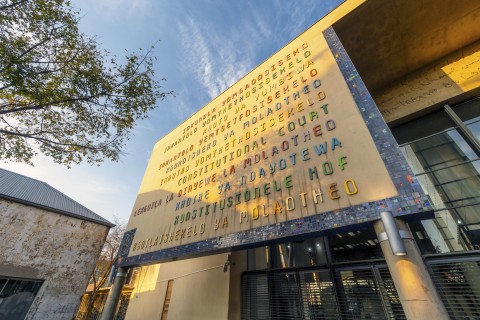
SOUTH AFRICA —
Key facts
- The Constitutional Court is delivering a judgment on the Phala Phala matter.
- The case involves an application by the EFF and the ATM.
- finding a prima facie case.
- The ruling could compel Parliament to revisit its decision on an impeachment inquiry.
- Legal expert Elton Hart questions the rationality of Parliament's vote.
- Governance scholar Richard Calland views the case as a test of oversight in a dominant-party system.
- Section 89 panels assess evidence for further inquiry, not guilt.
Court to Decide Parliament's Role in Phala Phala Probe
The Constitutional Court is poised to deliver a pivotal judgment that will determine whether Parliament acted appropriately in halting proceedings related to the Phala Phala report. This ruling carries significant weight, potentially triggering further investigations or even impeachment proceedings against President Cyril Ramaphosa. The case before the apex court stems from an application lodged by the Economic Freedom Fighters (EFF) and the African Transformation Movement (ATM). These parties are challenging Parliament's decision to reject a had previously found a prima facie case, suggesting that further investigation was warranted into allegations connected to the Phala Phala farm. The outcome is keenly awaited by political actors and observers alike, as it could force Parliament to reconsider its stance on blocking a formal impeachment inquiry. The judgment is expected to clarify the boundaries of parliamentary oversight and accountability in South Africa.
The Core of the Legal Challenge
At the heart of the Constitutional Court's deliberation is an application brought by the EFF and the ATM. Their challenge targets Parliament's rejection of a Section 89 panel's findings. This panel had concluded that there was sufficient initial evidence – a prima facie case – to warrant a deeper probe into the Phala Phala affair. Parliament, however, voted against proceeding with further investigation based on this report. The EFF and ATM argue this decision was not in line with Parliament's constitutional obligations. They contend that the rejection effectively shut down a necessary accountability mechanism. The legal practitioners involved, such as Michael Osborne SC, emphasize that Section 89 panels are designed to assess the threshold for further inquiry, not to adjudicate guilt or innocence. Their role is to determine if allegations are substantial enough to merit a more comprehensive investigation.
Questions of Rationality and Parliamentary Duty
Legal experts are scrutinizing the rationality of Parliament's decision to block further inquiry. Elton Hart, a legal expert, suggests that while Parliament may have technically followed procedural rules, the subsequent vote raises questions about the underlying rationale. He posits that a prima facie finding should naturally lead to further investigation, and blocking this step appears counterintuitive. Hart highlights the reluctance of courts to intervene in parliamentary processes due to the principle of separation of powers. However, he notes that intervention may be justified if Parliament's actions are deemed unconstitutional or irrational. The central question, is whether Parliament fulfilled its constitutional duty to South Africans, rather than prioritizing the president's position. This perspective underscores a critical concern: why would an institution actively prevent an investigation that could potentially exonerate the president? The decision to halt proceedings, in this view, appears to lack a rational basis and undermines the principle of accountability.
Oversight in a Dominant-Party System
The Phala Phala case is seen by governance scholars as a significant test for the efficacy of oversight mechanisms within South Africa's political landscape. Richard Calland frames the issue as a crucial examination of whether parliamentary oversight can operate independently when the ruling party holds a commanding majority in voting outcomes. This dynamic raises concerns about the potential for the governing party to influence or suppress accountability processes. The ability of Parliament to serve as an effective check on executive power is paramount in a democracy, particularly in systems where one party consistently dominates legislative proceedings. The Constitutional Court's ruling is therefore expected to provide clarity on the practical application of oversight principles and the judiciary's role in ensuring that parliamentary processes are not unduly influenced by political expediency.
Echoes of Nkandla and Future Implications
The current case draws parallels with the landmark Nkandla judgment, which involved former president Jacob Zuma. In that instance, the Constitutional Court clarified Parliament's responsibilities in holding the executive accountable. The Phala Phala ruling is anticipated to further define these duties and set precedents for future accountability processes. The ramifications of the court's decision are far-reaching. A ruling in favour of the EFF and ATM could compel Parliament to reopen the Section 89 inquiry, potentially leading to a more thorough investigation into the Phala Phala allegations. Conversely, a decision upholding Parliament's previous vote would signify a different interpretation of its oversight obligations. Regardless of the specific outcome, the judgment is expected to shape the discourse on accountability and the separation of powers in South Africa's governance framework for years to come.
The bottom line
- The Constitutional Court's judgment will clarify Parliament's duty to investigate allegations against the executive.
- The case tests whether parliamentary oversight can function independently in a dominant-party system.
- finding a prima facie case is central to the legal challenge.
- The ruling may compel Parliament to revisit its decision on an impeachment inquiry into President Ramaphosa.
- Legal experts question the rationality of Parliament's vote to halt further investigation.
- The decision is compared to the Nkandla judgment, which defined Parliament's accountability role.


Aston Villa Eyes Europa League Final as Nottingham Forest Seeks to Defend Lead

Standard Bank's Fuel Rewards Face Scrutiny
