SARS Commissioner Makhubu Demands R3.6 Billion for Border Scanners to Combat Illicit Trade
Johnstone Makhubu warns that the tax agency lacks the capacity to investigate high-profile non-compliance and needs integrated systems to tackle both domestic and continental illicit trade.
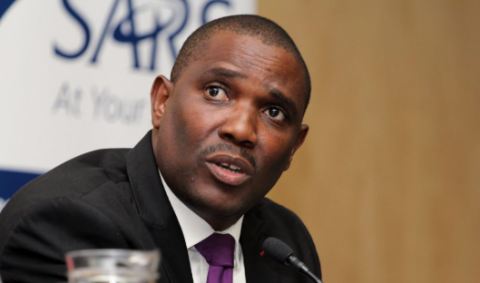
SOUTH AFRICA —
Key facts
- SARS Commissioner Johnstone Makhubu said R3.6 billion is needed for scanner infrastructure alone.
- Each scanner costs R180 million, and the total would cover border scanning infrastructure.
- Makhubu stated SARS does not have enough personnel to investigate high-profile non-compliance cases.
- Illicit trade includes sophisticated plants that adulterate petrol and cause disease.
- Makhubu emphasized the need for a joint approach with other agencies and smart borders.
- Public trust in SARS is reportedly at 75%, but critics dispute this figure.
- SARS frequently issues letters of demand for debts not due and TPAs for non-submission penalties where returns are not required.
- Capital gains tax is criticized as grossly unfair due to currency depreciation by the government.
A Billion-Rand Gap in Border Security
South Africa’s tax authority needs R3.6 billion for scanner infrastructure alone to secure its borders against illicit trade, SARS Commissioner Johnstone Makhubu said. The cost of a single scanner is R180 million, and the total investment would cover an integrated system across multiple agencies. Makhubu stressed that without this funding, the fight against illicit trade cannot succeed.
The Scale of Illicit Trade and Its Toll
Makhubu revealed that SARS has made inroads against sophisticated plants set up to adulterate petrol, which cause disease. He described this as in-country illicit trade that must be tackled alongside continental smuggling. The commissioner warned that illicit trade cannot be allowed to continue unabated, as it undermines public health and the economy.
Capacity Crunch at SARS
Makhubu admitted that SARS lacks the capacity to investigate all high-profile non-compliance cases. “My view is that we don’t have the capacity to investigate all the matters we need to investigate,” he said. The cases under investigation are complex, and the agency needs more personnel to address them effectively.
Calls for a Joint Approach
The commissioner emphasized that SARS cannot tackle the scourge alone. “We need to make our borders smart and collaborate with other entities. We need scanning technology. Funding SARS a priority,” he said. An integrated system between various agencies is essential, as illicit trade spans both domestic and continental networks.
Public Trust and Operational Flaws
Despite claims that public trust in SARS stands at 75%, critics argue that this figure is unrealistic. Structural and service delivery flaws remain, including SARS issuing letters of demand for debts not due and TPAs for non-submission penalties when returns are not required—such as for employees earning less than R500,000 annually from a single income source. These practices erode confidence.
Controversies Over Tax Policy
Capital gains tax has come under fire as grossly unfair, with critics noting that gains are often illusory due to government-driven currency depreciation. This adds to the broader discontent with SARS’s enforcement methods and the tax system’s equity.
The Road Ahead for SARS
Makhubu, settling into his new office, has signaled his readiness to take on these challenges. However, without substantial funding and inter-agency cooperation, the illicit economy will continue to thrive. The R3.6 billion request underscores the scale of investment needed to modernize border controls and restore SARS’s investigative capacity.
The bottom line
- SARS needs R3.6 billion for border scanners to combat illicit trade, with each scanner costing R180 million.
- The agency lacks personnel to investigate high-profile non-compliance cases, hampering enforcement.
- Illicit trade includes petrol adulteration plants that cause disease, requiring both domestic and continental action.
- Public trust in SARS is disputed; critics cite flawed practices like issuing demands for non-existent debts.
- Capital gains tax is criticized as unfair due to currency depreciation, adding to taxpayer discontent.
- A joint, integrated approach among agencies is essential for effective border security and illicit trade reduction.

Police Officer Lowered by Helicopter Into Crocodile-Infested River to Retrieve Body of Eaten Businessman

In Stellenbosch, a historic community marches against gentrification as mayor fails to appear
In South Africa's wealthiest municipality, Jamestown residents march against neglect as mayor fails to appear
