May Day Protests Sweep Globe as Labor Rallies Morph into Anti-War Battleground
From Paris to Istanbul, hundreds of thousands demonstrate against rising costs, U.S. foreign policy, and Israel, with clashes erupting in multiple cities.

ZIMBABWE —
Key facts
- May Day commemorates the 1886 Haymarket Affair, a Chicago protest for an eight-hour workday that turned violent.
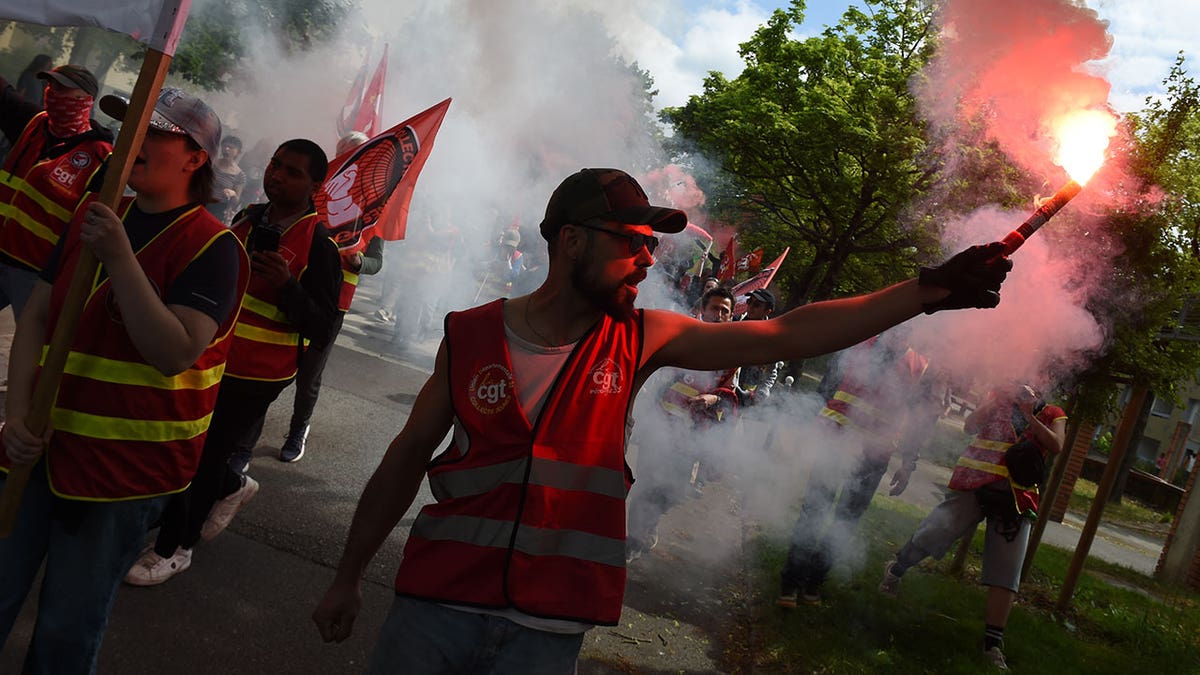
- In Paris, police used tear gas and made forceful arrests after projectiles were thrown during demonstrations.
- In Madrid, thousands marched under banners reading 'Capitalism should pay the cost of their war.'
- In Munich, riot police used batons to disperse leftist protesters after pyrotechnics were ignited.
- In Istanbul, hundreds of protesters chanting 'resistance is everywhere' clashed with police trying to prevent them from gathering in Taksim Square.
- A probe found that 600 groups with $2 billion in revenue mobilized 3,000 May Day protests in a 'red-blue' alliance.
- Nile Gardiner of the Heritage Foundation called the demonstrations a 'troubling moral inversion.'
- Emma Schubart of the Henry Jackson Society warned that May Day demonstrations increasingly serve ideological movements beyond labor activism.
A Global Wave of Unrest
May Day demonstrations across multiple continents escalated into clashes on Friday, as traditional labor protests increasingly became vehicles for anti-war and anti-Israel political movements. From Paris to Istanbul, Madrid, Manila and Seoul, hundreds of thousands took to the streets, linking rising living costs and social inequality to war in the Middle East, U.S. foreign policy, and broader anti-capitalist narratives. In Paris, protests turned violent when police deployed tear gas grenades and made forceful arrests after projectiles were thrown, according to social media footage. French labor leaders had initially focused on inflation, wages, and social protections, but parts of the demonstrations also featured anti-war slogans, Palestinian symbolism, and criticism of military spending. In Madrid, thousands marched under banners reading 'Capitalism should pay the cost of their war,' protesting stagnant wages, housing shortages, and militarism. Placards targeting President Donald Trump and Israeli Prime Minister Benjamin Netanyahu highlighted how international conflict featured prominently alongside domestic labor concerns.
Clashes in Istanbul and Munich
In Istanbul, Reuters video showed hundreds of protesters chanting 'resistance is everywhere' before groups clashed with police who tried to contain them from congregating in Taksim Square. The square, a historic site of labor and political protests, remains a flashpoint for Turkish authorities. Germany also saw unrest in Munich, where riot police used batons to disperse radical leftist protesters after pyrotechnics were repeatedly ignited during a revolutionary May Day demonstration. The scenes echoed similar confrontations in other European cities. In the United States, Americans took to the streets for May Day, with some cities hosting 'Workers Over Billionaires' rallies and marches. The day commemorates the 1886 Haymarket Affair, when a Chicago protest for an eight-hour workday turned into a violent clash between demonstrators and police.
The Red-Blue Alliance and Its Funding
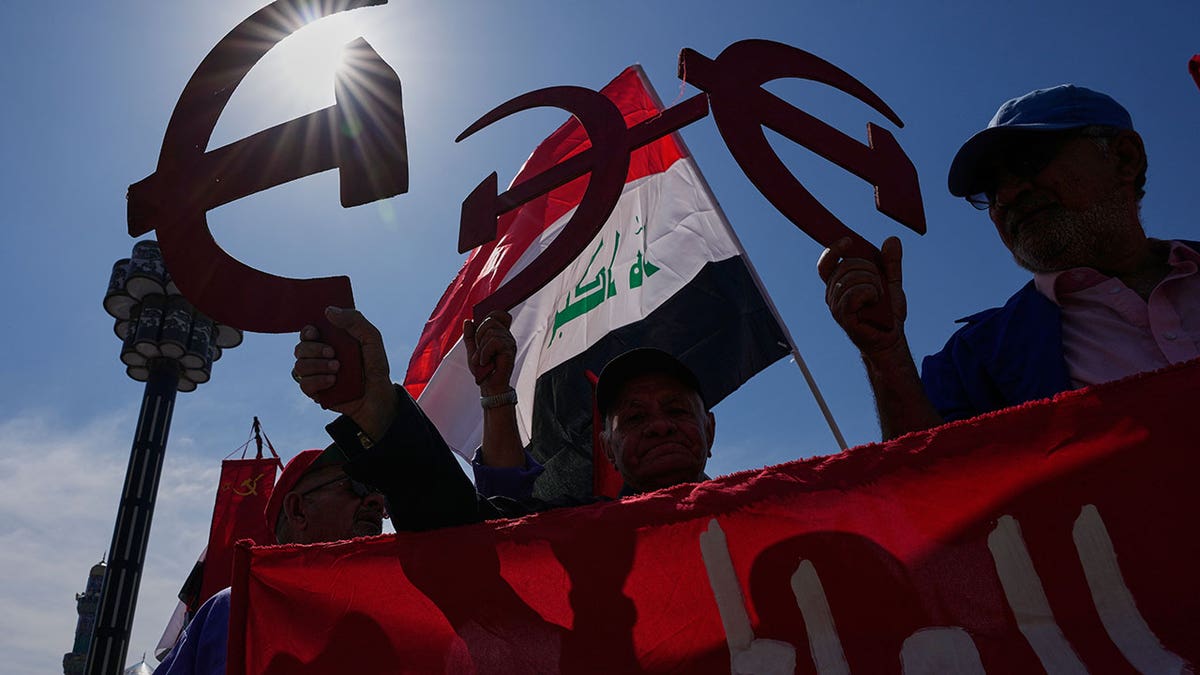
A probe found that 600 groups with $2 billion in revenue mobilized 3,000 May Day protests in what it described as a 'red-blue' alliance. The investigation, which did not specify its source, suggests a coordinated effort across ideological lines to amplify the scale of demonstrations. Supporters of the Iraqi Communist Party were seen holding a symbolic hammer and sickle during a May Day celebration in Baghdad, underscoring the global reach of leftist symbolism. The protests spanned continents, from Latin America to Asia, where workers also marked the day with demonstrations. In South Africa, 130 Nigerians sought repatriation after the latest anti-immigration protests, highlighting how May Day can also trigger xenophobic tensions.
Anti-War and Anti-Israel Sentiments Dominate
Nile Gardiner, senior fellow at the Heritage Foundation, told Fox News Digital that the demonstrations reflected what he described as a 'troubling moral inversion.' 'These May Day protesters should be demonstrating against the brutal tyranny in Tehran instead of protesting against U.S. military action, and this is an illustration of the complete moral vacuum that exists in Europe today,' Gardiner said. Emma Schubart, Research Fellow at the Henry Jackson Society, a London-based think tank, warned that May Day demonstrations increasingly serve as platforms for ideological movements extending beyond labor activism. The shift was evident in the intertwining of anti-war rhetoric with traditional labor demands. In the U.S., protests also targeted immigration policies, with ICE (U.S. Immigration and Customs Enforcement) becoming a focus of demonstrators. The May Day protests in San Francisco saw protesters block a road outside the international terminal, leading to the street's closure for about two hours.
Historical Context and Escalating Stakes
May Day, or International Workers' Day, has its roots in the 1886 Haymarket Affair, when a Chicago protest for an eight-hour workday turned violent. Over the decades, the day has evolved from a labor rights event into a broader political battleground, a trend that accelerated this year. In Turkey, hundreds were detained during May Day protests, while in Argentina, workers demonstrated over President Javier Milei's labor-law overhaul. The protests reflect growing dissatisfaction with economic policies and geopolitical alignments. The convergence of labor grievances with anti-war and anti-Israel activism suggests that future May Day demonstrations will likely remain flashpoints for broader ideological struggles. As one protester in Istanbul chanted, 'resistance is everywhere.'
What Comes Next
The scale and coordination of the protests, backed by well-funded organizations, indicate that May Day will continue to be a platform for political mobilization. Governments in Europe and Asia are likely to tighten restrictions on public gatherings, particularly in symbolic locations like Taksim Square. The Henry Jackson Society's Schubart warned that the ideological capture of labor movements could alienate traditional working-class supporters. Meanwhile, the Heritage Foundation's Gardiner called for a moral reckoning, urging protesters to redirect their anger toward authoritarian regimes. As the dust settles, the question remains whether the labor movement can reclaim its original focus on workers' rights, or whether it will remain subsumed by broader geopolitical battles.
The bottom line
- May Day 2026 saw unprecedented coordination among 600 groups with $2 billion in revenue, mobilizing 3,000 protests globally.
- Traditional labor demands were overshadowed by anti-war, anti-Israel, and anti-capitalist rhetoric in many cities.
- Clashes erupted in Paris, Istanbul, and Munich, with police using tear gas, batons, and arrests.
- The protests reflect a broader ideological shift, with think tanks warning of a 'moral inversion' and ideological capture.
- Historical roots in the 1886 Haymarket Affair remain relevant, but the day is now a platform for multiple political movements.
- Future May Day demonstrations are likely to remain flashpoints for global political tensions.




Newcastle End Winless Run with 3-1 Victory Over Brighton as Howe Faces Tough Questions

Al Qadsiah 3-1 Al Nassr: Ronaldo's title hopes dealt major blow as unbeaten run ends

Mavididi Ends Leicester's Winless Run as Blackburn Tribute Falls Flat
