America's Affordability Crisis: Wages Stagnate as Costs Surge, Leaving Millions Struggling
Despite cooling inflation, nearly half of Americans find groceries harder to afford than a year ago, and a record number of full-time workers face homelessness.

AUSTRALIA —
Key facts
- Consumer Price Index hit a 40-year high of 9.1% in June 2022; annual inflation was 3% in September 2025.
- Grocery prices rose 2.7% year-over-year in September 2025, but are 18% higher than in January 2022.
- 14% of U.S. households experienced food insecurity between January and October 2025, up from 12.5% in 2024.
- Almost three-quarters of Americans say housing has grown more unaffordable in their communities in recent years.
- Productivity grew 73% from 1979 to 2019, but median wages rose only 23%; top 1% earnings soared 169%.
- Consumer sentiment dropped from 71.8 in November 2024 to 51 in November 2025, a near-record low.
- 20 states have no state minimum wage above the federal $7.25, effectively leaving half of America without a binding minimum wage.
The Squeeze on Daily Necessities
Cat Hill, a 43-year-old from Hornby, New York, used to buy frozen dinners and fancy cheese as a treat for her family of five. Now, she says, "We can't afford to do those little luxuries any more because they're just too expensive to feed five with. There's not any wiggle room." Hill, who also runs a small horse stable, is among millions of Americans feeling the pinch of rising prices for groceries, housing, childcare, education, and healthcare. Although inflation has eased from its peak of 9.1% in June 2022, the cumulative effect remains severe. The Consumer Price Index shows grocery prices rose 2.7% in September on an annual basis, a sharp contrast to the 11.4% increase in 2022, but overall food prices are still more than 18% higher than in January 2022. Shoppers focus on day-to-day spending, which keeps climbing, and compare current out-of-pocket costs with what they paid several years ago, a gap that official measures may understate. Roughly 14% of food insecurity on average between January and October 2025, up from 12.5% in 2024, according to data from Purdue University's Center for Food Demand Analysis and Sustainability. In New York City, 40% of local families cannot afford their weekly food costs, per data from charitable organizations Robin Hood and Columbia University.
Housing: The Tip of an Invisible Iceberg
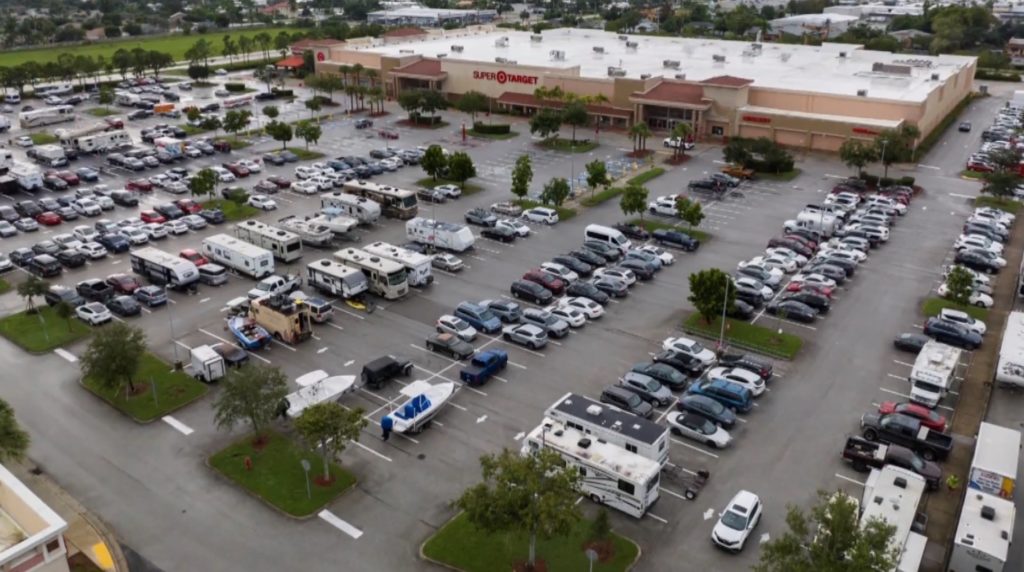
The skyrocketing cost of living has left millions of full-time workers unable to afford a place to live. Journalist Brian Goldstone, author of "There Is No Place for Us: Working and Homeless in America," argues that in cities across the country, a low-wage job is "homelessness waiting to happen." He notes that the low-wage workforce faces not only wages too low to keep up with rents, but also volatile hours—employers often give 29 hours a week to avoid providing benefits at the 30-hour threshold. Goldstone describes a "shadow realm of homelessness" that is invisible to most: families with children who work but still cannot secure housing. "What homelessness looks like today isn't just the person sleeping outside the parking lot of a convenience store or a Walmart or a Target. It's often the very cashier worker stocking the shelves in those stores," he says. These workers often have children and don't know where they will stay at night, sometimes sleeping in a car in that same parking lot. Almost three-quarters of Americans said housing has grown more unaffordable in their communities in recent years, according to an October poll from YouGov and the University of Florida Center for Public Interest Communications. The housing crisis is rooted in a lack of available homes, partly due to cutbacks in construction after the Great Recession, and more recently steep new U.S. tariffs have fueled inflation.
Wage Stagnation: The Missing Half of the Equation
Economist Arindrajit Dube argues that the true culprit behind America's affordability crisis is not just rising prices, but that "employers have had too much power and too little motivation to share gains." Over the past 45 years, wage growth for most Americans has been halting, often failing to keep up with overall economic gains. Productivity grew by about 73% between 1979 and 2019, but median wages rose only about 23%. A retail worker in 1979 earned about $14.60 in today's dollars; by 2019, that had risen to $17.40—a 19% gain in an economy that nearly doubled in size. Meanwhile, earnings for the top 1% soared 169%. This gap was not accidental. It resulted from corporate strategies that prioritized shareholder returns over worker pay, the erosion of labor unions, and policy choices that let the minimum wage wither. Today, 20 states have no state minimum wage above the federal $7.25, meaning nearly half of America effectively has no binding minimum wage. In contrast, the 30 states that have instituted state minimum wages have seen workers' pay rise without the job losses often predicted by critics; instead, companies see turnover fall and productivity rise. During the tight labor markets of 2021–2023, wages at the bottom grew faster than at the top, reversing roughly one-third of the inequality built up since the late 1970s. This demonstrates that full employment can counter employer monopsony power and boost wages.
Political Promises and Policy Realities
During the 2024 election campaign, Donald Trump promised to bring down prices "starting on day one." But two days after winning, he remarked, "Our groceries are way down. Everything is way down … So I don't want to hear about the affordability." Much of his first year in office was dominated by trade wars, a crackdown on illegal immigration, sending National Guard troops into American cities, and the longest government shutdown in history. Prices rose in five of the six main grocery groups tracked by the consumer price index from January to September 2025, including meats, poultry, and fish (up 4.5%), non-alcoholic beverages (up 2.8%), and fruits and vegetables (up 1.3%). Federal Reserve officials have long been clear that Trump's tariffs caused inflation; consumer prices were increasing at an annual rate of 2.3% in April when the import taxes were launched, and that rate accelerated to 3% in September. Even as the shutdown deepened financial woes, Trump launched remodeling projects including a gilded ballroom at the White House and threw a Great Gatsby-themed party at his Mar-a-Lago estate. Tara Setmayer, co-founder of the Seneca Project, a women-led Super Pac, said, "The ads write themselves for the midterm elections in 2026 when you have a president who promised to make the American people's lives better … bragging repeatedly from his gilded Oval Office while military families are on food bank lines."
The Human Toll: Toxic Stress and Eroding Living Standards
Consumer sentiment dropped to a near-record low in November 2025, falling from 71.8 out of 100 in November 2024 to 51, according to the University of Michigan's Surveys of Consumers. Director Joanne Hsu said consumers "are continuing to be very frustrated by these high prices. They feel like those high prices are eroding their living standard, and they just don't feel like they're thriving at the end of the day." Public health experts use the term "toxic stress" to describe the chronic, debilitating stress that children and parents experience from housing insecurity—stress that can fundamentally alter a child's long-term development. this is the human toll of what happens when millions of families are flung into what a case manager in his book calls "the housing hunger games." Jeremy Tolbert, a 47-year-old web developer in Lawrence, Kansas, faces an 18% increase in his family's monthly health care premiums to $2,600 next year. He plans to cut back on food, saying, "Our food budget is going to go down — we're not talking about eating beans and rice, but going from a comfortable middle-class lifestyle to eating how we did when we first got out of college."
Paths Forward: Minimum Wages and Sectoral Standards
Despite the grim picture, there are signs of possible solutions. In states that have raised their minimum wages, workers have seen pay rise without job losses, and companies have experienced lower turnover and higher productivity. This June, voters in Oklahoma will decide whether to raise their minimum wage to $15 an hour by 2030. Sectoral boards, which set pay standards for specific industries, are being experimented with in states like Minnesota and California. Dube points to the Writers Guild of America's sector-wide agreement protecting against AI displacement as an example of how standard-setting can safeguard workers' interests. He argues that technology does not automatically share gains; it depends on the choices we make. "Shared prosperity is a choice, and we can choose to rebuild the wage standard for families across America," he writes. As the affordability crisis deepens, the debate over how to address it—whether through minimum wage increases, sectoral bargaining, or other policies—will likely intensify. The outcome will determine whether the American dream of a stable, middle-class life remains attainable for millions.
The bottom line
- Despite lower inflation, cumulative price increases since 2022 have left many Americans struggling with groceries, housing, and healthcare.
- Wage stagnation over 45 years, driven by employer monopsony power and declining unionization, means typical workers have not shared in productivity gains.
- Nearly half of U.S. households face food insecurity or housing unaffordability, with full-time workers increasingly at risk of homelessness.
- Trump's tariffs and policy choices have contributed to rising prices, while his administration's focus on other issues has frustrated voters.
- State-level minimum wage increases and sectoral boards offer proven ways to boost pay without harming employment.
- Consumer sentiment has plummeted to near-record lows, reflecting widespread frustration with eroding living standards.



Leaked Whiteboard Notes Expose Brisbane Lions' Candid Assessments of Essendon Players Ahead of Clash

Bulldogs’ Bontempelli injury scare after 12-point loss to Fremantle

Hayden Young's three goals and Shai Bolton's dagger seal Fremantle's 12-point comeback win over Western Bulldogs
