Texas Man Taps Air for Water Amid Severe Drought Restrictions
A $30,000 atmospheric water generator offers a glimpse into future household water security.
AUSTRALIA —
Key facts
- Corpus Christi is under Stage 3 drought restrictions.
- Brent Lanphier uses an atmospheric water generator for his household needs.
- The system produces up to 250 gallons of water daily.
- Lanphier's generator stores a maximum of 3,000 gallons.
- The installation cost over $30,000, with monthly costs around $300.
- Lanphier experienced a severe drought in the 1980s that depleted his well.
Water Independence in the Face of Scarcity
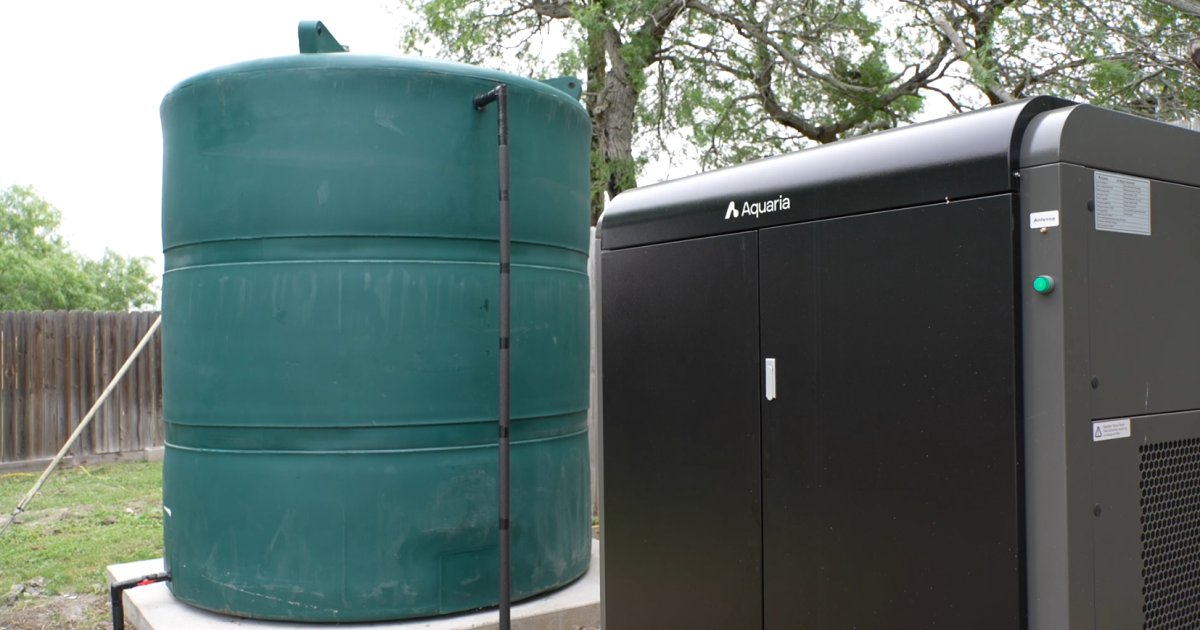
As Corpus Christi grapples with Stage 3 drought restrictions, one resident is taking an unconventional route to secure his household's water supply. Brent Lanphier has installed an atmospheric water generator, a device that literally pulls moisture from the air, providing his home with water for all essential needs. This system is currently supplying his family with all the water they use for drinking, cooking, and cleaning. The technology draws in the warm, humid coastal air, condenses its moisture, and then subjects the collected water to a rigorous purification process. This includes filtration and UV treatment before it is stored in a tank and piped directly into the residence. The machine is capable of generating approximately 250 gallons of water per day, with a storage capacity of up to 3,000 gallons, offering a substantial buffer against dwindling municipal supplies.
A Costly Solution Rooted in Past Hardship
The investment in this advanced water-generating technology was significant, exceeding $30,000 for Lanphier's setup, with ongoing monthly expenses around $300. He readily acknowledges that the price point places it beyond the reach of most consumers. "It's not budget-friendly water, but it's gonna be there," Lanphier stated, highlighting the priority he places on reliability. This drive for self-sufficiency is deeply personal, stemming from a traumatic experience in his youth. During a severe drought in the 1980s, his family's well ran dry, leaving them without a water source. The memory of needing to hire a well digger and the subsequent uncertainty about water availability has profoundly shaped his perspective on resource security.
The Appeal of Self-Reliance
Lanphier's pursuit of water independence is more than just a response to current restrictions; it's a proactive stance against future vulnerabilities. His motivation is clear: to avoid depending on external systems that may not prioritize his interests during times of crisis. "It's not having to depend on somebody else that's not looking out after my interests — I'm looking out after my own interests," he explained. While less expensive alternatives for water conservation and collection exist, Lanphier's sophisticated system represents a burgeoning interest in household-level water autonomy. This trend is particularly pronounced in coastal regions where ambient humidity levels are consistently high enough to make atmospheric water generation a technically viable option.
Atmospheric Water Generation: A Niche Technology
Atmospheric water generators (AWGs) operate by cooling air to its dew point, causing water vapor to condense into liquid water. This collected water is then filtered and purified to make it potable. The efficiency of these machines is heavily dependent on environmental conditions, specifically temperature and relative humidity. Coastal areas, like Corpus Christi, often provide the ideal climate for AWGs due to higher humidity levels compared to arid inland regions. However, the energy consumption and the significant initial capital outlay remain considerable barriers to widespread adoption. The technology, while promising for individual water security, is not yet a scalable solution for municipal water shortages.
Broader Implications for Water-Scarce Futures
Lanphier's initiative arrives at a critical juncture, as many regions globally face escalating water stress due to climate change, population growth, and aging infrastructure. The challenges highlighted by the drought in Corpus Christi echo concerns in diverse locales, from farmers in the United States struggling with high diesel prices and drought, to communities in Iraq seeing water return to their marshes, and Somalis facing desperation due to aid cuts, drought, and conflict. While Lanphier's system is a personal solution, it points towards a growing demand for resilient and localized water sources. As droughts become more frequent and severe, innovative technologies like atmospheric water generation, despite their current limitations, may play an increasingly significant role in individual and community water strategies.
The bottom line
- Corpus Christi is currently under Stage 3 drought restrictions, prompting residents to seek alternative water solutions.
- Brent Lanphier has implemented an atmospheric water generator, capable of producing 250 gallons of purified water daily.
- The system cost over $30,000, reflecting a significant barrier to entry for widespread adoption.
- Lanphier's decision is influenced by a past personal experience with severe drought in the 1980s.
- Atmospheric water generation is most viable in humid coastal environments.
- The technology represents a growing trend towards individual water independence in the face of increasing water scarcity.




Antarctic Blast to Bring Snow to Australian Capitals

Arctic Blast Plunges Millions into Deep Freeze as May Cold Front Shatters Spring Warmth