Trump downplays oil spike as Iran ceasefire teeters after Hormuz clashes
The US president claims critics were wrong about energy prices even as petrol hits record highs and the fragile Pakistan-brokered truce unravels in the Gulf.

AUSTRALIA —
Key facts
- Brent crude oil is trading at $US114 a barrel.
- US petrol prices have reached their highest level ever recorded for this time of year.
- Donald Trump said US forces sank seven Iranian small boats in the Strait of Hormuz.
- Iran claimed it struck a US frigate with two missiles; the US Navy denies any ships were hit.
- A drone attack on the UAE's Fujairah port and oil refinery injured three Indian nationals.
- Over 800 ships and roughly 20,000 crew members remain stranded in the Gulf.
- The ceasefire, mediated by Pakistan, took effect on April 8 but failed to reopen the Strait of Hormuz.
Ceasefire unravels as US and Iran trade fire in the Strait
The fragile ceasefire between the United States and Iran appeared on the verge of collapse on Monday after a series of clashes in the Strait of Hormuz, the strategic waterway through which about a fifth of the world's oil supplies normally transit. President Donald Trump claimed that US forces had sunk seven Iranian small boats, while Iran's military said it had targeted a US warship with missiles after it ignored warnings about violating maritime rules. US Central Command flatly denied that any Navy vessel had been struck. "No US Navy ships have been struck," the command said in a statement, adding that two US-flagged merchant vessels had successfully transited through the strait as part of "Project Freedom," the American operation to escort ships through the blockade.
Project Freedom triggers Iranian retaliation and regional escalation
The US launched Project Freedom on Monday to help hundreds of ships trapped with their crews in the Gulf, an operation Trump described as "one of the greatest military maneuvers ever done." Iran responded by reasserting its blockade and warning it would strike any US naval vessel approaching the strait. two missiles had hit a US frigate, forcing it to turn back, but the Pentagon insisted the claim was false. Meanwhile, missiles were intercepted over the skies of the United Arab Emirates, and a fire broke out on a South Korean-flagged vessel in the strait, though it was unclear whether the blaze was caused by Iranian action. A large drone strike hit the UAE's biggest port and oil refinery at Fujairah, sending three Indian nationals to hospital with moderate injuries.
Trump dismisses oil price fears as petrol hits record highs
Amid the escalating crisis, Trump downplayed the surge in global oil prices, which have pushed Brent crude to $US114 a barrel. "Everybody was wrong. They thought energy would be at $300. It's at like $100. And I think it's going down," he said, referring to Brent crude. He added that there was "a lot of energy out there on ships all over the world that are loaded up with it," but that the ships were "kidnapped by a pretty evil place." In the United States, petrol prices have hit their highest level ever recorded for this time of year, and the highest since the war with Iran began. The president's comments came as the ceasefire he had touted as a victory appeared to be crumbling, raising questions about the durability of the April 8 truce brokered by Pakistan.
Iran warns of shooting on sight as US redirects commercial vessels
Iran's military central command warned on Monday that it would strike any US naval vessel approaching the strait, and Tehran later announced it would shoot US forces on sight. The threats followed Trump's statement that the US would "guide out" ships stranded in the region. US Central Command said it had redirected 50 commercial vessels amid the ongoing blockade. The standoff has left more than 800 ships and roughly 20,000 crew members stranded in the Gulf, unable to transit the vital waterway. Trump, in an interview with Fox News, claimed Iranian officials had been "far more malleable" in recent talks than before, but his comments were at odds with the escalating military rhetoric.
Pakistan-brokered truce fails to reopen strategic waterway
The ceasefire that took effect on April 8, mediated by Pakistan, had paused more than two months of intense fighting in the Gulf region but failed to achieve its core objective: reopening the Strait of Hormuz. The drone attack on Fujairah shattered a period of relative calm in the UAE, which had largely been spared the worst of the conflict. Trump's latest threats against Iran echo remarks he made in April, when he warned that a "whole civilization will die" if Tehran did not comply with his demands over the strait. Those comments drew widespread domestic and international backlash, and Monday's events suggest the administration is willing to escalate further.
Stakes for global trade and energy markets
The Strait of Hormuz is a chokepoint for global energy supplies, and its closure has already sent oil prices soaring. With Brent crude at $US114, the economic consequences are being felt worldwide. Trump insisted that US weapons stockpiles were ample, telling Fox News: "We have more weapons and ammunition at a much higher grade than we had before. We have the best equipment. We have stuff all over the world." But the administration's strategy of combining military pressure with ceasefire diplomacy appears increasingly contradictory. The president's claim that "everyone was wrong" about the economic impact of the war is contradicted by the record-high petrol prices at home and the stranded ships in the Gulf.
Outlook: brink of full-scale war or renewed talks?
The region now stands on the brink of a full-scale war that neither side says it wants but both seem unable to avoid. Trump's threat that Iran will be "blown off the face of the earth" if it attacks US vessels leaves little room for de-escalation, while Iran's vow to shoot on sight suggests it is prepared to test American resolve. Vice President JD Vance is reportedly set to lead a US delegation to Pakistan for peace talks with Iran as the ceasefire deadline nears, but Monday's violence has undermined the credibility of that process. The coming days will determine whether the two sides can pull back from the abyss or whether the Gulf is headed for a wider conflagration.
The bottom line
- The US-Iran ceasefire is effectively dead after Monday's clashes in the Strait of Hormuz, with both sides accusing each other of violations.
- Trump claims US forces sank seven Iranian boats; Iran says it struck a US frigate, but the Pentagon denies any hits.
- A drone attack on the UAE's Fujairah port injured three Indian nationals, breaking a period of relative calm in the Emirates.
- Brent crude is at $US114 a barrel, and US petrol prices are at record highs for this time of year, despite Trump's downplaying of the spike.
- Over 800 ships and 20,000 crew remain stranded in the Gulf, with the US redirecting 50 commercial vessels amid the blockade.
- The Pakistan-brokered ceasefire of April 8 failed to reopen the Strait of Hormuz, and new peace talks led by Vice President Vance face an uphill battle.


Sharks run riot as Tigers suffer 52-10 humiliation after Luai's bombshell departure announcement
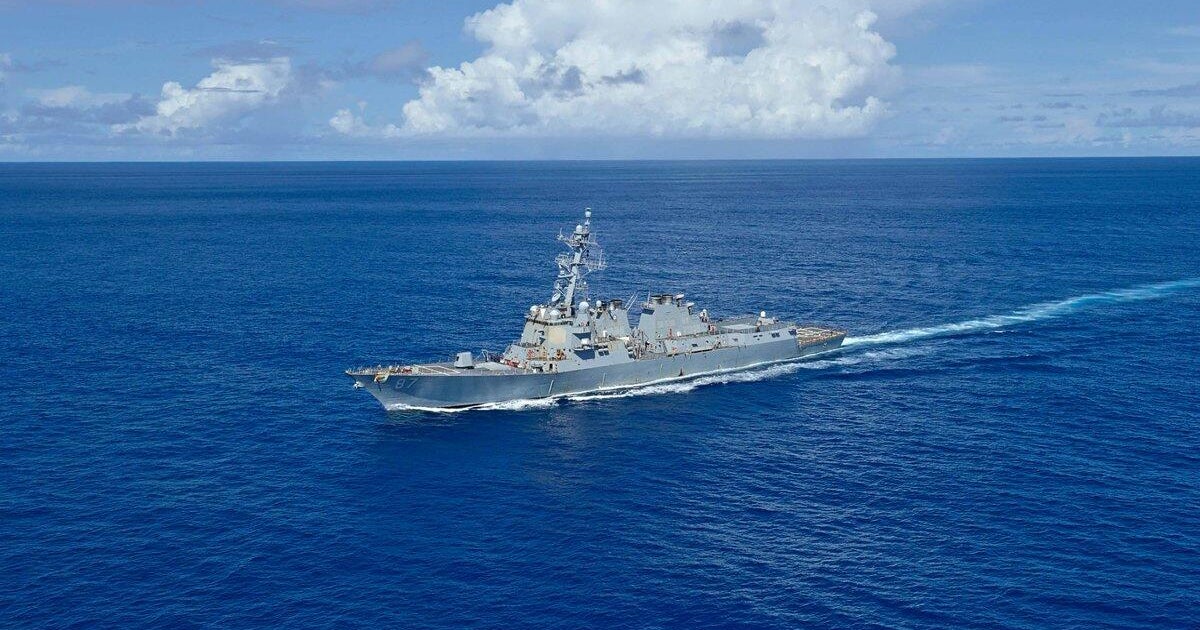
UAE reports Iranian missile attack as US pushes Project Freedom through Strait of Hormuz

Marta Kostyuk Captures First WTA 1000 Title in Madrid, Defeating Mirra Andreeva
