Inside Sydney's $29bn Metro West: 1,200 walk tunnel as 128km of boring ends
A rare underground tour reveals the scale of a project that will reshape transport and housing, with 18-minute journeys from Pyrmont to Parramatta by 2032.

AUSTRALIA —
Key facts
- More than 1,200 members of the public walked 1.3 km underground from Bays West to Pyrmont on the first station-to-station tour.
- The final tunnel boring machine, 'Jessie', broke through at Hunter Street in February, completing 128 km of tunnelling across all Sydney Metro projects since 2014.
- Jessie excavated 230,000 tonnes of material over 2.3 km from The Bays to Hunter Street, working 24/7 five days a week from mid-2024.
- The Hunter Street cavern is Australia's largest underground rail cavern at 20 m tall, 28 m wide, and 180 m long.
- The NSW Government awarded $11.5 billion in contracts in December for track, systems, stations, and fleet on Metro West.
- Metro West will enable up to 18,000 homes around Burwood North and North Strathfield stations, 15,000 near Sydney Olympic Park, and 8,500 near Bays station.
- Travel times will be slashed: Pyrmont to Parramatta in 18 minutes, Bays to Hunter Street in 4 minutes.
- Jessie will be disassembled into 16 pieces, trucked to Newcastle, and shipped to China for recycling or return to manufacturer.
A rare descent into Sydney's underground future
More than 1,200 members of the public will today become the first to walk the tunnels of Sydney Metro West, descending by lift into the Bays West station box and traversing 1.3 kilometres of freshly bored rock. The route passes within 25 metres of the Anzac Bridge footings, beneath Johnstons Bay, and reaches a depth of 45 metres as it approaches Pyrmont. This window between the completion of tunnelling and the start of fit-out offers a rare glimpse of a project that will transform transport and housing across Sydney. The walk takes about 15 minutes each way; when the line opens in 2032, the same journey will take just two minutes.
The end of a tunnelling era: 128 kilometres of boring complete
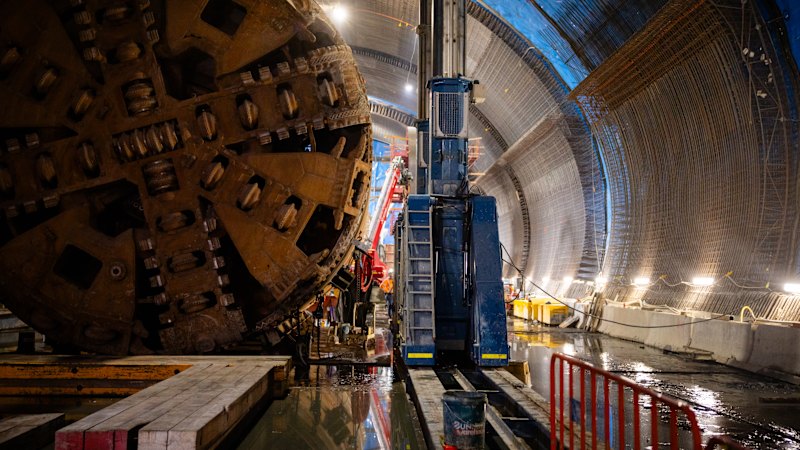
The final tunnel boring machine on Metro West, a 1,100-tonne machine named Jessie, broke through sandstone into the Hunter Street station cavern in February, marking the end of 128 kilometres of tunnelling across all Sydney Metro projects since 2014. Jessie had worked around the clock, five days a week, since mid-2024 to excavate 230,000 tonnes of material over a 2.3-kilometre stretch from The Bays to Hunter Street. Now, delicate retrieval efforts are underway in Sydney's cramped CBD. Jessie will be disassembled into 16 pieces, lifted by crane through a shaft to the surface, and trucked out of the city at night to Newcastle, where the components will be shipped back to China. There, they will either be melted down and recycled or returned to the original manufacturer.
Hunter Street: Australia's largest underground rail cavern
The future Hunter Street station, housed in a cavern measuring 20 metres tall, 28 metres wide, and 180 metres long, will be the flagship station on the $29 billion line. It will be larger than both Victoria Cross station in North Sydney and Martin Place metro station when it opens in 2032. JCG project manager Peter Shepherd, who has worked on major sections of the Metro City and Southwest lines, called Hunter Street the largest and most captivating station he has delivered. 'Just the sheer scale of this is so impressive. The logistics of tunnelling in the city, the volume of work to be done, and it's also very complex in terms of engineering,' he said. In some sections, concrete over half a metre thick has been poured over reinforced steel, with blue lining underneath acting as a waterproof membrane.
$11.5 billion in contracts and a 2032 timeline
With tunnelling complete, the project's focus shifts to station construction and tunnel fit-out. In December, the NSW Government awarded $11.5 billion worth of contracts to deliver 60 kilometres of track, rail systems, five Metro West stations, tunnel fit-outs, the supply and operation of the train fleet, and a development partner for Hunter Street station. When services begin in 2032, travel times will be dramatically reduced: from The Bays to Hunter Street in 4 minutes, Pyrmont to Hunter Street in 2 minutes, Pyrmont to Parramatta in 18 minutes, and Westmead to Hunter Street in 22 minutes. The total investment is estimated at $27–29 billion.
A backbone for housing reform and rezoning
Beyond transport, Metro West is designed to underpin the government's most significant rezonings and housing reforms. Up to 18,000 homes are planned around Burwood North station, another 18,000 around North Strathfield, up to 15,000 near Sydney Olympic Park, and up to 8,500 near Bays station. NSW Transport Minister John Graham described Hunter Street as a 'key junction' that will complement Martin Place, allowing commuters to easily switch between metro and heavy rail services. 'We're here on the street level of the city, but below us there's an underground city unfolding,' he said.
What comes next: fit-out and the road to 2032
The immediate task is fitting out the stations with concrete, laying tracks, and installing vital equipment. The Hunter Street cavern will be transformed into a working station over the next several years. For now, the public tour offers a tangible connection to a project that will reshape Sydney. As Shepherd noted, the sheer scale and complexity of the engineering are unprecedented. The disassembly of Jessie and the removal of her parts mark the end of one phase and the beginning of another, as the underground city slowly takes shape.
The bottom line
- Sydney Metro West's 24-kilometre line will open in 2032, cutting travel times drastically, with Pyrmont to Parramatta in 18 minutes.
- All 128 km of tunnelling across Sydney Metro projects since 2014 is now complete, ending with Jessie's breakthrough at Hunter Street.
- The Hunter Street cavern is Australia's largest underground rail cavern, measuring 20 m by 28 m by 180 m.
- The project is tied to housing reforms enabling up to 18,000 homes near some stations.
- $11.5 billion in contracts have been awarded for track, systems, stations, and fleet.
- Jessie, the 1,100-tonne boring machine, will be disassembled and shipped to China for recycling or return.


Sydney Swans Snap Melbourne's Unblemished Sunday Record with 17-Point Victory at SCG
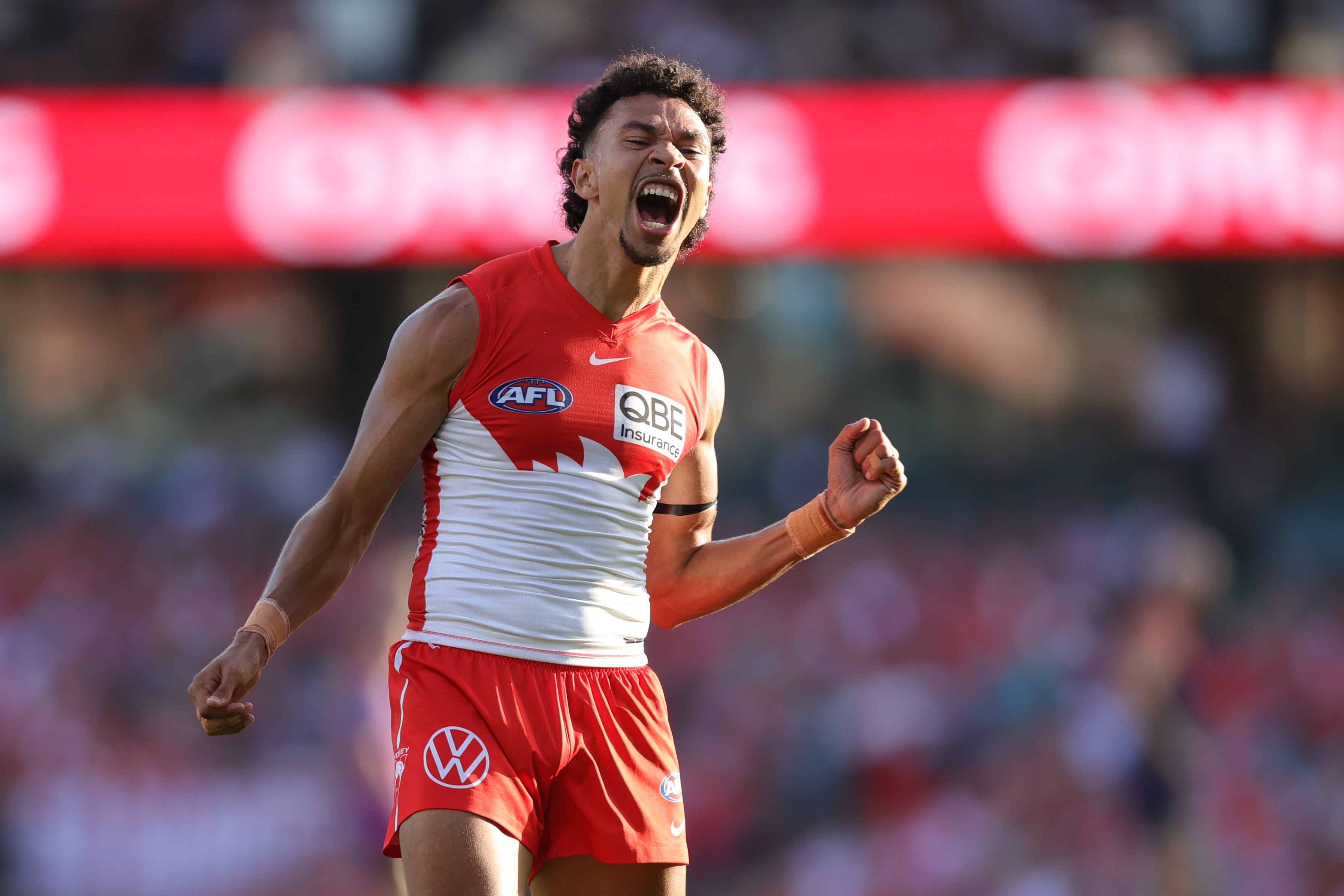
Malcom Rosas’s seven-goal haul propels Sydney Swans to 17-point win over Melbourne
