May's Flower Moon to Rise as a Micromoon on Friday, Sparking Debate Among Astronomers
The full moon on May 1 will appear slightly smaller than average as it reaches apogee, but definitions vary on whether it qualifies as a micromoon.

AUSTRALIA —
Key facts
- The Flower Moon reaches full phase at 18:23 UTC on Friday, May 1, 2026.
- The moon will be at apogee, about 406,000 km from Earth, making it a micromoon.
- Spica, the brightest star in Virgo, will appear near the nearly-full moon on April 29.
- The term 'Flower Moon' originates from May's spring blooms.
- A second full moon on May 30-31 will be a Blue Moon and the year's most distant full moon at 406,135 km.
- The moon's orbit is elliptical, with apogee and perigee differing by about 43,000 km.
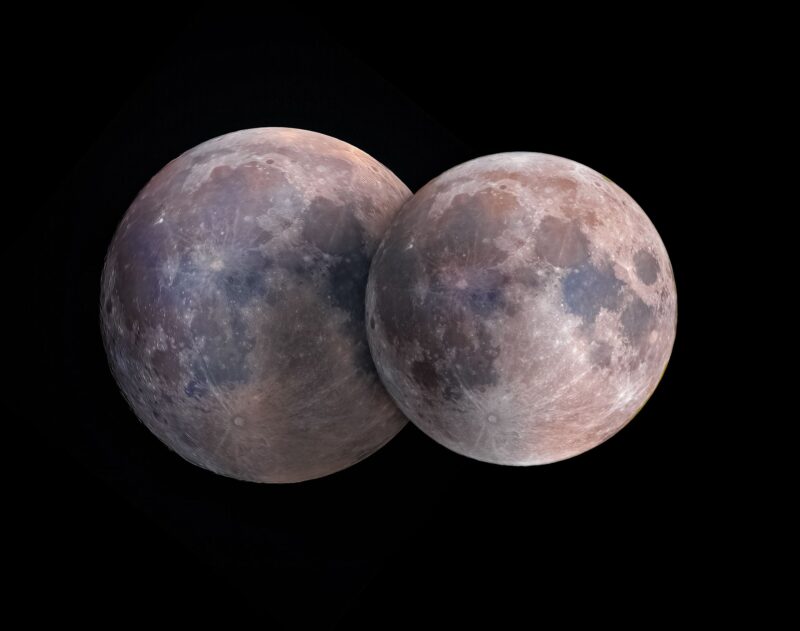
- A micromoon appears about 12-14% smaller than a supermoon and 7% smaller than an average full moon.
- Sources disagree on whether the May 1 full moon qualifies as a micromoon due to differing definitions.
A Celestial Prelude: Spica and the Waxing Moon
On the evening of Wednesday, April 29, skywatchers across the southern hemisphere will witness a striking pairing: the nearly-full Flower Moon gliding alongside Spica, the brightest star in the constellation Virgo. The star will appear to the moon's left, visible in the southern sky just after sunset. This apparent closeness is an optical illusion. Spica lies about 250 light-years from Earth, while the moon is a mere 384,000 km away on average. The moon, currently in its waxing phase, is building toward full phase, which will occur on Friday, May 1.
The Flower Moon Rises: Timing and Visibility
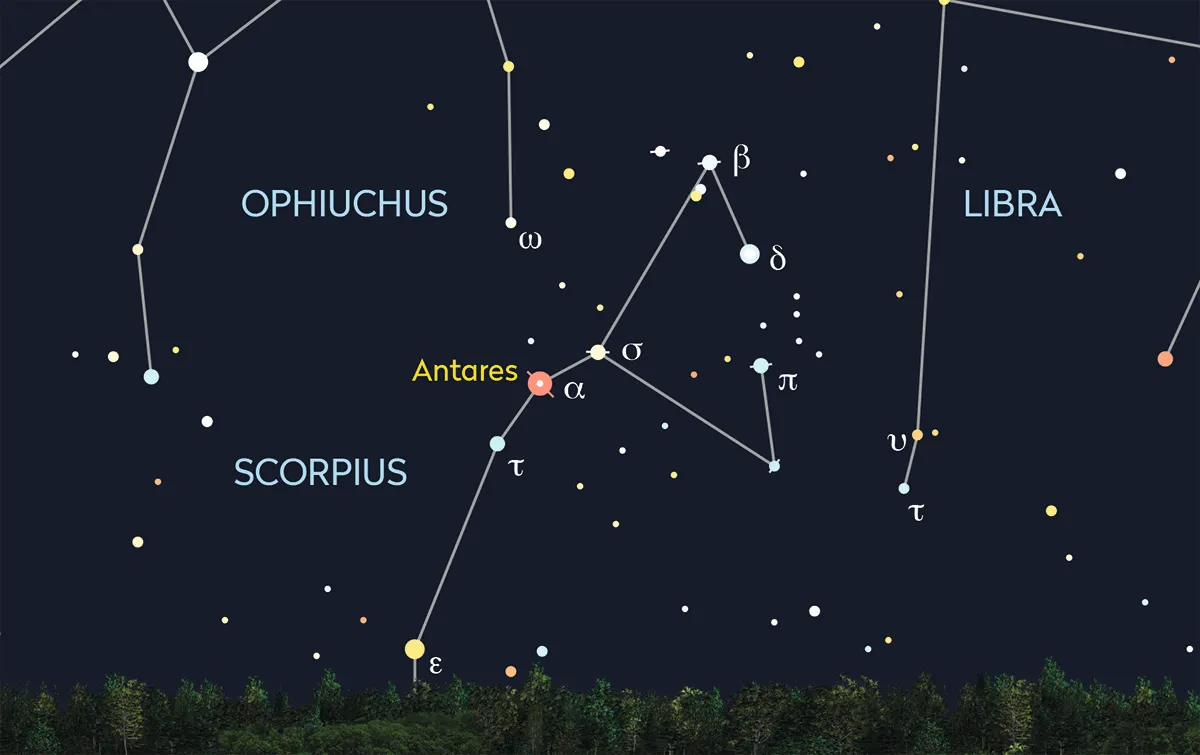
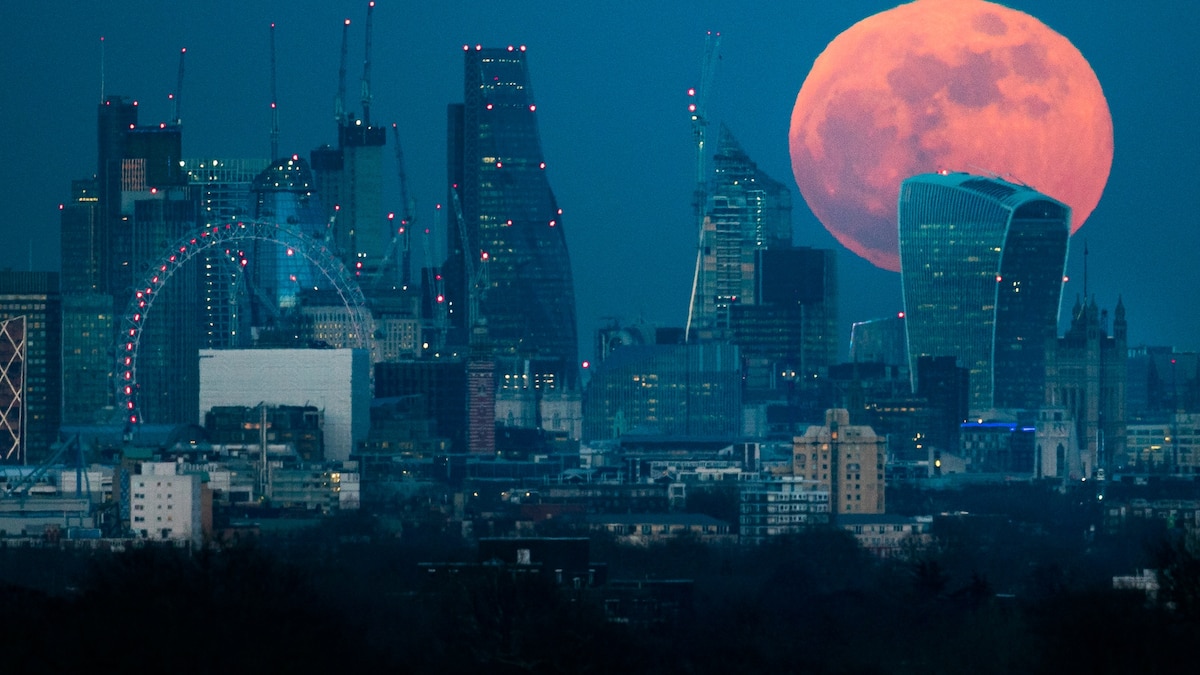
May's full moon, historically known as the Flower Moon, will reach its fullest at 18:23 UTC on Friday, May 1. The name derives from the abundance of spring flowers blooming in the Northern Hemisphere, a tradition rooted in Native American and colonial folklore. The moon will rise in the southeast just as the sun sets in the northwest, climbing high into the southern sky as midnight approaches. It will set in the southwest around dawn. The moon will be positioned in the constellation Libra, just below Virgo's 'Bowl of Virgo' asterism.
A Micromoon Debate: Definitions Diverge
This year's Flower Moon is a micromoon, meaning it occurs near apogee, the farthest point in the moon's elliptical orbit from Earth. At apogee, the moon sits roughly 406,000 km away, about 43,000 km farther than at perigee. The difference makes the moon appear slightly smaller and marginally less bright than average, though the change is barely perceptible to the naked eye. However, astronomers disagree on the exact criteria for a micromoon. Fred Espenak's AstroPixels website classifies the May 1 full moon as a micromoon, but Timeanddate.com does not, reserving the label for the Blue Moon on May 30-31. That later full moon will be 2026's most distant, at 406,135 km. Both sources agree that the Strawberry Moon on June 29 is a micromoon, yielding either two or three micromoons in 2026.
The Science of Lunar Distance
The moon's orbit is not a perfect circle but an ellipse, causing its distance from Earth to vary continuously. Each month, the moon reaches perigee (nearest point) and apogee (farthest point). When a full moon coincides with apogee, it is called a micromoon; when it coincides with perigee, it is a supermoon. A full micromoon appears about 12–14% smaller than a full supermoon and about 7% smaller than a full moon at average distance. The difference between apogee and perigee is roughly 43,000 km, but to the unaided eye, the size change is subtle, often only noticeable in photographs.
What Lies Ahead: A Blue Moon and More Micromoons
Skywatchers who miss the Flower Moon need not wait long. A rare second full moon in May, known as a Blue Moon, will occur on May 30-31. That full moon will be the most distant of 2026, at 252,360 miles (406,135 km), and is classified as a micromoon by both AstroPixels and Timeanddate.com. June will bring another micromoon on June 29, the Strawberry Moon, which both sources agree qualifies. In total, 2026 may feature two or three full micromoons, depending on the definition used. Additionally, a new micromoon will occur on December 9, the most distant new moon of the year at 251,460 miles (404,687 km).
The Cultural and Scientific Significance of Lunar Names
The tradition of naming full moons dates back centuries, with the Flower Moon being one of many seasonal monikers. These names, often derived from Native American or European folklore, reflect natural phenomena such as blooming flowers, harvests, or animal behavior. The practice persists today, adding a layer of cultural resonance to astronomical events. Scientifically, micromoons and supermoons highlight the dynamic nature of the moon's orbit. While the visual differences are small, they underscore the moon's elliptical path and its varying proximity to Earth, a fact that continues to fascinate both amateur and professional astronomers.
The bottom line
- The Flower Moon on May 1, 2026, is a full micromoon, appearing slightly smaller due to its proximity to apogee.
- Spica will appear near the moon on April 29, offering a preview of the full moon.
- A Blue Moon on May 30-31 will be the year's most distant full moon, at 406,135 km.
- There is no universal definition of a micromoon, leading to disagreement over which full moons qualify.
- The moon's elliptical orbit causes monthly variations in distance, affecting apparent size and brightness.
- 2026 will have at least two full micromoons (May 31 and June 29), possibly three including May 1.


May's Sky Delivers Two Full Moons: Flower Moon and Rare Blue Moon
May 2026 Brings Two Full Moons and a Meteor Shower from Halley's Comet
May 2026 Brings Two Full Moons, Including a Rare Blue Moon, and the Eta Aquarid Meteor Shower
