Chinese EV flood threatens decade of repair woes for Australian owners, industry warns
As electric vehicle sales surge 42% in March amid fuel price spikes, more than 80% of new EVs come from China, raising fears of stranded motorists when obscure manufacturers exit the market.

AUSTRALIA —
Key facts
- EV sales in Australia rose 42% in March compared to February, reaching 15,839 units or 14.6% of the new car market.
- More than 80% of EVs sold in Australia are manufactured in China.
- Over 40 EV brands are now selling vehicles in Australia, many of them obscure Chinese entrants.
- Brad Gannon, CEO of Capricorn Group, which represents over 30,000 auto repair shops, warned of a 'decade of pain' for consumers.
- vehicles sitting idle for weeks or months awaiting parts, with owners still paying finance, insurance, and registration.
- At the Beijing Auto Show, 1500 new cars were unveiled from 109 brands, with industry executives describing a 'musical chairs' dynamic.
- Only a handful of the dozens of Chinese car makers are expected to survive a looming industry shakeout.
- Hybrid and plug-in hybrid models, including the Cupra Formentor VZe and Forthing Taikon 5, are also entering the Australian market by 2027.
Surge in EV sales masks looming repair crisis
Australians are buying electric vehicles in record numbers, but a growing chorus of industry experts warns that the rush to escape soaring petrol prices could saddle motorists with cars that become unrepairable within a few years. Electric vehicle sales jumped 42 per cent in March compared with February, reaching 15,839 new cars — equivalent to 14.6 per cent of the total new car market. As a proportion of the market, that is nearly double the figure from March 2025. The spike follows a surge in global fuel prices triggered by the US military campaign against Iran, which prompted many Australian drivers to seek alternatives to petrol-powered vehicles.
China dominates supply as obscure brands multiply
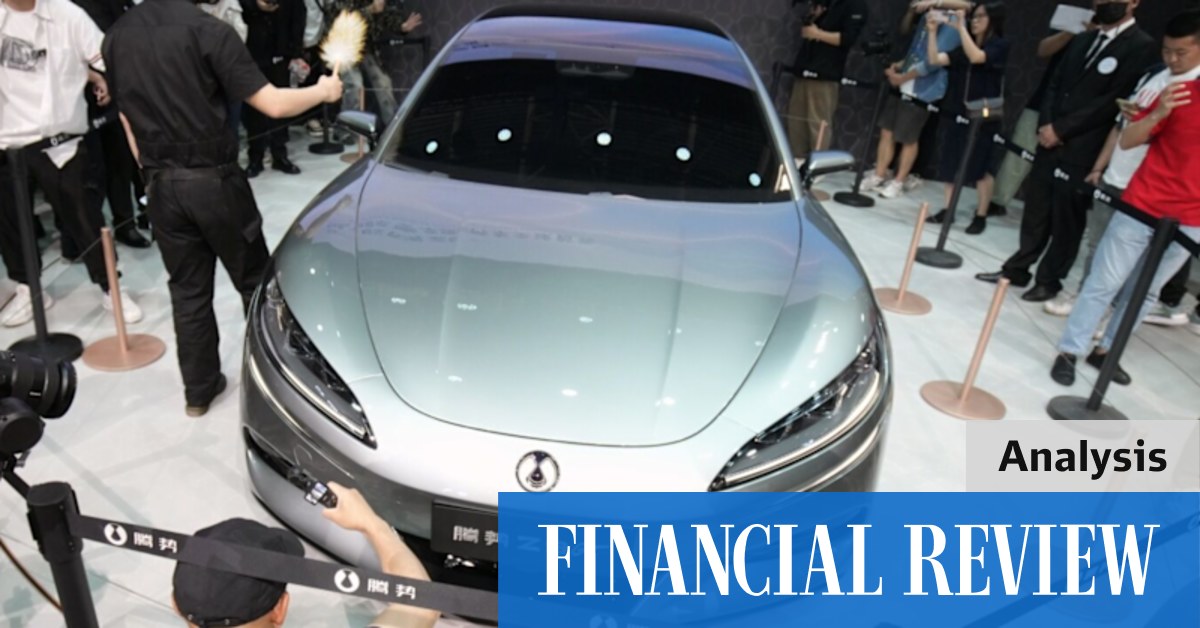
More than 80 per cent of electric vehicles sold in Australia come from China, which has now become the top manufacturing country for cars exported to the country. Over 40 different EV brands are now competing for Australian buyers, many of them little-known Chinese manufacturers that have never before sold cars in the country. At the Beijing Auto Show, where 1500 new cars were unveiled from 109 brands, industry executives described a "musical chairs" dynamic as dozens of Chinese manufacturers scramble to secure distribution partners in Australia. The consensus among executives is that only a handful of these car makers will survive a looming shakeout.
Repair industry warns of stranded owners
Brad Gannon, chief executive of Capricorn Group — which represents more than 30,000 auto repair shops across Australia — has warned that the influx of brands will unleash a decade of pain on unsuspecting motorists. "The risk for consumers isn't at the point of sale but when a repair is needed down the track, when parts may not be available, or brands may not be operating in the country anymore," Mr Gannon said. He said the problem could affect not just servicing but also re-sale values. Workshops are already reporting vehicles sitting idle for weeks or even months, leaving owners paying finance, insurance, and registration on cars they cannot use. "What we're hearing from across the industry is that the issues emerging now will define the next five to 10 years of vehicle ownership for many Australians," he added.
Hybrids offer alternative as EV drawbacks persist
Not all buyers are ready to go fully electric. Many Australian consumers cite high purchase prices, range and capability concerns, and inadequate charging infrastructure as reasons for hesitating. Hybrid and plug-in hybrid vehicles offer a middle ground, combining internal-combustion engine benefits — quick refuelling, driver engagement, lower upfront cost — with electric advantages such as quiet operation and reduced emissions. Dozens of hybrid and plug-in hybrid models are confirmed for Australian release by 2027, spanning SUVs, passenger cars, and commercial vehicles. Among them is the 2026 Cupra Formentor VZe, a performance crossover with a 200kW plug-in hybrid powertrain capable of more than 100km on electricity alone.
New Chinese hybrids enter market with long electric range
The 2026 Forthing Taikon 5, a medium SUV new to Australia, will be offered from June in both battery-electric and range-extender hybrid forms. The hybrid version uses a compact petrol engine as a generator for its 31.9kWh battery pack, which powers a 120kW/240Nm electric motor. It claims a maximum fuel range of 1050km, with 170km in pure EV mode. Another model, the 2026 GWM Haval Jolion Max, is expected to sit above the compact Jolion SUV but below the mid-sized H6, and will reportedly be offered with plug-in hybrid or battery-electric powertrains. These vehicles are part of a broader wave of Chinese-branded hybrids and EVs entering Australia, intensifying the competition — and the risks for consumers who bet on manufacturers that may not survive.
Price war in China drives aggressive export push
The flood of new entrants into Australia is being fuelled by a brutal price war in China's domestic auto market, where manufacturers are locked in a race to cut costs and capture market share. With margins squeezed at home, Chinese car makers are aggressively pushing into foreign markets to secure sales volumes. Australia, with its relatively open market and growing appetite for electrified vehicles, has become a prime target. Industry executives at the Beijing Auto Show described the situation as a high-stakes game of musical chairs, with dozens of manufacturers vying for limited distribution partnerships. The expectation is that many will fail, leaving Australian owners of their vehicles stranded without parts or service support.
Outlook: buyer beware in the electric vehicle boom
For Australian consumers, the immediate benefit of the Chinese EV influx is lower prices and greater choice. But the long-term risks are becoming increasingly clear. Brad Gannon's warning encapsulates the dilemma: the point of sale is not the moment of truth — it is when a repair is needed years later, and the manufacturer has vanished. As the number of EV brands in Australia continues to grow, the industry is bracing for a shakeout that could leave thousands of motorists with expensive, unrepairable vehicles. The next five to ten years will reveal which brands survive and which become costly lessons for early adopters.
The bottom line
- EV sales in Australia surged 42% in March, with Chinese-made vehicles accounting for over 80% of the market.
- More than 40 EV brands now sell in Australia, many from China, but only a few are expected to survive a looming industry shakeout.
- Capricorn Group CEO Brad Gannon warns of a 'decade of pain' as consumers may face unavailable parts and stranded vehicles when manufacturers exit.
- cars sitting idle for weeks or months, with owners still paying finance and insurance.
- Hybrid and plug-in hybrid models are entering the market as alternatives, but they too come from many of the same Chinese manufacturers.
- The price war in China's domestic market is driving an aggressive export push, increasing the risk of brand failures in Australia.



Hayden Young's three goals lead Fremantle to seventh straight win in 12-point thriller over Bulldogs

Leaked whiteboard notes reveal Brisbane Lions' brutal assessments of Essendon players ahead of AFL clash

Bulldogs' Bontempelli injury crisis deepens after 12-point loss to Fremantle