Royal Caribbean Orders Two More Icon-Class Ships, Extending Megaliner Boom Through 2030
The cruise line exercises an option with Meyer Turku for a sixth vessel and keeps a seventh under consideration, as the third ship in the class begins sea trials.
AUSTRALIA —
Key facts
- RCI-Royal Caribbean International confirmed the ICON fleet expansion on April 27, exercising an option for a sixth vessel with Meyer Turku.
- A seventh Icon-class ship remains under consideration pending final financial arrangements.
- Delivery dates are set for 2028 (Icon 5), 2029 (Icon 6), and 2030 (Icon 7).
- The third ship, Legend of the Seas, departed the Turku yard for initial sea trials covering more than 2,400 nautical miles over approximately 10 days.
- Icon-class ships measure about 248,000 gross tons and 364 metres in length, accommodating up to 7,600 passengers and over 2,000 crew.
- The lead ship, Icon of the Seas, entered service in 2024; Star of the Seas is scheduled to follow, and Hero of the Seas is under construction for delivery later this decade.
- The extended agreement between RCI and Meyer Turku reserves construction capacity through 2036.
Megaliner Expansion Confirmed
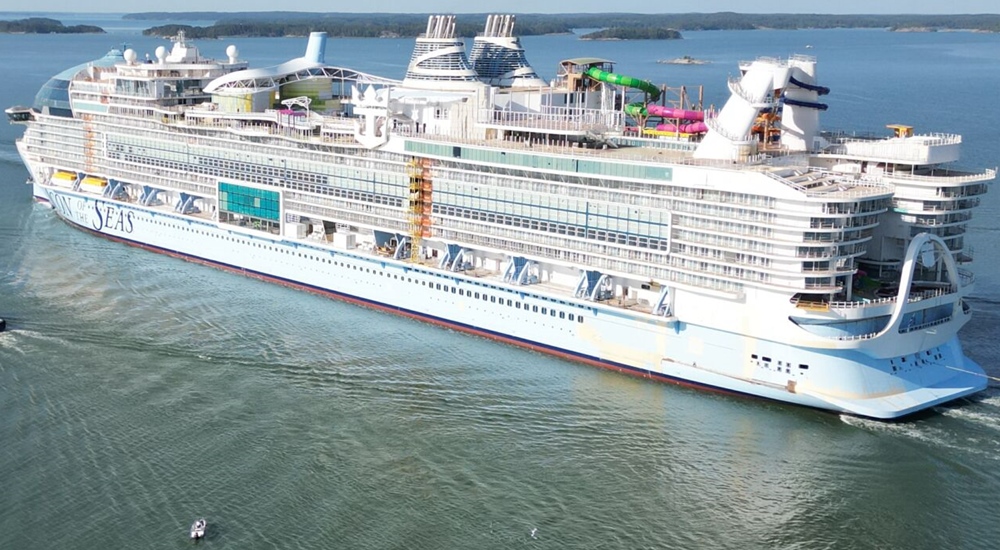
Royal Caribbean International has formally exercised a shipbuilding option with Finland’s Meyer Turku yard to add a sixth vessel to its Icon class, with a seventh unit under active consideration. The decision, announced on April 27, locks in delivery dates of 2028 for the fifth ship, 2029 for the sixth, and 2030 for the seventh, extending one of the largest commercial shipbuilding programmes currently underway. The move comes as the third Icon-class ship, Legend of the Seas, begins its initial sea trials after leaving the Turku yard. Over roughly ten days, the vessel will undergo technical evaluations covering propulsion, navigation systems, and handling in open water, traversing more than 2,400 nautical miles before returning for final outfitting.
The Ships and Their Specifications
Each Icon-class vessel displaces approximately 248,000 gross tons and stretches 364 metres in length, making them the largest passenger ships ever built. Designed to carry up to 7,600 passengers and a crew exceeding 2,000, the ships function as floating resorts, featuring multiple pools, water attractions, dining venues, and a range of accommodation categories. The lead ship, Icon of the Seas, entered service in 2024. Star of the Seas is slated to follow, and a fourth vessel, Hero of the Seas, is already under construction for delivery later this decade. Future ships in the series are expected to introduce incremental design changes, including expanded recreational areas and new accommodation concepts.
Shipyard Capacity and Long-Term Planning
The extended agreement between Royal Caribbean and Meyer Turku reserves construction capacity through 2036, ensuring the yard can support the sequential delivery of these massive vessels. The order maintains momentum behind a series that has already reshaped the cruise industry’s approach to scale and onboard amenities. By committing to one Icon-class ship per year through 2030, Royal Caribbean is signalling a sustained investment in high-capacity vessels. The programme has corresponding implications for operational staffing and technical management across the fleet, as each ship requires a crew of over 2,000 to run its complex systems.
Sea Trials and Technical Milestones
Legend of the Seas, the third ship in the class, is currently undergoing sea trials that will test its propulsion performance, navigation systems, and overall handling in open water. The trials, expected to cover more than 2,400 nautical miles, are a critical step before the vessel returns to Turku for final outfitting and eventual delivery. The successful completion of these trials will pave the way for the ship’s entry into service, adding another unit to a fleet that is already the largest in the world by passenger capacity. The class’s design aligns cruise vessels more closely with large-scale resort infrastructure, a model that Royal Caribbean has aggressively pursued.
Industry Context and Strategic Implications
The Icon class represents a bet on ever-larger ships as the cruise industry rebounds from the pandemic downturn. Royal Caribbean’s decision to extend the series through 2030 suggests confidence in sustained demand for high-capacity, amenity-rich cruising. The programme also deepens the relationship between the cruise line and Meyer Turku, a yard that has become a specialist in building the world’s largest passenger vessels. With capacity reserved through 2036, the partnership is set to define the upper end of cruise ship construction for more than a decade.
What Comes Next
The seventh Icon-class vessel remains contingent on final financial arrangements, leaving room for adjustment if market conditions shift. Royal Caribbean has not disclosed the total investment required for the expanded order, but each ship is estimated to cost well over $1 billion. As Legend of the Seas completes its sea trials and moves toward delivery, the yard will begin work on the fifth and sixth ships. The sequential schedule — one ship per year — suggests a deliberate pace that balances production capacity with market absorption.
A Fleet of Megaliner Resorts
With the Icon class, Royal Caribbean has transformed the cruise ship from a vessel into a destination. The ships’ size allows for onboard features that rival land-based theme parks, including multiple water slides, surf simulators, and a central park with live greenery. The expansion of the class through 2030 cements Royal Caribbean’s position as the industry leader in ship size and passenger capacity. Whether the market can sustain such rapid growth remains an open question, but for now, the company is betting big on big ships.
The bottom line
- Royal Caribbean has ordered a sixth Icon-class ship and is considering a seventh, with deliveries scheduled annually from 2028 to 2030.
- The third ship, Legend of the Seas, is undergoing sea trials covering more than 2,400 nautical miles.
- Each Icon-class vessel is about 248,000 gross tons, 364 metres long, and carries up to 7,600 passengers plus 2,000 crew.
- The agreement with Meyer Turku reserves construction capacity through 2036.
- The lead ship Icon of the Seas entered service in 2024; Star of the Seas and Hero of the Seas are in various stages of construction.
- Future ships will feature incremental design modifications, including expanded recreational areas and new accommodation concepts.

Hayden Young's three goals lead Fremantle to seventh straight win in 12-point thriller over Bulldogs

Leaked whiteboard notes reveal Brisbane Lions' brutal assessments of Essendon players ahead of AFL clash

Bulldogs' Bontempelli injury crisis deepens after 12-point loss to Fremantle