ShinyHunters Extortion Group Targets Ed-Tech Giant Instructure
Cybercriminals claim to have stolen 275 million records from the Canvas learning platform, highlighting systemic risks in the education sector.

AUSTRALIA —
Key facts
- The criminal group ShinyHunters breached Instructure, the provider of the Canvas learning management system.
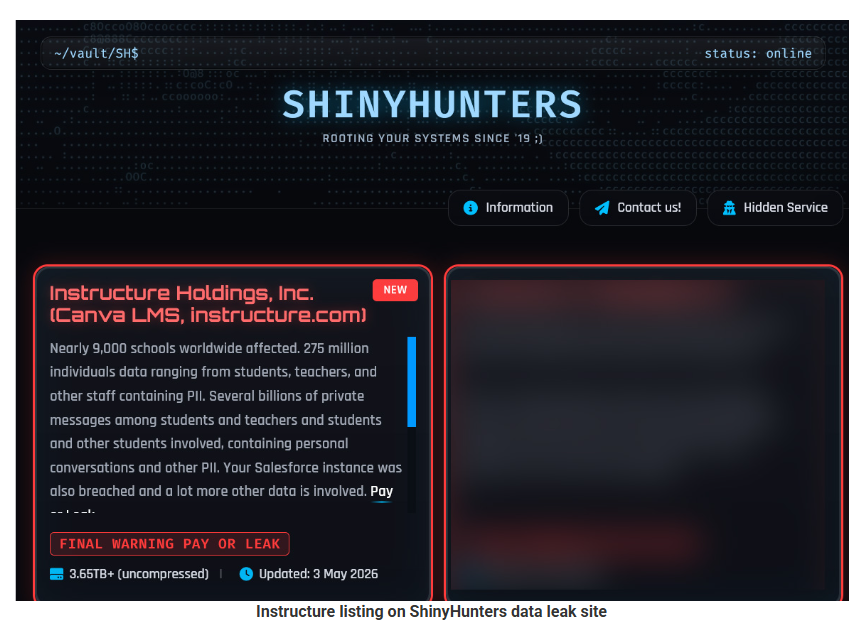
- ShinyHunters claims to have stolen approximately 275 million user records.
- Instructure confirmed a cyber incident and subsequent data breach affecting its cloud-hosted environment.
- The hackers demanded payment from Instructure by May 6, 2026, threatening to leak data.
- Over 40 percent of colleges and universities use Instructure's Canvas platform.
- Previous targets linked to ShinyHunters include Salesforce, Infinite Campus, and McGraw Hill.
- Stolen data samples reportedly include names, email addresses, and phone numbers, but not passwords.
Cybercriminals Target Education Sector's Trusted Vendor
The ed-tech giant Instructure, responsible for the widely used Canvas learning management system, has fallen victim to a significant cyberattack. The criminal extortion group known as ShinyHunters claims responsibility, alleging the theft of approximately 275 million user records. This incident serves as a stark reminder to the higher education sector, where more than 40 percent of colleges and universities rely on Canvas, that it remains a prime target for cybercriminals. While Instructure has stated it has contained the attack, cybersecurity experts point to the increased value cyberattackers derive from targeting third-party vendors rather than individual institutions. This strategic shift means that a single breach can compromise a vast network of downstream partners, amplifying the potential damage and reach of malicious actors. ShinyHunters has a documented history of targeting educational technology providers. Last fall, the group was linked to a breach at Salesforce, claiming the theft of around one billion customer records across numerous companies, including Instructure itself, which boasts 8,000 partner institutions. Earlier in 2024, ShinyHunters infiltrated Infinite Campus, a key student information system for K-12 schools, and took credit for accessing internal data at the publisher McGraw Hill.
Ransom Demand Issued with Data Leak Threat
The breach came to light late last week when Canvas users began reporting disruptions to their authentication keys. Shortly thereafter, Instructure received a direct ultimatum from ShinyHunters: "PAY OR LEAK." The hackers issued a deadline of May 6, 2026, for Instructure to comply, warning of "annoying [digital] problems" and urging the company to "make the right decision" to avoid becoming "the next headline." Instructure, while not directly commenting on the ransom demand, confirmed the incident through updates from its chief information security officer, Steve Proud. Proud acknowledged that the breach was "perpetrated by a criminal threat actor" and stated the company was "actively investigating this incident with the help of outside forensics experts." He assured that impacted institutions would be notified if the situation changed. Reports from a news outlet that viewed a sample of the stolen data provided by ShinyHunters indicated that the compromised information included names, email addresses, and some phone numbers. However, Instructure maintained that passwords and other sensitive data categories were unaffected by the breach.
Systemic Risks Exposed in the Education Supply Chain
The attack on Instructure highlights a critical vulnerability within the education technology supply chain. As one expert noted, the situation is akin to a bank robber discovering the precise location of armored car stops, with the real risk now extending "downstream." The potential for highly personalized phishing attacks, referencing real courses and conversations, significantly increases their likelihood of success. This incident underscores the challenge faced by organizations, even those with robust security measures, when a trusted vendor is compromised. The reliance on third-party providers creates a systemic risk where a breach at one point can cascade through an entire network of educational institutions and their users. Experts are calling for a more comprehensive approach to cybersecurity, emphasizing the need for stronger defenses, greater accountability within the supply chain, and a recognition that data breaches are not isolated incidents but rather part of a broader, strategic threat landscape.
Impact on Institutions and Users
ShinyHunters claims to have affected 8,809 school districts, universities, and online education platforms, with per-institution record counts varying from tens of thousands to several million. The group shared this list with a cybersecurity news outlet. The total number of records claimed by the hackers, around 275 million, encompasses data tied to students, teachers, and staff. For individuals whose data may have been compromised, practical steps are recommended to mitigate potential harm. These include carefully reviewing notifications from schools and Instructure to understand the specific data involved, such as names, email addresses, student IDs, or course information. Users are advised to change passwords immediately, especially for accounts that might use reused credentials. Implementing multi-factor authentication and educating younger users about the importance of not sharing security codes are also critical protective measures.
Ongoing Investigation and Recovery Efforts
As of Monday, its Canvas Data 2 and Beta services should be available to all customers. However, another version of the learning management system, Canvas Test, remains under maintenance as the company works to fully restore services and investigate the full scope of the breach. The company's chief information security officer, Steve Proud, has been providing regular updates on the incident's progression. The ongoing forensic investigation, aided by external experts, aims to determine the precise methods used by ShinyHunters to gain access and the full extent of the data exfiltrated. While Instructure's immediate response focused on containing the breach and restoring services, the long-term implications for data security within the education sector are significant. The incident is likely to spur further discussions and investments in cybersecurity resilience and vendor risk management across educational institutions.
The bottom line
- The criminal group ShinyHunters has targeted Instructure, the provider of the Canvas learning management system, claiming to have stolen 275 million user records.
- The attack highlights the significant cybersecurity risks posed by third-party vendors in the education sector.
- ShinyHunters issued a ransom demand to Instructure by May 6, 2026, threatening to leak compromised data.
- to include names and email addresses, but not passwords.
- Experts emphasize the need for systemic cybersecurity improvements, including supply-chain accountability.
- Individuals affected are advised to change passwords, enable multi-factor authentication, and verify communications from their institutions.



Antarctic Blast to Bring Snow to Australian Capitals

Arctic Blast Plunges Millions into Deep Freeze as May Cold Front Shatters Spring Warmth
