Hobart Endures Hottest May Day in 144 Years as Blocking High Stalls Over Tasman Sea
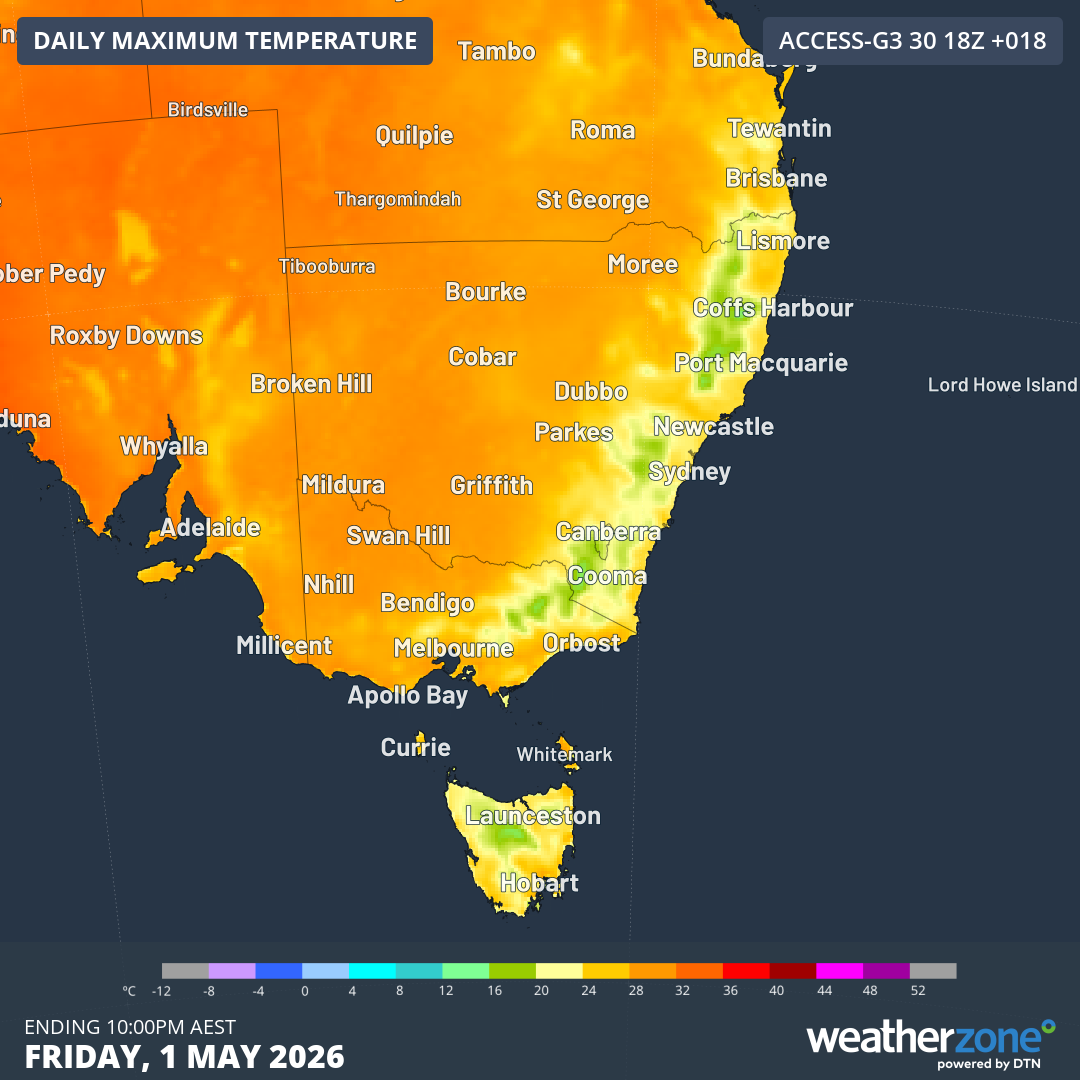
Temperatures soared more than 12°C above average across southeastern Australia, with at least 20 Tasmanian weather stations breaking monthly records on Friday.
AUSTRALIA —
Key facts
- Hobart reached 26.9°C on May 1, 2026, breaking the previous May record of 25.7°C set in 144 years of data.
- Adelaide hit 30.0°C, its warmest May day since 2013.
- Melbourne recorded 26.9°C, its hottest May day since 2002.
- Launceston's Ti Tree Bend station reached 24.3°C, surpassing the old May record of 22.9°C.
- Liawenee, known for its frigid nights, recorded a minimum of 9.9°C, breaking its previous May warmest minimum of 9.0°C.
- At least 20 Victorian weather stations also set May records, including Avalon (29.3°C) and Warrnambool (28.3°C).
A Stalled High Pressure System Drives Unseasonable Heat
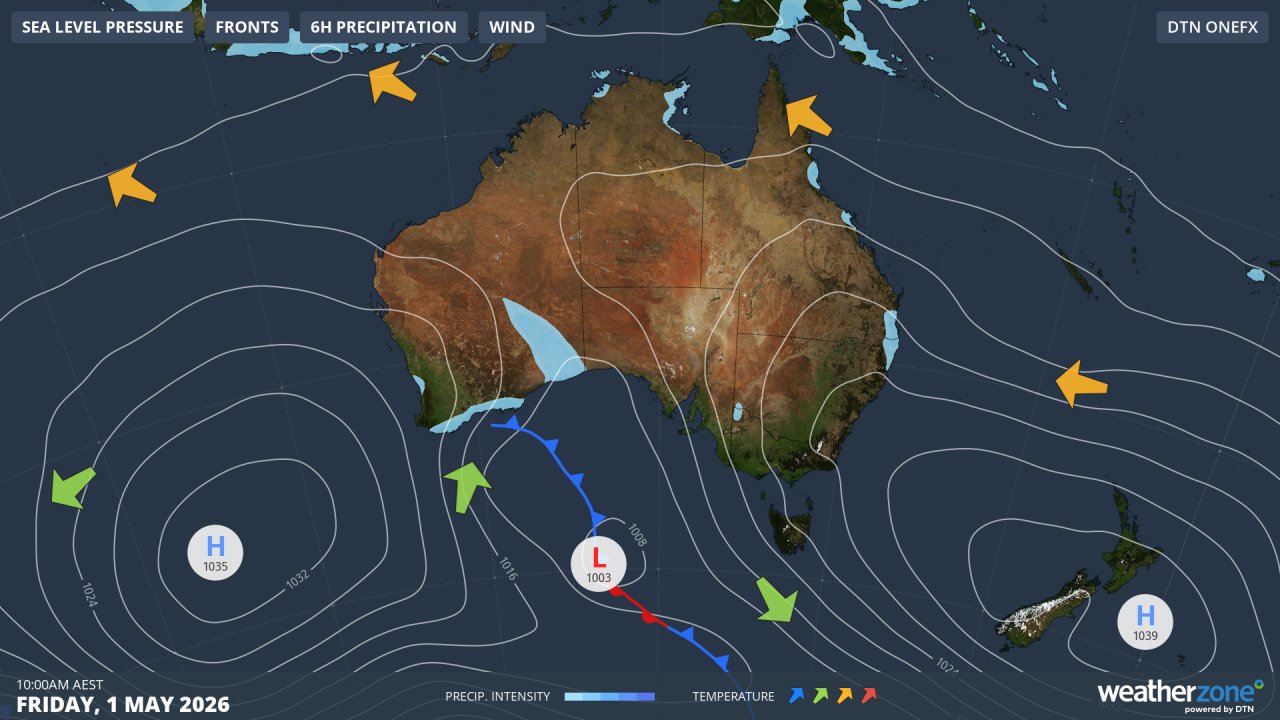
Just weeks before the official start of winter, southeastern Australia is experiencing a prolonged burst of summertime warmth. On Friday, temperatures surged more than 10 degrees Celsius above average from northern South Australia to southern Tasmania, shattering May records in multiple states. The cause is a stationary region of high pressure in the Tasman Sea, known as a blocking high. This system has prevented cold fronts from reaching the mainland southeast for nearly two weeks, instead drawing tropical air southward. The result has been a slow, steady climb in temperatures that culminated in Friday's extraordinary readings.
Hobart and Launceston Smash Monthly Records
Hobart recorded its hottest May day since records began in 1894, reaching 26.9°C at 3:02 pm — more than 12 degrees above the city's average May maximum of 14.6°C. The previous record of 25.7°C was exceeded by well over a degree. Hobart Airport's weather station also set a new May high of 27.5°C, the highest maximum recorded anywhere in Tasmania since 1936. Launceston, Tasmania's second city, broke its May record at 1:38 pm with a reading of 24.3°C at the Ti Tree Bend station, surpassing the old mark of 22.9°C. Across the state, at least 20 weather stations in 10 of Tasmania's 11 official Bureau of Meteorology forecast districts set new May records for either maximum or minimum temperatures.
Liawenee's Unusually Warm Night Highlights Widespread Anomaly
One of the most remarkable readings came from Liawenee, a tiny town on the Central Plateau famous for its frigid overnight temperatures. Liawenee holds the state record for the coldest temperature ever recorded: -14.2°C. Yet on Friday night, the mercury only dipped to 9.9°C, breaking its previous warmest May minimum of 9.0°C. This anomaly underscores the breadth of the heat event, which affected not only coastal capitals but also inland areas typically shielded from such warmth. The pattern of record-breaking minimums suggests that the blocking high is trapping heat even during the night, preventing the usual cooling.
Victoria and Other States Also See Record Heat
Victoria experienced its own share of May records, with at least 20 weather stations registering new highs. Geelong reached 29.3°C, its warmest May day since records began in 1964. Avalon, on Melbourne's western outskirts, hit 29.3°C at 1:02 pm, beating the old record of 28.0°C. The southwestern city of Warrnambool reached 28.3°C, surpassing its previous May record of 27.9°C. Within the Melbourne metropolitan area, Moorabbin Airport recorded 28.1°C at 2:37 pm, breaking its old record of 27.4°C. South Australia and New South Wales also contributed a smattering of record highs, though the most concentrated record-breaking occurred in Tasmania and Victoria.
A Sudden Shift: Polar Air and Winter Weather on the Horizon
After weeks of stagnant weather, volatility is about to return. A cool, gusty and stormy change will follow the heat in the coming days, sweeping across the region. This will be followed by an intense wave of polar air midweek, which has the potential to bring a wintry mix of showers, thunderstorms, hail and snow. The transition from record heat to wintry conditions highlights the extreme variability that blocking highs can produce. While the stalled system has delivered unseasonable warmth, its breakdown will release a surge of cold air from the Southern Ocean, likely catching many residents off guard after the prolonged warmth.
Climate Context and the Significance of the Records
The May 1, 2026 heat event is notable not only for its intensity but for its timing — just weeks before winter. The fact that Hobart's record was broken by more than a degree, and that dozens of stations across two states set new marks, points to a pattern of increasingly frequent and severe temperature extremes. While individual weather events cannot be directly attributed to climate change without formal attribution studies, the occurrence of such anomalies fits within the broader trend of warming observed across Australia in recent decades. The blocking high itself is a natural atmospheric phenomenon, but the background warming of the climate system amplifies the temperatures it can produce.
The bottom line
- Hobart's May record of 26.9°C was more than 12°C above its average May maximum, highlighting the extreme nature of the event.
- A blocking high in the Tasman Sea stalled cold fronts for nearly two weeks, drawing tropical air south and causing temperatures to climb steadily.
- At least 20 Tasmanian and 20 Victorian weather stations set May records, with some records broken by wide margins.
- Liawenee, typically one of Tasmania's coldest locations, recorded its warmest May minimum on record at 9.9°C.
- The heat will be short-lived, with a cold front and polar air expected to bring wintry conditions including snow by midweek.
- The event underscores the potential for extreme temperature swings in a warming climate, even in late autumn.

Hayden Young's three goals lead Fremantle to seventh straight win in 12-point thriller over Bulldogs

Leaked whiteboard notes reveal Brisbane Lions' brutal assessments of Essendon players ahead of AFL clash

Bulldogs' Bontempelli injury crisis deepens after 12-point loss to Fremantle