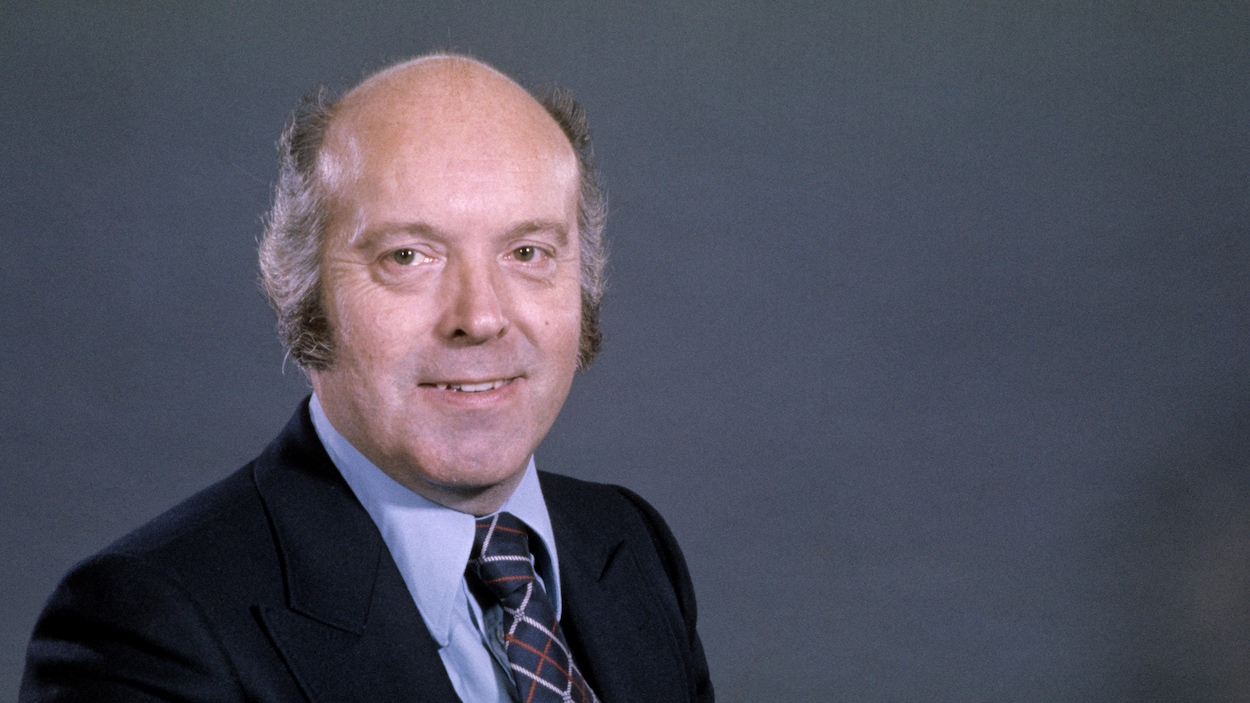
Claude Morin, Architect of Quebec Sovereignty Strategy, Dies at 96
The former minister and key figure of the Quiet Revolution leaves a legacy of constitutional battles and a controversial collaboration with the RCMP.

CANADA —
Key facts
- Claude Morin died at age 96 in Quebec City.
- He served as minister under Premier René Lévesque and as deputy minister for five premiers.
- Morin was born on May 16, 1929, in Montmorency (Beauport), Quebec.
- He earned a master's in economics from Université Laval and a Master of Social Welfare from Columbia University.
- Morin authored the 'étapisme' strategy for Quebec sovereignty, adopted by the Parti Québécois in 1974.
- He collaborated with RCMP agent Léo Fontaine from 1975, meeting in Quebec City hotels.
- Morin quit politics after the November 5, 1981 constitutional agreement known as the 'Night of the Long Knives'.
A Life Woven Into Quebec's Political Fabric
Claude Morin, the former Parti Québécois minister and architect of the sovereignty movement's gradualist strategy, died Tuesday in Quebec City at the age of 96. His death closes a chapter on a career that spanned seven decades and touched every major constitutional debate in modern Quebec. Morin was a professor, senior civil servant, minister, and author who served five premiers: Jean Lesage, Daniel Johnson, Jean-Jacques Bertrand, Robert Bourassa, and René Lévesque. He was present at the creation of the Quiet Revolution and later at its most contentious constitutional battles.
From Academia to the Corridors of Power
Born on May 16, 1929, in the working-class village of Montmorency, now part of Beauport, Morin grew up near the Montmorency Falls. He studied at Collège Saint-Grégoire and later at Université Laval, earning a bachelor's in social sciences and a master's in economics. He also obtained a Master of Social Welfare from Columbia University in New York. In 1956, he joined the faculty of Université Laval's social sciences department at the invitation of Father Georges-Henri Lévesque, the influential Dominican sociologist. But his academic career was interrupted in 1960 when he began writing speeches for Premier Jean Lesage, earning $200 per text. By 1963, Lesage had appointed him deputy minister of federal-provincial affairs.
The Quiet Revolution's Architect in the Shadows
As deputy minister, Morin worked to repatriate powers from Ottawa to Quebec, helping his colleague René Lévesque convince Lesage of the merits of nationalizing electricity. He remained in the post under premiers Daniel Johnson, Jean-Jacques Bertrand, and Robert Bourassa, preparing Quebec's positions for numerous constitutional conferences. Morin was part of the delegation that accompanied Bourassa to Europe in spring 1971 and to the Victoria conference in June 1971, where Quebec rejected a proposed constitutional charter because it granted no new powers. Disillusioned with Bourassa, Morin resigned as deputy minister in October 1971, having twice refused to run as a Liberal candidate.
The Etapisme Strategy and the Parti Québécois
After returning to teaching, Morin joined the Parti Québécois in 1972, paying his $3 membership fee with a receipt signed by René Lévesque himself. He ran unsuccessfully in the 1973 election in Louis-Hébert. Reflecting on the defeat during a stay on Île d'Orléans at the home of his brother-in-law, singer Félix Leclerc, Morin developed the concept of 'étapisme' — a gradual approach to sovereignty through a referendum. At the PQ's fifth congress in November 1974, the strategy won two-thirds of the vote, paving the way for the party's victory in 1976. Morin became a key minister in Lévesque's government, but the 1981 'Night of the Long Knives' — when Ottawa and nine English-speaking provinces reached a constitutional agreement without Quebec — convinced him to leave politics and return to teaching.
The RCMP Collaboration That Tarnished a Reputation
In summer 1974, Morin received an unexpected call from RCMP agent Léo Fontaine, who wanted to establish a channel to discuss risks of French intelligence infiltration of the PQ, which itself might be infiltrated by Soviets. After hesitating, Morin agreed in early 1975, believing he could prevent federal 'dirty tricks' and glean information using spy-film tactics. Their meetings often took place in Quebec City hotels — the Hilton, the Auberge des gouverneurs, or the Concorde on Grande-Allée — sometimes lasting over two hours. The collaboration, revealed years later by journalist Normand Lester, stained Morin's legacy, with some remembering him as a spy and others as a great public servant.
A Legacy of Contradictions
Morin's career was marked by two defining events: the adoption of the étapisme mechanism and the RCMP revelations. He defended his reputation until the end, insisting he acted to protect the PQ from federal machinations. In his memoirs, 'Mes premiers ministres,' he recounted his service under five premiers. René Lévesque described him in his 1986 memoirs as 'an indefatigable digger, always alert, constantly on the lookout for the slightest traps that those in Ottawa could set for us, who detested him with a cordial intensity.' Morin is survived by his legacy as a key architect of Quebec's modern political identity, a man who helped shape the province's place in Canada and the world.
The bottom line
- Claude Morin was a central figure in Quebec's Quiet Revolution, serving five premiers as a senior civil servant and later as a PQ minister.
- He devised the 'étapisme' strategy for Quebec sovereignty, which became official PQ policy and led to the 1980 and 1995 referendums.
- His collaboration with the RCMP from 1975 remains a controversial aspect of his career, revealed by journalist Normand Lester.
- Morin resigned from politics after the 1981 constitutional agreement that excluded Quebec, a decision that cemented his legacy as a defender of provincial rights.
- He authored several books on Quebec politics and federal-provincial relations, including 'Mes premiers ministres.'
- Morin died at 96 in Quebec City, leaving a complex legacy as both a nation-builder and a figure of intrigue.


Cherie DeVaux Makes History as First Female Trainer to Win Kentucky Derby

Olivia Rodrigo Announces 65-Date 'Unraveled Tour' with Two-Night Stops in Pittsburgh, Philadelphia, and Hartford
CRA refunds $647 million from repealed digital services tax after U.S. threats
