Panama President Accuses US of Visa Threats as China Port Dispute Escalates
José Raúl Mulino says Washington is pressuring officials with ties to Chinese companies, while Beijing retaliates against Panama-flagged vessels.

CANADA —
Key facts
- Panama's Supreme Court ruled the Hong Kong-based Panama Ports Company concession unconstitutional in January 2025.
- Panama seized the Balboa and Cristóbal terminals in February and appointed Denmark's APM Terminals as interim operator.
- China's Hong Kong and Macao Affairs Office called the ruling 'absurd' and warned of 'heavy prices' in February.
- Chinese authorities sharply increased inspections and detentions of Panama-flagged vessels in March and April.
- On April 29, the US and five other nations issued a joint statement backing Panama's sovereignty.
- Panamanian President Mulino accused the US Embassy of threatening visa revocations on October 16, 2025.
- The Strait of Hormuz has been effectively closed for weeks due to US-Israeli attacks on Iran.
- Ferdinand Rauch, an economist, warned prolonged canal disruption could dampen global GDP measurably.
A New Maritime Flashpoint
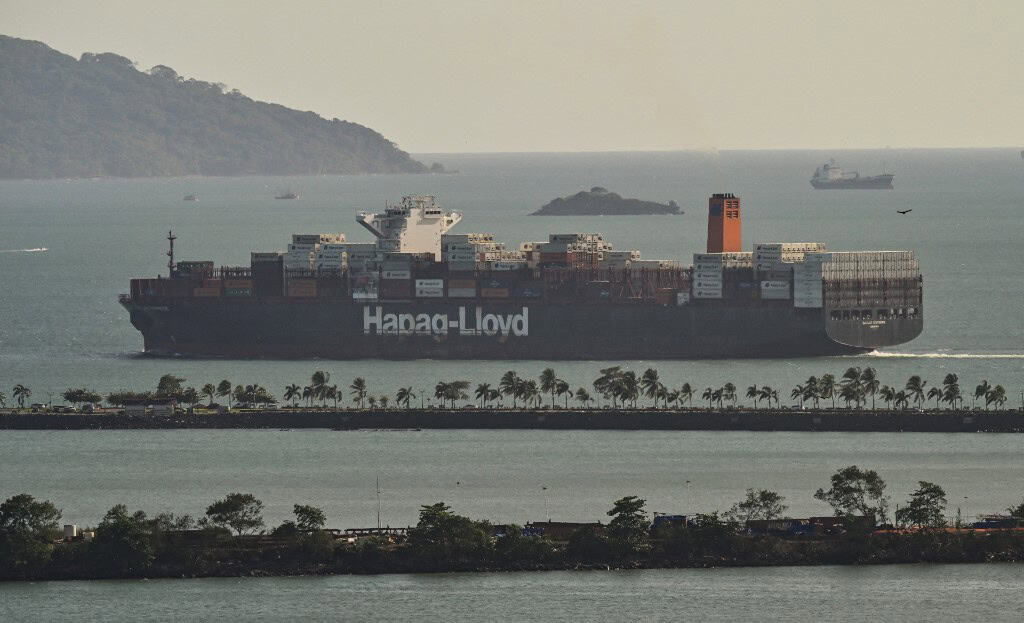
The Panama Canal has become the latest theatre of great-power rivalry, with the United States and China trading accusations over influence at one of the world's most vital shipping chokepoints. The standoff, which erupted after Panama's Supreme Court invalidated a Hong Kong company's port concession, has drawn in regional allies and raised fears of broader trade disruption. Panamanian President José Raúl Mulino on October 16 accused the U.S. Embassy of threatening to revoke visas of officials and business figures with ties to Chinese companies. 'They're free to give and take a visa to anyone they want, but not threatening that, "If you don't do something, I'll take the visa,"' he said at his weekly news conference, describing the alleged pressure as inconsistent with the friendly relations he seeks with Washington.
The Port Concession That Sparked a Crisis
The dispute traces back to January 2025, when Panama's Supreme Court declared unconstitutional the concession that allowed Panama Ports Company, a subsidiary of Hong Kong-based CK Hutchison Holdings, to operate two key terminals at the canal's entrances. The ruling invalidated both the original 1997 contract and its 2021 extension. In February, the government published the decision and ordered the Panama Maritime Authority to immediately occupy the Balboa and Cristóbal terminals, citing urgent social interest. Officials seized all equipment and operations. The authority then appointed APM Terminals, a subsidiary of Denmark's A.P. Moller-Maersk group, to manage the ports temporarily while a new concession process is prepared. President Mulino has stated that no single company will again control both terminals.
Beijing's Retaliation and Washington's Response
China reacted swiftly. In early February, the Hong Kong and Macao Affairs Office called the court ruling 'absurd' and warned that Panama would pay 'heavy prices both politically and economically' if it did not reverse course. Mulino rejected the statement the next day, declaring that 'Panama is a state governed by the rule of law' and 'will not be threatened by any foreign power.' By March and April, Chinese authorities had sharply increased inspections and detentions of Panama-flagged vessels in Chinese ports. The U.S. Federal Maritime Commission and regional governments described the actions as targeted economic pressure linked to the port ruling. On April 29, the United States joined Bolivia, Costa Rica, Guyana, Paraguay and Trinidad and Tobago in a joint statement condemning what they called 'China's targeted economic pressure' and 'a blatant attempt to politicise maritime trade and infringe on the sovereignty of the nations of our hemisphere.'
Mulino's Balancing Act
President Mulino has repeatedly sought to keep Panama out of the larger U.S.-China rivalry. In November 2025, he publicly denied reports that the United States was using Panamanian territory to prepare military operations against Venezuela. 'Panama is not lending its territory for any hostile act against Venezuela or any other country,' he said at the time, after U.S. military training exercises in Panama drew regional speculation. His latest accusation of visa threats underscores the intensifying pressure Washington is applying to limit Chinese economic involvement around the canal. Mulino insisted the broader dispute 'doesn't involve Panama,' even as his country finds itself at the centre of a geopolitical tug-of-war.
The Strait of Hormuz Factor
The Panama Canal standoff comes against the backdrop of a separate crisis at the Strait of Hormuz, which has been effectively closed for weeks since the launch of US-Israeli attacks on Iran. The waterway has seen multiple attacks and seizures of ships, forcing oil tankers to seek alternative routes and driving up demand for canal crossings. Some companies are reportedly paying up to $4 million per transit, and the blockage has boosted Panama Canal oil tanker traffic. Together, these frictions point to a broader shift in international shipping, with major powers increasingly willing to contest control of global shipping lanes. Analysts warn that any disruption to the canal, even temporarily, could 'disrupt global trade significantly.' Ferdinand Rauch, an economics professor at the University of St Gallen in Switzerland, said it 'would lead to temporary supply bottlenecks, stock market volatility, inflationary upward pressure and could dampen global GDP measurably if prolonged.'
Unravelling Maritime Norms
The dual crises raise questions over whether longstanding international laws governing the world's seas are beginning to unravel. The US and its allies accuse China of politicising maritime trade, while Beijing calls such accusations 'hypocritical' and says Washington is undermining sovereignty. China has denied the allegations, calling them 'hypocritical' and accusing the US of politicising global commerce. The back-and-forth has left the shipping industry in a state of uncertainty, with no clear resolution in sight. As the world's two largest economies vie for influence over critical waterways, the Panama Canal has become a symbol of the new era of maritime contestation.
What Comes Next
Panama is now preparing a new concession process for the Balboa and Cristóbal terminals, with APM Terminals serving as interim operator. President Mulino has vowed that no single company will again control both ports, a move that could further complicate relations with Beijing. Meanwhile, the increased inspections and detentions of Panama-flagged vessels in Chinese ports show no signs of abating. The US and its allies have pledged to support Panama's sovereignty, but the effectiveness of their diplomatic backing remains untested. With the Strait of Hormuz still closed and tensions simmering on multiple fronts, the global trading system faces a stress test unlike any in recent memory.
The bottom line
- Panama's Supreme Court invalidated a Hong Kong company's port concession, triggering Chinese retaliation against Panama-flagged vessels.
- President Mulino accused the US Embassy of threatening visa revocations, highlighting Washington's pressure to limit Chinese influence.
- China warned Panama of 'heavy prices' and escalated inspections of its ships, while the US and five allies issued a joint statement backing Panama.
- The Strait of Hormuz closure has increased reliance on the Panama Canal, with some companies paying up to $4 million per transit.
- Analysts warn that prolonged disruption to the canal could cause supply bottlenecks, inflation, and lower global GDP.
- The dispute reflects a broader erosion of international maritime norms as major powers contest control of key shipping lanes.




Rare May Nor'easter Pummels Maritimes with Rain, Gusts and Snow

Céline Galipeau steps down as anchor of Radio-Canada's flagship newscast after 17 years

23 U.S. States Declare Emergencies as Winter Storm Threatens 200 Million
