Gold and Silver Slide as Escalating Middle East Tensions Fuel Inflation Fears
Bullion drops 2.4% after missile threat from Iran, while silver falls 3.5% amid rising oil prices and rate hike expectations.
CANADA —
Key facts
- Gold fell as much as 2.4% on Tuesday, extending Monday's decline.
- Silver dropped 3.5%, while platinum and palladium also declined.
- its air defense systems responding to a missile threat from Iran.
- Iran warned it is tightening its grip on the Strait of Hormuz.
- Brent crude prices have doubled since the start of the year.
- U.S. inflation accelerated in March, reinforcing expectations the Fed may keep rates on hold or hike.
- Bart Melek of TD Securities said the Fed's next move may be a hike if oil problems persist.
- UBS analyst Giovanni Staunovo said gold remains negatively correlated to oil in the short term.
Middle East Missile Threat Sends Precious Metals Lower
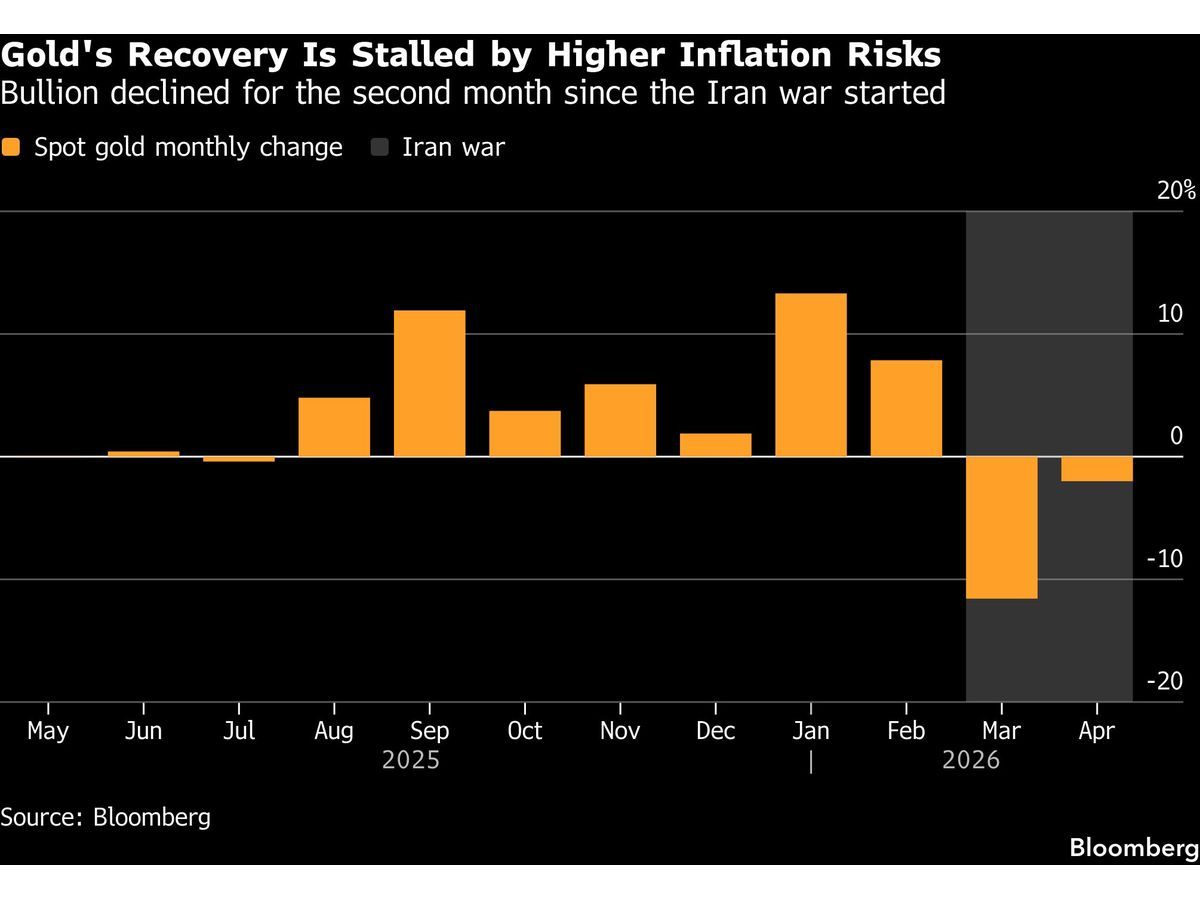
Gold fell sharply on Tuesday, dropping as much as 2.4% to extend the previous day's decline, after the United Arab Emirates said its air defense systems were responding to a missile threat from Iran. Tehran warned it was tightening its grip on the Strait of Hormuz, a critical chokepoint for global oil shipments. signaled that attacks are still ongoing, threatening a fragile ceasefire between the US and Iran and keeping energy prices elevated. Spot gold settled 2% lower at $4,516.85 an ounce in New York. Silver fell 3.5%, while platinum and palladium also declined. The Bloomberg Dollar Spot Index rose 0.2%, adding pressure on dollar-denominated commodities.
Oil Price Surge Fans Inflation Concerns and Rate Hike Bets
Brent crude prices have touched double the levels seen at the start of the year, raising concerns about a global economic slowdown and faster inflation. Surging energy prices and a lack of availability of key inputs such as fertilizer will likely raise inflationary risks, increasing the chance of a Federal Reserve rate hike, global head of commodity strategy at TD Securities. “We may start to see these forces hit food and continue to keep fuel prices elevated, suggesting that there is a risk that these shocks will feed through into core inflation,” Melek said in an interview. “If this oil problem continues, the Fed’s next move may well be a hike.” Such a situation would support the US dollar, keep rates high and drive down gold prices, he added.
Central Banks Hold Rates as Inflation Accelerates
U.S. inflation accelerated in March as the war raised gasoline prices, reinforcing expectations that the Federal Reserve could keep interest rates on hold well into next year. The European Central Bank and the Bank of England left interest rates unchanged on Thursday, following similar decisions this week by the Fed and the Bank of Japan. Higher interest rates reduce the appeal of non-yielding assets like gold and silver, which compete with yield-bearing instruments such as Treasuries. Gold, traditionally seen as a hedge against geopolitical uncertainty and inflation, can come under pressure in a high interest rate environment. UBS analyst Giovanni Staunovo noted that gold remains negatively correlated to oil in the short term, as it impacts interest rate expectations.
Silver and Other Metals Follow Gold Downward
Spot silver prices fell 0.6% to $73.27 per ounce on Friday, while platinum was down 1.3% at $1,960.30, and palladium lost 0.6% to $1,515.37. The broader precious metals complex declined as the dollar strengthened and rate hike expectations weighed. Silver, which has both industrial and monetary uses, was particularly sensitive to the growth slowdown fears triggered by high oil prices. On a weekly basis, gold was on track for a loss of 1.2%, with spot gold down 1.1% at $4,568.82 per ounce on Friday. U.S. gold futures for June delivery fell 1.1% to $4,579.70.
Iran Threatens Retaliation as Strait of Hormuz Tensions Rise
Iran said on Thursday it would respond with “long and painful strikes” on U.S. positions if Washington renewed attacks, reiterating its claim to the Strait of Hormuz. A fresh plan announced by US President Donald Trump to help vessels through the key waterway has left shipping executives perplexed, as attacks continued and traffic remains at a near standstill. The ongoing disruption keeps oil prices elevated and inflation risks alive. underscored that the conflict is far from resolved, despite diplomatic efforts. The Strait of Hormuz is a vital passage for about a fifth of the world's oil supply, and any sustained disruption could have severe global economic consequences.
Traders Eye US Treasury Borrowing Plans and Employment Data
Looking ahead, traders will focus on this week’s announcement of the US Treasury Department’s borrowing plans for the next three months, an array of Federal Reserve speakers and a loaded calendar of economic releases, crowned by monthly employment data. The information should give clues on the trajectory of rates and the US fiscal deficit. Stronger-than-expected data could reinforce the case for higher rates, further pressuring gold and silver. Melek and other analysts will be watching for any signs that the Fed might pivot, but for now, the combination of high oil prices and sticky inflation keeps the bias toward tighter monetary policy.
UBS Maintains Constructive Long-Term Outlook for Gold
Despite the near-term headwinds, UBS analyst Giovanni Staunovo said the bank retains a constructive outlook over the next six to 12 months. “Uncertainty surrounding upcoming (U.S.) midterm elections, expectations of a weaker U.S. dollar over time, and declining real interest rates (as the Fed cuts) will likely support investment demand alongside continued central bank demand,” he said. These factors could drive prices towards $5,900 per ounce by late 2026. For now, however, the immediate trajectory for gold and silver depends on whether Middle East tensions escalate further and whether central banks are forced to respond with rate hikes. The correlation between oil and precious metals remains negative in the short term, but the longer-term outlook hinges on the path of inflation and interest rates.
The bottom line
- Gold fell 2% to $4,516.85 and silver dropped 3.5% as Middle East tensions escalated, with the UAE reporting a missile threat from Iran.
- Brent crude prices have doubled since January, fueling inflation fears and raising the likelihood of a Fed rate hike.
- Bart Melek of TD Securities warned that if oil problems persist, the Fed's next move may be a hike, which would support the dollar and pressure gold.
- Central banks in the US, Europe, UK, and Japan have all held rates steady, reinforcing expectations of a prolonged high-rate environment.
- Iran threatened retaliation against US positions and tightened its grip on the Strait of Hormuz, keeping oil supply risks elevated.
- UBS remains constructive on gold over 6-12 months, citing midterm election uncertainty, a weaker dollar, and eventual Fed cuts, with a price target of $5,900/oz by late 2026.



Rare May Nor'easter Pummels Maritimes with Rain, Gusts and Snow

23 U.S. States Declare Emergencies as Winter Storm Threatens 200 Million

Flyers and Hurricanes Set for First Postseason Meeting After Four Overtime Thrillers
