IO Interactive’s 007 First Light Forges a Bond for Every Era, Hands-On Demo Reveals
The Hitman developer’s first licensed game offers a young, malleable 007 who blends stealth, social bluffing, and explosive action across a globe-trotting origin story.

UNITED KINGDOM —
Key facts
- 007 First Light is James Bond’s first video game in nearly 15 years.
- The game is developed by IO Interactive, the studio behind the Hitman series.
- Actor Patrick Gibson portrays a young Bond, combining traits from Ian Fleming, Pierce Brosnan, and Daniel Craig.
- Senior combat designer Tom Marcham cited Daniel Craig’s krav maga and Pierce Brosnan’s ‘craziness’ as influences.
- Art director Rasmus Poulsen described the game’s aesthetics as a collision of timeless romance and modern edge.
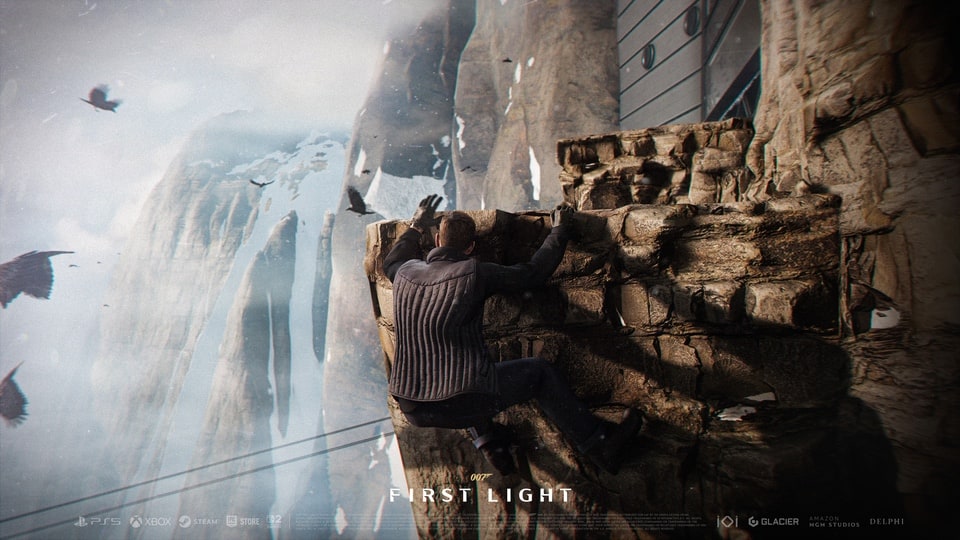
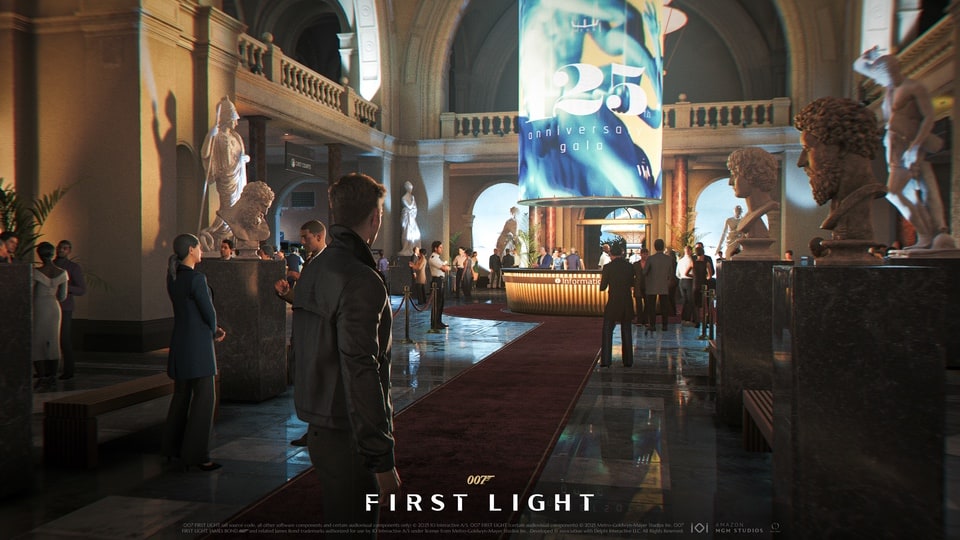
- The demo includes missions in Iceland, Malta, and a Kensington tech mogul event.
- Players use gadgets like the Q-Lens and Q-Watch, which require scavenging batteries and hand sanitiser.
- The game features a torture-interrogation scene reminiscent of Goldfinger’s laser table.
A New Bond for a New Generation
After nearly 15 years without a major video game appearance, James Bond returns in 007 First Light, an origin story developed by IO Interactive, the studio celebrated for its Hitman series. The game introduces a younger, less polished 007, portrayed by actor Patrick Gibson, who previously played a young Dexter Morgan. Gibson’s Bond is an amalgam of the character’s cinematic history: the facial scar nods to Ian Fleming’s novels, the charm echoes Pierce Brosnan, and the brutal hand-to-hand combat channels Daniel Craig’s Casino Royale. Crucially, Gibson brings an outsider’s unease and a nascent arrogance that MI6 will later weaponise. The decision to craft a Bond for all fandoms risked pleasing none, but early impressions from a hands-on demo suggest the performance works. The character’s multifaceted nature allows the game to shift fluidly between playstyles, from social stealth to gadget-infused infiltration to explosive action. As senior combat designer Tom Marcham put it, ‘We’re truly happy for you to pick whatever [style] you want. We trust you to pick the one you’ll have the most fun with. We’ve designed for all of them.’
From Iceland’s Ice to Kensington’s Glitter
The demo begins with Bond on an SAS mission in Iceland, the sole survivor after two helicopters are shot down. Struggling with hypothermia, he must evade armed enemies using rocks, tall grass, and cover while a broken radio threatens to betray his position. An MI6 officer guides him not to safety but into the heart of a base filled with explosives, hostages, and a glowing habitat dome. Bond goes off-script, proving his worth for serious training. Later, a training scenario in Malta introduces the Q-Lens, a gadget that triggers distractions from a distance. Guards are instructed to play dumb, allowing Bond to lure them into traps or simply brawl his way to a capture-the-flag objective. The rules of engagement restrict lethal force: Bond can only use a gun when genuinely under fire from armed enemies. The training wheels come off in a mid-game mission set at a glitzy Kensington tech mogul event, where Bond must bluff, eavesdrop, and pickpocket his way past security.
Stealth, Social Bluffing, and Hitman DNA
The Kensington mission showcases the game’s Hitman heritage. Bond must infiltrate a press conference, eavesdropping on guests to uncover routes to a target. Options include posing as a photographer or sending a guard on a break by sniffing out a staff roster. Unlike Agent 47, Bond is more social animal than predator: if caught, he can use ‘Instinct’ to placate accusers with a smug one-liner. The game also allows de-escalation through combat, such as punching a guard or braining him with a keyboard. Once inside the event’s heart, classic stealth action takes over: using the Q-Lens to distract guards, crawling through vents, and watching patrol patterns. The Q-Watch adds a laser for cutting metal, a blinding flash, and darts that induce woozyness. These abilities require scavenging batteries from phones and hand sanitiser from tables—a detail that feels both daft and distinctly un-Bond. Yet the game flows seamlessly from stealth to set pieces, including a boss fight where Bond must trigger experimental jet engines to damage an enemy who adapts to repeated traps.
Combat That Embraces Chaos and Cinematic Flair
When stealth fails, 007 First Light delivers satisfying combat. Bond vaults over tables, clamber along ledges marked with white and yellow moss, and brawls with krav maga-inspired moves. On lower difficulties, players can mash the punch button and counter when a yellow indicator appears, but the system also allows slick finishers, throwing objects, and smashing enemies into scenery. The game encourages improvisation: running out of ammo, Bond can throw an empty gun at an enemy’s head, rush in for a takedown, and grab the fallen foe’s weapon. Senior combat designer Tom Marcham noted Daniel Craig’s influence for his ‘arguably the best action sequences’ and use of krav maga, but also drew on Pierce Brosnan’s era for its ‘craziness’ and high-drama combat. ‘We’re very keen for him not to be 100% competent from the start,’ Marcham said. ‘We need a little more mess in there.’ The result is a Bond who feels like an action adventure star, with set pieces that recall Uncharted’s blockbuster choreography—though some transitions and animations show slight clumsiness, a departure from Hitman’s clockwork precision.
Thematic Tension Between Timeless Romance and Modern Edge
Art director Rasmus Poulsen sees the game’s aesthetics as a collision of two forces: timeless, romantic adventure and a crisp, modern edge. ‘These are the aesthetics that are fighting, just as they are themes that are fighting,’ he said. ‘It’s longevity versus the promise of a tech utopia. How to belong, but also to challenge what came before.’ This tension mirrors IO Interactive’s own challenge: drawing on reliable Hitman experience while finding new ways to excite. Poulsen said the Bond project has been ‘a wonderful expansion on our capabilities.’ The game’s narrative arc follows Bond from raw recruit to a spy who will one day be weaponised by MI6. The demo includes a torture-interrogation scene where Bond, strapped to a chair, must time goading quips to hold his captor’s attention without succumbing to pain—a direct nod to Goldfinger’s laser table, but with the player living the moment. Poulsen emphasised that the game prioritises forward momentum over grand, open sandboxes: ‘Rather than having grand, open sandboxes, it’s important for us that you feel certain things at certain times, to bring that story through and have the player feel the forward momentum.’
A Promising Balance Between Familiarity and Innovation
007 First Light walks a tightrope between honouring Bond’s legacy and forging a new identity. The Venn diagram of Bond and Hitman is nearly an eclipse: both are globetrotting adventures with aesthetically aspirational villainy. Yet the game distinguishes itself through Bond’s social abilities, the restriction on lethal force until under fire, and a story that emphasises character growth. The price of forward momentum is less player agency on a grand scale, but the demo suggests the trade-off is worthwhile. The game’s set pieces—from a bin lorry chase through a fashion boutique to a museum hall with destructible LED walls—demonstrate a willingness to embrace blockbuster spectacle. While some animations lack the polish of Hitman, the overall experience feels slick and satisfying. As one player noted after a guns-blazing playthrough, ‘I was having a grand old time, even if set piece after set piece had me wondering quite where this mission was going to actually end!’
What Comes Next for 007 in Gaming
With 007 First Light, IO Interactive is betting that a younger, messier Bond can appeal to both longtime fans and a new generation of gamers. The game’s release date has not been announced, but the hands-on demo suggests a title that respects its source material while pushing the franchise forward. The studio’s ability to blend stealth, social gameplay, and action into a cohesive whole bodes well for the final product. The broader implications for the Bond franchise are significant. After a 15-year hiatus from video games, this origin story could redefine how the character is portrayed in interactive media. If the full game delivers on the promise of the demo, 007 First Light may not only satisfy fans of both Bond and Hitman but also carve out a distinct identity that stands on its own.
The bottom line
- 007 First Light is James Bond’s first video game in nearly 15 years, developed by Hitman studio IO Interactive.
- The game features a young Bond played by Patrick Gibson, blending traits from multiple cinematic eras.
- Players can choose between stealth, social bluffing, and action, with combat inspired by Daniel Craig’s krav maga and Pierce Brosnan’s high-drama style.
- Gadgets like the Q-Lens and Q-Watch require scavenging resources, adding a survival element.
- The narrative emphasises forward momentum over open sandboxes, with set pieces that include a torture scene reminiscent of Goldfinger.
- The game’s aesthetics pit timeless romance against modern edge, reflecting themes of belonging and challenging tradition.



UK to Bake at 27°C Friday, Then Plunge Into Thunderous Bank Holiday Weekend

Shevlin double fires Coleraine to Irish Cup glory in seven-goal thriller
/https%3A%2F%2Fsportsmole-media-prod.s3.gra.io.cloud.ovh.net%2Fuploads%2F2026%2F04%2Fmousinho-7-69d159c93061f755597880.jpg)
Mousinho's Farewell? Portsmouth Host Birmingham in Final Day Showdown