Kazakhstan sells 70% stake in world's largest undeveloped tungsten deposit to US-backed firm
The $1.1 billion deal for Severniy Katpar marks a decisive phase in US-China competition for Central Asia's rare metals, with the combined entity set to list on Nasdaq.

UNITED KINGDOM —
Key facts
- Tau-Ken Samruk sold a 70% stake in the Severniy Katpar deposit to Cove Kaz Capital Group.
- Cove Kaz committed to invest at least $1.1 billion in the project.
- The deposit holds 1.4 million tonnes of tungsten trioxide, about 70% of Kazakhstan's tungsten resources.
- The US Export-Import Bank issued a Letter of Interest for up to $900 million in project financing.
- The US International Development Finance Corporation issued a Letter of Interest for up to $700 million.
- The combined company will be named Kaz Resources and trade on Nasdaq under the ticker KAZR.
- China had previously considered the deposit but withdrew, offering around $750 million.
A strategic asset changes hands
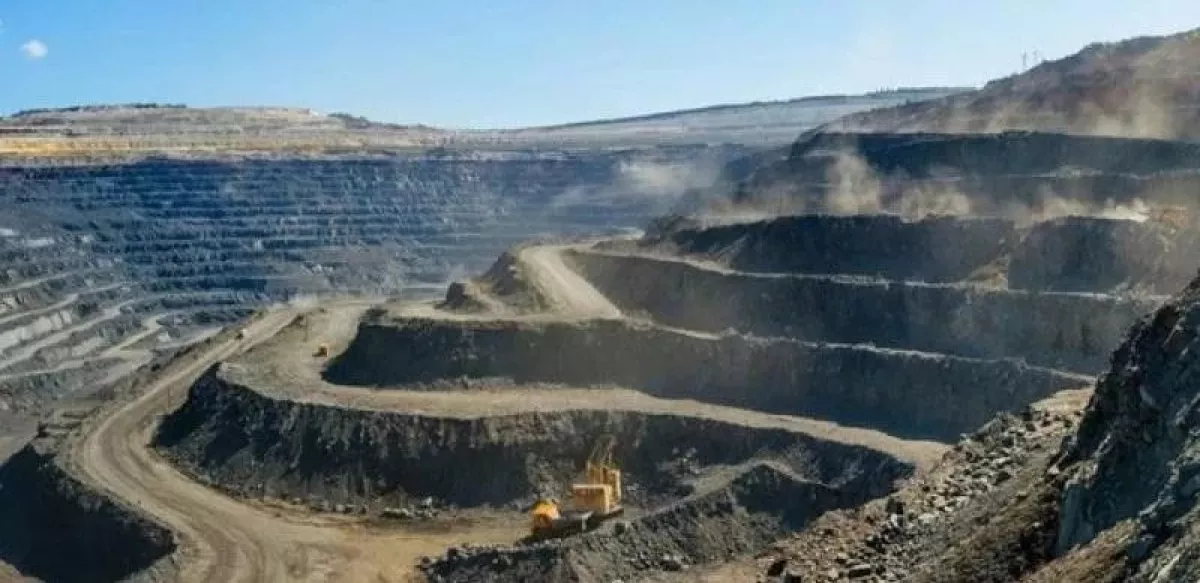
Kazakhstan’s national mining company Tau-Ken Samruk has sold a 70% stake in the Severniy Katpar deposit in the Karaganda region to Cove Kaz Capital Group, a US-backed geological exploration and mining firm. The agreement, signed in February 2026, is part of a broader strategy to develop the country’s critical minerals sector. Cove Kaz has committed to investing at least $1.1 billion, with the US Export-Import Bank and the US International Development Finance Corporation issuing letters of interest for up to $900 million and $700 million respectively. The deposit is the largest known undeveloped tungsten resource globally, with JORC-compliant mineral resources containing 1.4 million tonnes of tungsten trioxide—roughly 70% of Kazakhstan’s estimated 2 million tonnes. Production plans target approximately 12,000 metric tonnes per annum, representing about 15% of current global output. The deal underscores the intensifying competition between the United States and China for access to Kazakhstan’s vast but largely untapped rare metal reserves.
From Chinese withdrawal to American commitment
The Severniy Katpar deposit was initially offered to Chinese investors, who considered the opportunity but ultimately withdrew. a Kazakh political scientist and economist, China offered around $750 million but stepped back due to high risks and the need for substantial capital injections. The American side proposed a larger amount and declared its readiness to bring extracted resources to the global market. The transaction is structured as a business combination between Cove Kaz and Skyline Builders Group Holding Limited, a Nasdaq-listed company under the ticker SKBL. The combined entity will operate as Kaz Resources and trade on Nasdaq under the ticker KAZR, with the deal expected to close in the fourth quarter of 2026 or early 2027, subject to shareholder and regulatory approvals. Skyline’s executive chairman, Paul E. Mann, stated that the transaction fulfills the company’s 2025 strategic direction to become a material supplier of critical minerals to the United States.
Kazakhstan’s untapped treasure and Soviet-era data
Kazakhstan ranks second globally in rare earth metal reserves, behind only China, with an estimated 28 million tonnes of rare earth metals. However, only about 30% of deposits are currently being developed, and even those on a limited scale. The remaining 60–70% remain completely untapped, with exact volumes unconfirmed as the country relies heavily on geological data and cartographic surveys from the Soviet era. Ishmukhamedov noted that further exploration could reveal even larger volumes and significantly expand understanding of Kazakhstan’s resource potential. The country’s own demand for tungsten and molybdenum is limited, making export markets critical. The deal with Cove Kaz is seen as a step toward monetizing these resources, but it also raises questions about maintaining control over strategic assets.
Tungsten’s military-industrial significance
Tungsten is a specialized material with critical importance primarily for the military industry, used in high-strength alloys, armor, weapons, and missile systems. Ishmukhamedov emphasized that tungsten does not play a central role in China’s current industrial strategy, which focuses on batteries, electric vehicles, and microchips. This difference in strategic priorities partly explains why China withdrew from the Severniy Katpar project while the United States pursued it. Cove Kaz’s executive chairman, Pini Althaus, stated that the company is positioned to become a global leader in mining and processing strategic minerals for the US defense and industrial base, specifically tungsten. The combined company also holds 15 critical minerals concessions in Kazakhstan covering rare earth elements, lithium, tantalum, beryllium, niobium, cesium, and tin, as well as a 75% interest in the Akbulak Rare Earth Project.
Systemic competition between superpowers
Ishmukhamedov described the competition between the United States and China for Kazakhstan’s rare earth resources as systemic and rooted in the policies of these major powers. The United States and Western countries have acknowledged that they largely lost ground as China recognized the strategic importance of rare earth metals early on, securing a strong position in the largest deposits in developing countries while maintaining its own reserves. The confrontation became more visible with Donald Trump’s return to the White House, who raised the issue at the highest level, although it was also discussed during the Biden administration. Ishmukhamedov noted that full-scale competition for Kazakhstan’s resources is only now beginning, with real rivalry among investors and mining companies from China, the United States, the United Kingdom, and South Korea for access to deposits.
Outlook: balancing investment and sovereignty
The deal with Cove Kaz could strengthen Kazakhstan’s position in the global rare metals market, but it also raises questions about the balance between attracting foreign investment and maintaining control over strategic resources. The country’s vast, undeveloped reserves require enormous capital investment, and there is no established system for bringing them to the global market or long-term contracts securing development. As the transaction moves toward closure, the involvement of US government financing agencies signals a strategic push to secure supply chains for critical minerals. The outcome will likely influence how other resource-rich nations navigate the competing demands of superpowers. For Kazakhstan, the challenge will be to leverage its mineral wealth without ceding sovereignty over its most valuable assets.
The bottom line
- Kazakhstan sold a 70% stake in the Severniy Katpar tungsten deposit to US-backed Cove Kaz Capital Group for at least $1.1 billion.
- The deposit is the world's largest undeveloped tungsten resource, with 1.4 million tonnes of tungsten trioxide.
- The US government has signaled strong support with letters of interest for up to $1.6 billion in financing.
- China had previously considered the deposit but withdrew due to high risks and strategic misalignment.
- Kazakhstan holds an estimated 28 million tonnes of rare earth metals, but over 60% remain unexplored and undeveloped.
- The deal marks an escalation in US-China competition for critical minerals in Central Asia.




Italian Prosecutors Rule Out Storm as Cause of Bayesian Sinking, Focus on Crew Actions

Taylor Swift’s 2018 clause triggers $1.4bn Spotify windfall for Universal artists
Bayesian Superyacht Sinking: Storm Not to Blame, Investigators Conclude