Actress Sues James Cameron Over "Avatar" Character Likeness
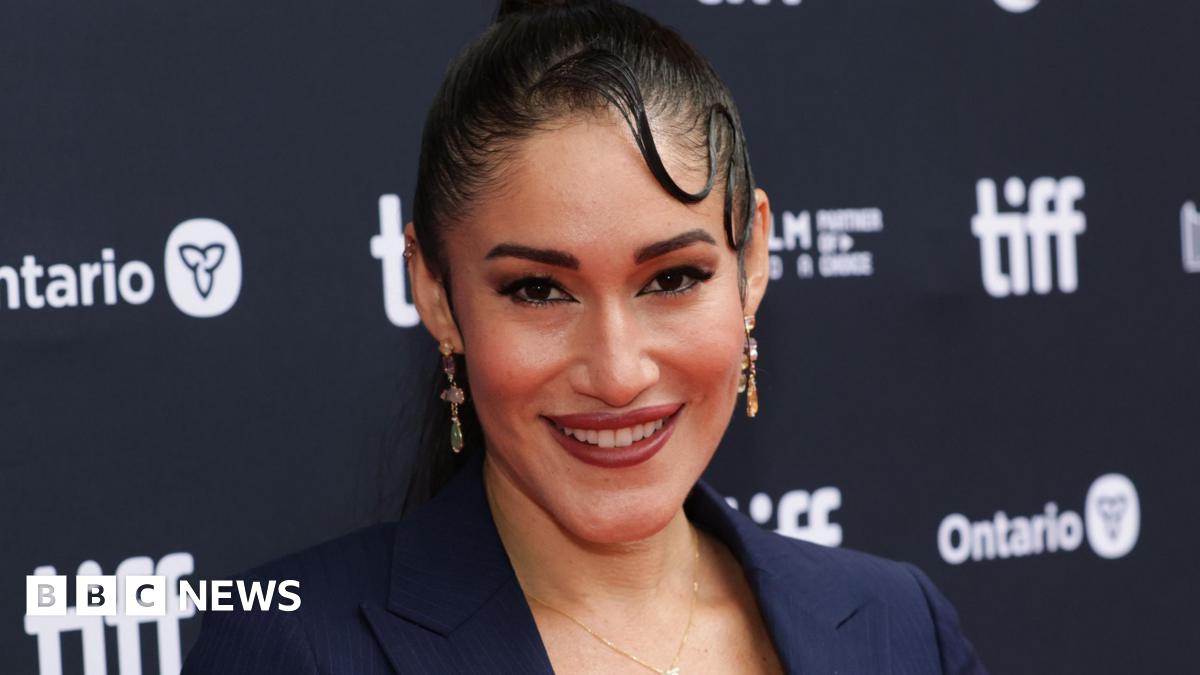
Q'orianka Kilcher alleges director used her facial features for Neytiri without consent or compensation.
UNITED KINGDOM —
Key facts
- Actress Q'orianka Kilcher is suing James Cameron and Disney.
- Kilcher alleges her facial features were used for the "Avatar" character Neytiri.
- The alleged use occurred in 2005 when Kilcher was 14 years old.
- The lawsuit claims Cameron "extracted" Kilcher's likeness from a photograph.
- Kilcher is seeking compensation, damages, and a share of profits.
- The first "Avatar" film grossed nearly $3 billion worldwide.
- Kilcher claims she learned of the alleged use late last year via a video interview.
Actress Alleges Likeness Misappropriation in "Avatar"
Filmmaker James Cameron and the Walt Disney Company face a lawsuit from actress Q'orianka Kilcher, who accuses the director of using her likeness as the basis for Neytiri, a central character in the "Avatar" franchise. Kilcher, a German-born US actress of indigenous Peruvian descent, claims that in 2005, when she was 14, Cameron "extracted her facial features" from a photograph of her portraying Pocahontas in the film "The New World." Filed in the U.S. District Court for the Central District of California, the legal claim asserts that Cameron "directed his design team to use it as the foundation for the character of Neytiri," who is depicted on screen by Zoe Saldaña. The lawsuit contends that Cameron and Disney violated Kilcher's publicity rights by "extracting, replicating, and commercially deploying her facial likeness" without her knowledge or consent. Kilcher is seeking compensation, damages, and a share of the profits generated by the multibillion-dollar franchise. Her legal team states that the case "exposes how one of Hollywood's most powerful filmmakers exploited a young Indigenous girl's biometric identity and cultural heritage to create a record-breaking film franchise - without credit or compensation to her."
The Design Process and the Alleged Deception
According to the complaint, Kilcher's likeness was allegedly replicated in production sketches, sculpted into three-dimensional maquettes, and laser-scanned into high-resolution digital models. These digital assets were then distributed to various visual effects vendors to form the character's image, which later appeared in theaters, on posters, and in merchandise across sequels and re-releases. "What Cameron did was not inspiration, it was extraction," stated Arnold P. Peter, lead counsel for Kilcher. "He took the unique biometric facial features of a 14-year-old Indigenous girl, ran them through an industrial production process, and generated billions of dollars in profit without ever once asking her permission." The lawsuit further claims that Cameron had not attempted to cast Kilcher for the project, despite her agent's efforts to secure an audition. Kilcher expressed her dismay, stating, "I never imagined that someone I trusted would systematically use my face as part of an elaborate design process and integrate it into a production pipeline without my knowledge or consent."
A Gift and a Revelation
The complaint details a meeting between Kilcher and Cameron in 2010, several months after the release of the first "Avatar" film. At a charity event, Cameron allegedly invited Kilcher to his office. Upon her visit approximately one week later, Cameron was absent, but a staff member presented Kilcher with a framed print of a sketch Cameron had made of Neytiri. from Cameron reading, "Your beauty was my early inspiration for Neytiri." Kilcher stated that she initially believed the sketch was a personal gesture, perhaps a loose inspiration tied to casting or her activism. However, the truth, she claims, emerged late last year when a broadcast video interview with Cameron began circulating on social media. In the video, Cameron stands before the Neytiri sketch and explicitly identifies Kilcher, saying, "The actual source for this was a photo in the L.A. Times, a young actress named Q’orianka Kilcher." This revelation led Kilcher to understand the alleged systematic use of her face in the film's design process. The lawsuit also claims the defendants violated California's recently enacted deepfake pornography statute.
"Avatar" Franchise: A Financial Juggernaut
The "Avatar" film series stands as one of the highest-grossing franchises in cinematic history. The original 2009 film, set in the 22nd century on the moon Pandora, remains the highest-grossing film of all time, with global box office takings approaching $3 billion, or approximately £2.2 billion. The narrative of the first film centers on Jake Sully's journey as he falls in love with the local Na'vi native Neytiri and defends her home from human mining operations. The movies blend live-action performance with computer-generated characters, creating a visually immersive world. Kilcher's team argued that the "lucrative" film franchise "presented itself as sympathetic to Indigenous struggles, all while silently exploiting a real Indigenous youth behind the scenes." The complaint seeks compensatory and punitive damages, disgorgement of profits attributable to the use of Kilcher's likeness, injunctive relief, and corrective public disclosure.
Legal Claims and Industry Scrutiny
The lawsuit names not only James Cameron and The Walt Disney Company but also Lightstorm Entertainment and multiple visual effects companies. The core of the legal argument rests on the unauthorized use of Kilcher's likeness, which her attorneys describe as a "deliberate analog-to-digital creative process that misappropriated Ms. Kilcher's identity." "It is deeply disturbing to learn that my face, as a 14-year-old girl, was taken and used without my knowledge or consent to help create a commercial asset that has generated enormous value for Disney and Cameron," Kilcher stated. Representatives for Cameron and Disney have been contacted for comment by various news outlets, including the BBC and The Guardian, as the legal proceedings unfold.
The bottom line
- Actress Q'orianka Kilcher is suing James Cameron and Disney, alleging her likeness was used for the "Avatar" character Neytiri without consent.
- The lawsuit claims the alleged extraction of Kilcher's facial features occurred in 2005 when she was 14, using a photograph from "The New World."
- Kilcher seeks financial compensation, damages, and a share of profits from the "Avatar" franchise, which has grossed nearly $3 billion globally.
- She alleges that Cameron presented her with a sketch of Neytiri in 2010, claiming she was an early inspiration, but she only learned of the alleged direct use of her features late last year.
- The legal complaint includes accusations of violating California's deepfake pornography statute.
- The case highlights concerns about the exploitation of an individual's biometric identity and cultural heritage in the creation of major film franchises.





Eta Aquariid Meteor Shower Peaks Amid Bright Moon

Lakers Face Uphill Battle Against Thunder Without Dončić in Western Conference Semifinals

Half Man: A Tale of Broken Masculinity and Enduring Trauma
