Romanian Government Collapses After No-Confidence Vote, Deepening Political Crisis
Prime Minister Ilie Bolojan ousted as Social Democrats join far-right opposition, raising doubts over fiscal reforms and EU alignment.
UNITED KINGDOM —
Key facts
- 281 MPs voted for the no-confidence motion, exceeding the 233 needed.
- The Social Democrats (PSD) abandoned the coalition last month and allied with far-right AUR.
- Bolojan's coalition came to power 10 months ago to curb the far-right surge.
- The budget deficit was reduced from 9.3% to 7.9% under Bolojan's austerity measures.
- The leu fell to a record low against the euro ahead of the vote.
- President Nicușor Dan will nominate a new prime minister; snap elections considered unlikely.
- The far-right AUR now polls at about 37%, surpassing the PSD as the most popular party.
Government Falls as Coalition Fractures
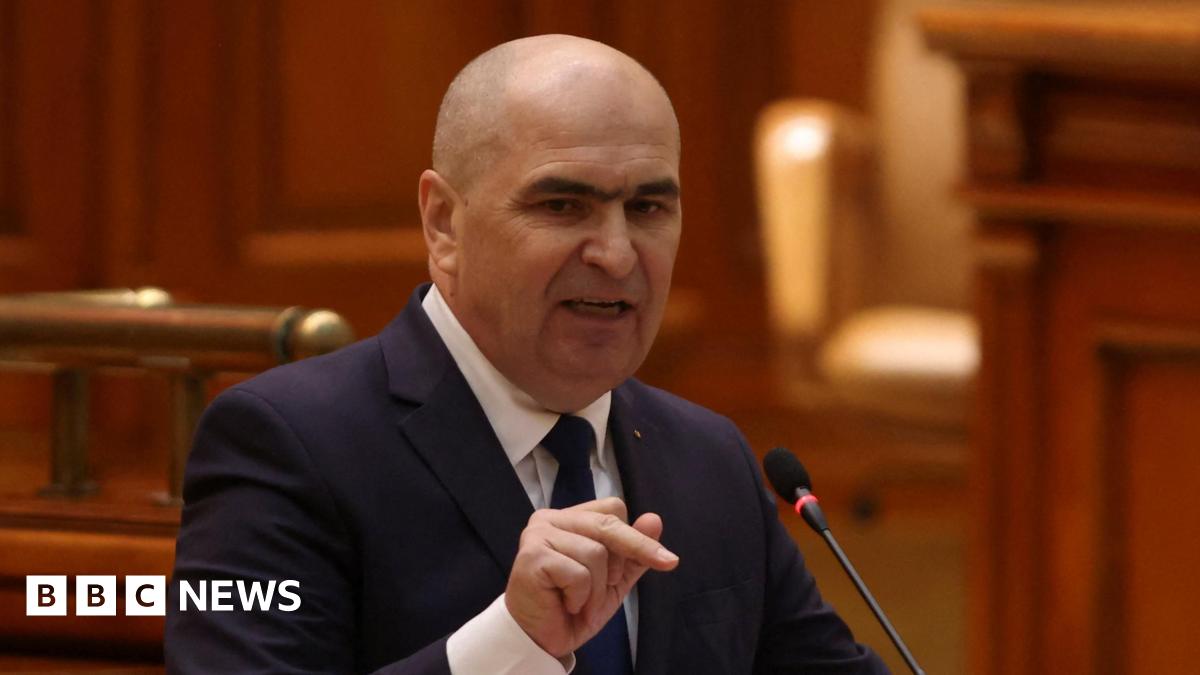
Romanian MPs voted to remove Prime Minister Ilie Bolojan in a no-confidence motion on Tuesday, collapsing the pro-European government after less than a year in power. The motion, tabled by the Social Democrats (PSD) and the far-right Alliance for the Uniting Romanians (AUR), passed with 281 votes — well above the 233 needed — in the 464-seat parliament. Bolojan's liberal PNL party and its USR allies did not vote. “This censure motion is false, cynical and artificial,” Bolojan told parliamentarians before the vote. “Any country in a multitude of crises would try to consolidate governments, not to change them.” The prime minister will remain in a caretaker role until a new government is approved.
Social Democrats Join Far Right to Topple Premier
The PSD, the largest party in parliament, abandoned Bolojan's four-party coalition last month and joined the opposition AUR to call for the vote. The centre-left party had repeatedly clashed with Bolojan over austerity measures — including tax increases, public sector wage and pension freezes, and cuts to spending and jobs — which hit its voter base. The coalition had promised to reduce Romania's budget deficit, one of the EU's highest, and succeeded in narrowing it from 9.3% to 7.9%, but at significant political cost. “There is life after the no-confidence vote,” said PSD leader Sorin Grindeanu. “We want to keep broadly this coalition.” The party has indicated it would rejoin a pro-EU coalition under a different prime minister.
President Vows to Keep Romania on Pro-Western Course
President Nicușor Dan, who won a tense presidential poll last May after a far-right victory was annulled over fraud and Russian interference allegations, is now expected to invite parties for negotiations. He aims to rebuild the coalition under a different PNL premier or possibly a technocrat. “Political discussions will be difficult, but it is my responsibility as president — and that of the political parties — to steer Romania in the right direction,” Dan told reporters. Dan has ruled out a far-right government and promised to maintain Romania's pro-Brussels stance as an EU and NATO member bordering Ukraine. The AUR leader, George Simion, called for early elections, saying “the voice of the people” had been heard. However, elections are not due until 2028, and a snap ballot is considered unlikely, mainly because the AUR has surged to about 37% support in polls, making it the most popular party.
Austerity Measures Split Coalition and Fuel Far Right
Bolojan's coalition came to power 10 months ago during efforts to curb the rise of the far-right AUR, which won one-third of parliamentary seats. The coalition started to reduce the deficit, but frictions with the Social Democrats grew as austerity hit leftist voters. The PSD's walkout left Bolojan leading a minority government since late last month, before the no-confidence vote. The far right has capitalized on public discontent. The AUR now leads in polls, surpassing the PSD. Romania's currency, the leu, fell to a record low against the euro ahead of Tuesday's vote, reflecting market anxiety over the country's commitment to fiscal reforms.
Divisions Within PNL and USR Complicate Coalition Talks
Bolojan's PNL party appeared divided after the vote. Some senior figures ruled out working with the PSD again, while others pushed for reconciliation. “We must keep our options open,” said PNL deputy prime minister Cătălin Predoiu. The reformist Save Romania Union (USR), the third coalition member, said it was unwilling to return to government with the Social Democrats, expressing openness to a minority government or early elections. Dan is expected to nominate a different member of Bolojan's party or a technocrat to lead a new government. The president must navigate these divisions to restore stability and reassure financial markets, which are concerned that political turbulence could weaken Romania's commitment to narrowing the EU's largest budget deficit.
Outlook: Uncertainty Over Fiscal Reforms and European Alignment
The collapse of the government raises doubts over Romania's fiscal consolidation path. While the coalition had made progress in reducing the deficit, the political crisis could delay further reforms. The leu's record low against the euro signals investor unease. With the far right surging and elections years away, the new government will face pressure to balance austerity with social spending. Romania's pro-western orientation is a key concern for EU and NATO allies, especially given its border with Ukraine. Dan's commitment to a pro-European course offers some reassurance, but the fragility of the coalition system and the rise of the far right pose long-term challenges. The coming weeks of negotiation will determine whether Romania can avoid a prolonged period of political paralysis.
The bottom line
- The no-confidence vote succeeded with 281 votes, ousting Prime Minister Ilie Bolojan after 10 months in power.
- The Social Democrats abandoned the coalition and allied with the far-right AUR, citing unpopular austerity measures.
- President Nicușor Dan will seek to rebuild a pro-European coalition, ruling out a far-right government.
- The budget deficit was reduced from 9.3% to 7.9%, but at the cost of political support for the coalition.
- The far-right AUR now leads in polls with about 37% support, complicating efforts to form a stable government.
- Financial markets reacted negatively, with the leu falling to a record low against the euro.



Dennis Taylor recalls saving Clive Everton's life as snooker legends gather for John Virgo memorial

BJP Secures Landslide Victory in West Bengal, Modi Hails 'New Dawn'
US Strikes Iranian Boats in Strait of Hormuz as Maersk Vessel Exits Under Military Protection
