Scotland Gripped by Unseasonal Snow as Arctic Air Descends
Temperatures plummet across the Highlands and Shetland, marking the coldest May night in five years.
UNITED KINGDOM —
Key facts
- A temperature of -6.1C was recorded in Altnaharra, Highlands.
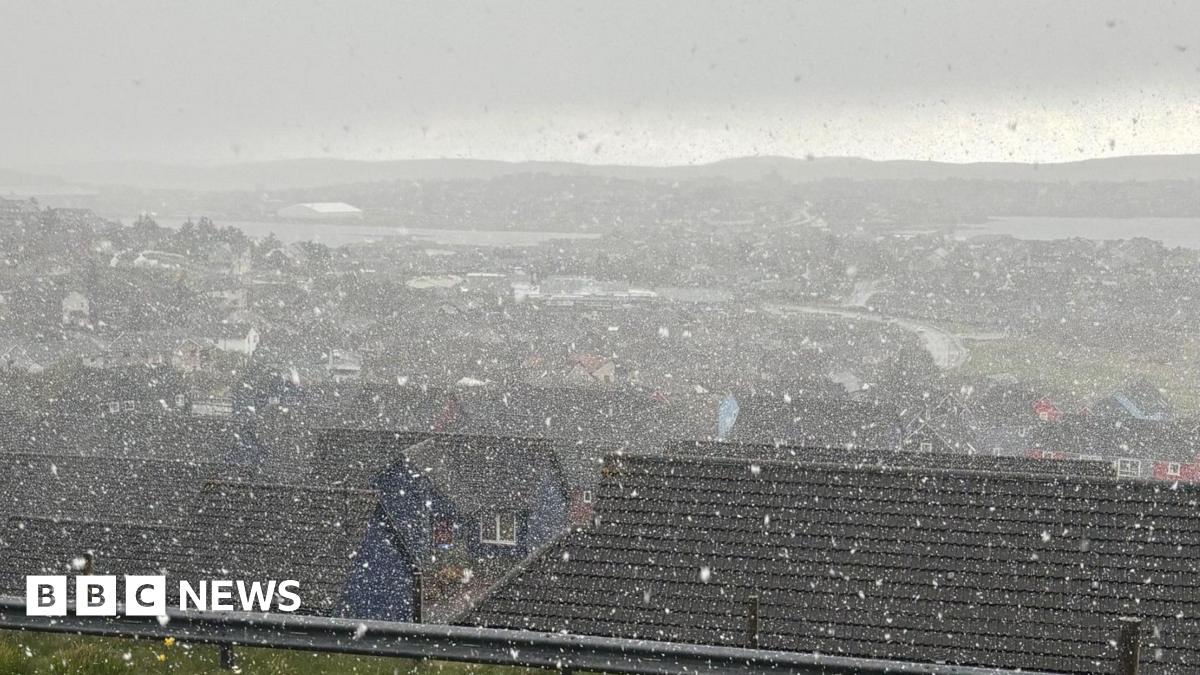
- Shetland experienced heavy snow showers on Wednesday morning.
- The UK recorded its coldest May night in five years.
- Overnight temperatures included -5.3C in Kinbrace and -4.3C in Braemar.
- Midweek high temperatures are forecast to be around 7C-8C in the north and 15C in the south.
- This represents a drop of approximately ten degrees Celsius from the previous week's peak.
- A low-pressure system north of Shetland brought cold Arctic air southwards.
Arctic Blast Brings Shock Snowfall to Scotland
Shetland awoke to a flurry of heavy snow on Wednesday morning, just hours after the United Kingdom registered its coldest May night in five years. The Met Office confirmed a stark -6.1C reading in Altnaharra, located in the Scottish Highlands, during the overnight period. This unseasonal cold snap has brought disruption and a distinct shock to residents accustomed to milder spring conditions. The dramatic temperature drop follows two weeks of exceptionally warm and sunny weather. This abrupt shift signifies a return to more seasonal conditions, characterised by cooler temperatures, cloudier skies, and the unwelcome return of overnight frosts. The contrast is stark, with midweek highs expected to hover around a mere 7C to 8C in northern regions and 15C in the south – a noticeable and dramatic ten-degree Celsius fall from the previous week's peak.
Highlands and Islands Bear the Brunt of the Cold
The severe chill was not confined to Altnaharra. Other parts of the Highlands recorded similarly low temperatures, with Kinbrace registering -5.3C and Braemar in Aberdeenshire seeing -4.3C. Even Dyce, near Aberdeen, experienced a frost with a low of -1.1C. On Wednesday morning, Shetland residents witnessed snow showers before temperatures began to rise. Weather expert David Wheeler, based in Fair Isle, attributed the cold air mass to a low-pressure system situated to the north of Shetland. This system drew frigid air directly from Arctic regions down towards the islands. Wheeler noted that while snow in spring is not unheard of in Scotland, its intensity and timing felt like a "shock."
Climate Change and Shifting Air Currents
Wheeler suggested that the changing climate may be influencing air current movements, making such low temperatures in May less unusual than they once were. He explained that, typically at this time of year, winds would be expected to bring air from warmer latitudes. However, the current northerly flow is drawing in much colder air. This phenomenon underscores a broader pattern where the direction of wind plays a crucial role in determining weather feel. A northerly wind, by its nature, brings colder air from the Arctic, irrespective of the season. Conversely, southerly winds typically usher in warmer air, often originating from regions like the Sahara Desert or southern Europe.
Historical Context and Future Outlook
While the current cold snap feels exceptional, spring snow in Scotland is not an entirely alien concept. Some of the country's highest peaks experienced light dustings of snow as late as early June in both 2023 and 2024. Historical accounts recall instances like midsummer skiing opportunities at the Cairngorm Mountain resort in 2010, though in previous eras, skiers often had to trek to find remaining snow patches. Looking ahead, milder weather is anticipated over the weekend. However, this respite is expected to be temporary, with a cooler period forecast to return, driven once again by a northerly air flow. The dynamic interplay of pressure systems and wind direction will continue to dictate the weather's character.
Understanding the 'Arctic Plunge'
The phenomenon of an 'Arctic Plunge,' as it is sometimes sensationally described, simply refers to the influx of cold air from the north. The direction of the wind is a key determinant of temperature. Winds from the north consistently bring colder air, while winds from the south bring warmer air. The current situation is a clear illustration of this principle, with isobars indicating a lack of strong pressure systems to block the southward movement of Arctic air. The weather patterns observed this week are a vivid reminder of the atmosphere's variability and the significant impact of global climate shifts on regional weather events. The unseasonal cold serves as a stark counterpoint to the recent warmth, highlighting the challenges in predicting and adapting to increasingly volatile weather.
The bottom line
- The UK experienced its coldest May night in five years, with temperatures dropping to -6.1C in Altnaharra.
- Shetland saw heavy snow showers on Wednesday morning, a stark contrast to recent warm weather.
- The unseasonal cold is attributed to a northerly airflow drawing Arctic air southwards.
- Experts suggest climate change may be influencing air current patterns, making such events less unusual.
- While spring snow is not unprecedented in Scotland, the current intensity has been noted as a shock.
- A return to milder weather is expected over the weekend, but cooler conditions may re-emerge.


Ted Turner, CNN Founder and Media Pioneer, Dies at 87

Gibbs-White Faces Fitness Test Ahead of Europa League Semi-Final

NYT Connections Puzzle Goes Full Symbol Grid, Stumping Players on May 6
