BJP Secures Historic Victory in West Bengal, Ending Mamata Banerjee's 15-Year Rule
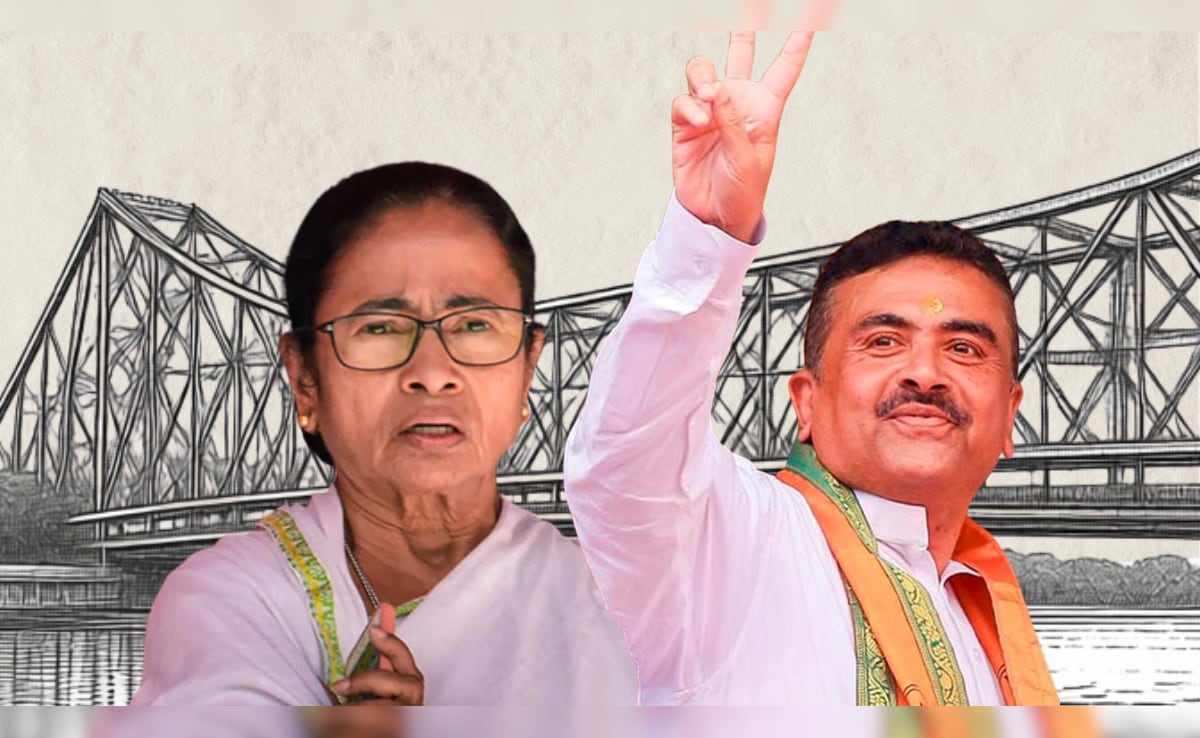
Prime Minister Narendra Modi declares 'Bengal has been freed from fear' as the BJP crosses 200 seats and Banerjee loses her own constituency of Bhabanipur.
IRELAND —
Key facts
- BJP won 206 seats; Trinamool Congress won 80 seats; one seat still counting.
- Mamata Banerjee lost Bhabanipur to Suvendu Adhikari by over 15,000 votes.
- Over 91 lakh voter names were deleted under the Special Intensive Revision (SIR).
- Voter turnout was 92.47%, the highest since Independence.
- Former minister Jyoti Priya Mallick lost Habra to BJP's Debdas Mondal by 31,462 votes.
- BJP's Agnimitra Paul led from Asansol Dakshin; TMC's Anisur Rahaman Bidesh led from Deganga.
A Political Earthquake in Bengal
The Bharatiya Janata Party has won a commanding majority in the West Bengal assembly, capturing 206 seats and ending the Trinamool Congress's 15-year hold on power. The result, which unfolded as counting concluded on Saturday, marks the first time the BJP will form a government in the eastern state. Prime Minister Narendra Modi, addressing supporters in the evening, declared that 'Bengal has been freed from fear and will now progress.' The victory fulfills a long-standing ambition for the BJP, which had made inroads in the 2021 election but failed to dislodge Mamata Banerjee.
Banerjee's Double Blow: Party Rout and Personal Defeat
Mamata Banerjee, chief minister since 2011, not only saw her party reduced to 80 seats but also lost her own constituency of Bhabanipur to Suvendu Adhikari, her former lieutenant who now serves as the Leader of the Opposition. Adhikari expanded his winning margin from under 2,000 votes in 2021 to over 15,000 votes this time. Banerjee, who had previously lost to Adhikari in Nandigram in the last election, alleged 'loot of seats' and described the BJP's victory as 'immoral.' In a video message to party workers, she urged them not to lose heart, saying multiple rounds of counting remained. Congress leader Rahul Gandhi echoed her concerns, agreeing that votes had been stolen.
The SIR Factor and Record Turnout
The election was the first after a contentious Special Intensive Revision of electoral rolls, which led to the deletion of over 91 lakh voter names. The process became a major campaign issue, with the TMC accusing the BJP of manipulating the rolls to disenfranchise its supporters. Despite the deletions, voter turnout soared to 92.47%, the highest since Independence. Election Commission officials attributed the surge to cleaner rolls, enhanced security, and improved accessibility. However, the SIR made it difficult to predict how the high turnout would affect the final outcome. In Malda, one of the regions with rampant deletions, the TMC barely managed to hold on.
BJP's Sweep Across Regions and Communities
The BJP made significant gains across the state, consolidating its stronghold in North Bengal and making deep inroads into TMC bastions. In Medinipur, the party secured tribal votes, while in Burdwan, another TMC stronghold, the saffron wave was evident. Urban pockets of Kolkata and Howrah also swung decisively to the BJP. Key victories included BJP's Debdas Mondal defeating former minister Jyoti Priya Mallick, accused in a multi-crore ration scam, by 31,462 votes in Habra. In Kalimpong, BJP's Bharat Kumar Chettri won by 21,464 votes, while in Medinipur, Sankar Kumar Guchhait won by 38,747 votes. The BJP also won seats in Asansol Dakshin, Barabani, and Jhargram.
Campaign Narratives: Scams, Fear, and Identity
The BJP's campaign focused on corruption, unemployment, and what it termed 'goon culture' under the TMC, amplified by the RG Kar rape and murder case. State BJP chief Samik Bhattacharya called the election 'an election of rejection,' citing teacher recruitment scams and joblessness as key factors. The TMC, in turn, emphasized Bengali identity and culture, with the slogan 'Bangla nijer meyekei chaye' (Bengal wants its own daughter). It warned of a ban on non-vegetarian food, including fish, under a BJP government. The BJP countered by having its leaders eat fish on camera. Ultimately, the electorate appeared to prioritize change over cultural appeals.
What Comes Next: A New Political Landscape
With the BJP set to form the government, the political landscape of West Bengal is poised for a dramatic shift. The party's victory ends the TMC's 15-year rule and reshapes the state's dynamics ahead of future national contests. Prime Minister Modi's metaphor from November last year—'The river Ganga flows to Bengal via Bihar'—proved prescient. The BJP's victory in Bihar had set the stage for this breakthrough. As counting concluded in all but one seat (Rajarhat New Town, where the TMC held a slender lead), the scale of the BJP's triumph became clear. The party's workers lit up the Kolkata sky in celebration, while Banerjee's supporters grappled with the end of an era.
The bottom line
- BJP won 206 seats, TMC 80, ending TMC's 15-year rule in West Bengal.
- Mamata Banerjee lost her own seat of Bhabanipur to Suvendu Adhikari by over 15,000 votes.
- Over 91 lakh voter deletions under SIR were a major campaign issue; turnout was a record 92.47%.
- BJP swept North Bengal, urban Kolkata, and made inroads in TMC strongholds like Medinipur and Burdwan.
- Corruption, unemployment, and fear of crime were decisive issues; cultural appeals by TMC failed.
- The result reshapes Bengal's politics and strengthens BJP's national footprint ahead of future elections.






Iheanacho Strikes 151 Seconds After Coming On as Celtic Beat 10-Man Hibernian to Level on Points with Hearts

Brandon Kelly’s extra-time goal propels Westmeath to sixth Leinster final, 2-21 to 0-23

Sinn Féin Slips as Micheál Martin Rises: Irish Polls Show Shifting Landscape
