U.S. Braces for a Summer of Scorching Heat, Severe Storms and Wildfire Risk as Super El Niño Looms
AccuWeather and NOAA forecasts converge on a hotter-than-normal summer across nearly all of the lower 48, with heightened tornado and derecho threats in the Plains and Midwest, and a strengthening El Niño expected to amplify extremes.

IRELAND —
Key facts
- AccuWeather predicts June–August temperatures 2–3°F above normal in Mississippi.
- NOAA estimates a 62% chance of El Niño prevailing during June–August 2026.
- The northern third of Mississippi faces a moderate risk of derechos with winds over 100 mph.
- A 'Super El Niño' is expected to develop by late 2026, according to long-range experts.
- The Texas Hill Country, still recovering from a $22 billion flood disaster in 2025, faces elevated flash flood risk this summer.
- Wildfire risk is moderate in Mississippi and 'destructive' in the Great Basin, per AccuWeather.
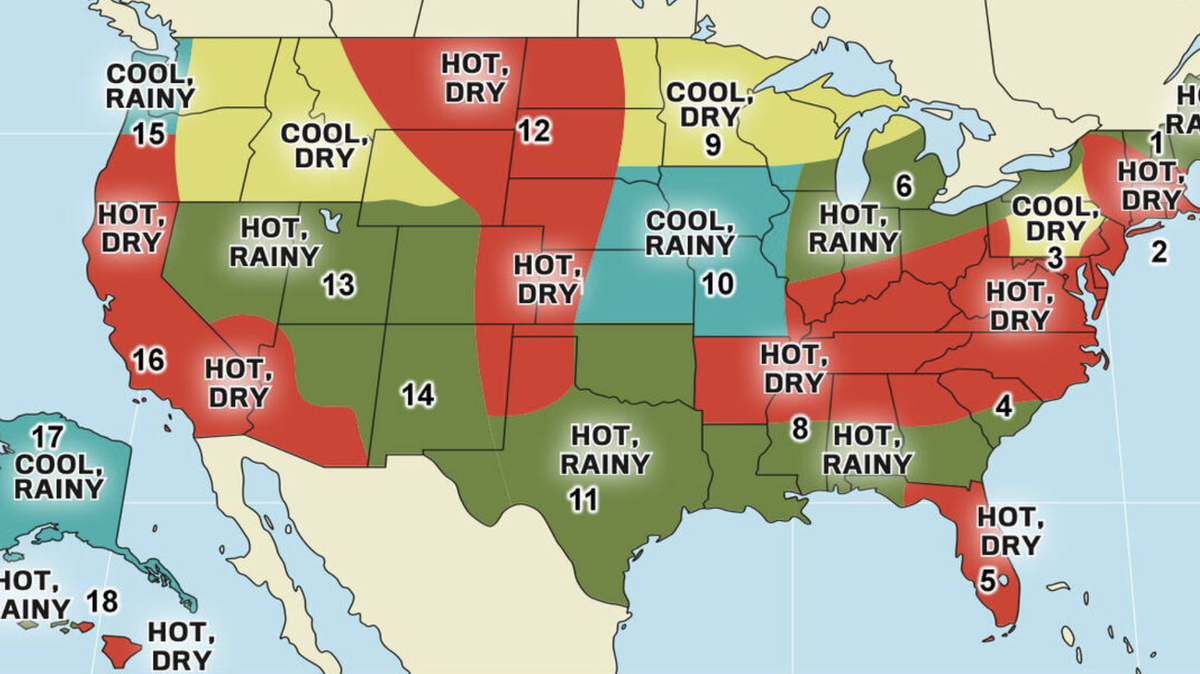
- The Old Farmer’s Almanac forecasts hot and dry conditions for western South Carolina, hot and wet for the east.
- Average July temperatures in Greenville, SC range from a high of 90°F to a low of 70°F.
A Nationwide Heat Dome Settles In
Summer 2026 will be defined by a sprawling heat dome that is expected to cover most of the contiguous United States, driving temperatures well above historical norms from June through August. AccuWeather’s long-range forecast indicates that almost nowhere in the lower 48 will experience a cool summer by historical standards, with the West and Northwest facing the most extreme conditions. Meteorologist Brandon Buckingham warned that wildfires in the Great Basin could be 'destructive' this year, as prolonged heat and drought create tinderbox conditions. In Mississippi, the heat will be slightly less extreme but still significant: the state is expected to see temperatures two to three degrees warmer than average for the three-month period. The Old Farmer’s Almanac paints a similar picture for South Carolina, where the western part of the state is forecast to be hot and dry, while the eastern region will be hot and wet. 'Forecasts suggest above-average temperatures across much of North America,' the Almanac stated, noting that while some regions may begin closer to average, heat will build as the season progresses. The National Oceanic and Atmospheric Administration’s Climate Prediction Center concurs, citing a transition from La Niña to a strong El Niño expected to begin in May–July 2026, with a 62% chance of El Niño prevailing during the summer months. This shift is the primary driver behind the anticipated heat wave, as El Niño typically amplifies global temperatures.
Severe Storms and Tornadoes: A Rowdy June and July
The atmosphere this summer will not only be hot but also volatile, particularly across the Plains and Midwest. AccuWeather long-range expert Paul Pastelok predicted that 'the number of tornadoes can run near to above average in June and July,' before dropping off dramatically in August. The northern half of Mississippi should expect its peak severe weather in June and July, while the southern half is likely to see more strong thunderstorms in July and August. Beyond tornadoes, the threat of derechos — powerful, long-lived lines of thunderstorms with winds that can exceed 100 mph — looms large. The northern third of Mississippi is at moderate risk of experiencing a derecho, which Pastelok described as an 'inland hurricane' capable of flattening crops and knocking out power. For the Plains and Midwest, Pastelok added that while tornadoes may calm down in August, they will likely be replaced by derechos, extending the severe weather season.
Flood and Drought: A Tale of Two Extremes
The summer forecast presents a stark contrast between too much water and too little. For Mississippi, there is some good news: only a small sliver of the state faces an elevated risk of flooding, and that level is not considered moderate or high. However, AccuWeather warns that long, dry stretches could worsen drought conditions along parts of the Gulf Coast, and the Magnolia State also carries a moderate wildfire risk. In Texas, the situation is reversed. The Texas Hill Country, still reeling from a $22 billion flood disaster in 2025, is once again in the 'splash zone.' Pastelok warned that 'flash flood events are expected… on a higher frequency this summer.' The North American monsoon is expected to arrive early in June, which could help replenish Lake Mead but also bring the risk of 'dry lightning' that ignites wildfires rather than extinguishing them. The Southwest and Texas thus face a game of 'too much or too little,' with the Northwest parching while parts of Texas are inundated.
Urban Heat Islands and the Northeast’s Sauna Summer
Major cities in the Northeast, including New York, Chicago, and Philadelphia, are bracing for a particularly oppressive summer. Pastelok is predicting a 'late surge of heat and higher humidity' for the region, which will push 'RealFeel' temperatures to uncomfortable highs both day and night. The combination of heat and humidity will make air conditioning a necessity, driving up electricity bills and straining power grids. The urban heat island effect will exacerbate conditions in densely populated areas, where concrete and asphalt absorb and retain heat. Nighttime temperatures are expected to remain elevated, offering little relief and increasing the risk of heat-related illnesses. Residents are advised to hydrate, find access to cooling centers, and prepare for potential power outages as demand for electricity spikes.
The El Niño Engine: Supercharging Summer Extremes
The common thread linking these disparate weather patterns is a strengthening El Niño in the Pacific Ocean. Meteorologists expect this El Niño to escalate into a rare 'super' version by the end of the year, which will have far-reaching effects on global weather. While a strong El Niño tends to suppress Atlantic hurricane activity, it amplifies heat and storminess across North America. NOAA’s Climate Prediction Center has identified a 62% chance that El Niño will be in place during the June–August period, following a transition from La Niña. This shift is already being felt, as the atmosphere responds to warmer-than-normal sea surface temperatures. The result is a summer that promises to be one of the most extreme in recent memory, with heat, storms, and wildfire risks all elevated.
What Comes Next: Preparing for a Long, Hot Season
As summer approaches, officials and residents across the country are urged to prepare for the challenges ahead. In Mississippi, the focus is on monitoring drought conditions and wildfire risk, while in Texas, flood preparedness is paramount. The Northeast and Midwest must brace for severe storms and heat waves, while the West confronts the prospect of destructive wildfires. AccuWeather’s forecast serves as a reminder that the 2026 summer will not be a typical one. With a Super El Niño on the horizon, the potential for record-breaking temperatures and extreme weather events is high. The coming months will test infrastructure, emergency services, and the resilience of communities from coast to coast. As one meteorologist put it, 'It’s going to be a long one.'
The bottom line
- Summer 2026 will be hotter than average across nearly all of the contiguous U.S., driven by a transition to a strong El Niño.
- The Plains and Midwest face an elevated risk of tornadoes in June and July, with derechos likely to follow in August.
- Mississippi will see temperatures 2–3°F above normal, with moderate wildfire risk and only a small flood threat.
- Texas, especially the Hill Country, is at heightened risk of flash floods after the devastating 2025 floods.
- The Northeast will experience a late surge of heat and humidity, making air conditioning essential and straining power grids.
- A 'Super El Niño' is expected to develop by late 2026, amplifying global temperatures and weather extremes.


Drogheda United Host Sligo Rovers as League of Ireland Action Intensifies
Banksy Claims New London Statue of Flag-Blinded Man as His Work

Andy Sachs freezes her eggs as 'The Devil Wears Prada 2' confronts a crumbling media landscape