Andy Sachs freezes her eggs as 'The Devil Wears Prada 2' confronts a crumbling media landscape
Twenty years on, the sequel finds its heroine navigating career precarity, singlehood, and the high cost of reproductive choice in an industry gutted by layoffs and AI.

IRELAND —
Key facts
- The sequel is set 20 years after the original, with Andy Sachs now an award-winning journalist at the New York Vanguard.
- Andy worries she will never be able to unfreeze her eggs, a costly procedure she cannot afford on her salary.
- Runway magazine is collapsing; Miranda Priestly eats in the cafeteria and flies economy.
- Emily Charlton now works as a senior executive at Dior, whose ads prop up Runway.
- More than 3,000 journalism job losses were recorded across the UK and US last year.
- Condé Nast shuttered Self magazine after 47 years; the Washington Post underwent an 'absolute bloodbath' of layoffs.
- 80% of journalists come from professional and upper-class backgrounds, per the National Council for the Training of Journalists.
- The film features cameos including Amelia Dimoldenberg and a brief appearance by Rory McIlroy.
A sequel for a generation that no longer has the job a million girls would kill for
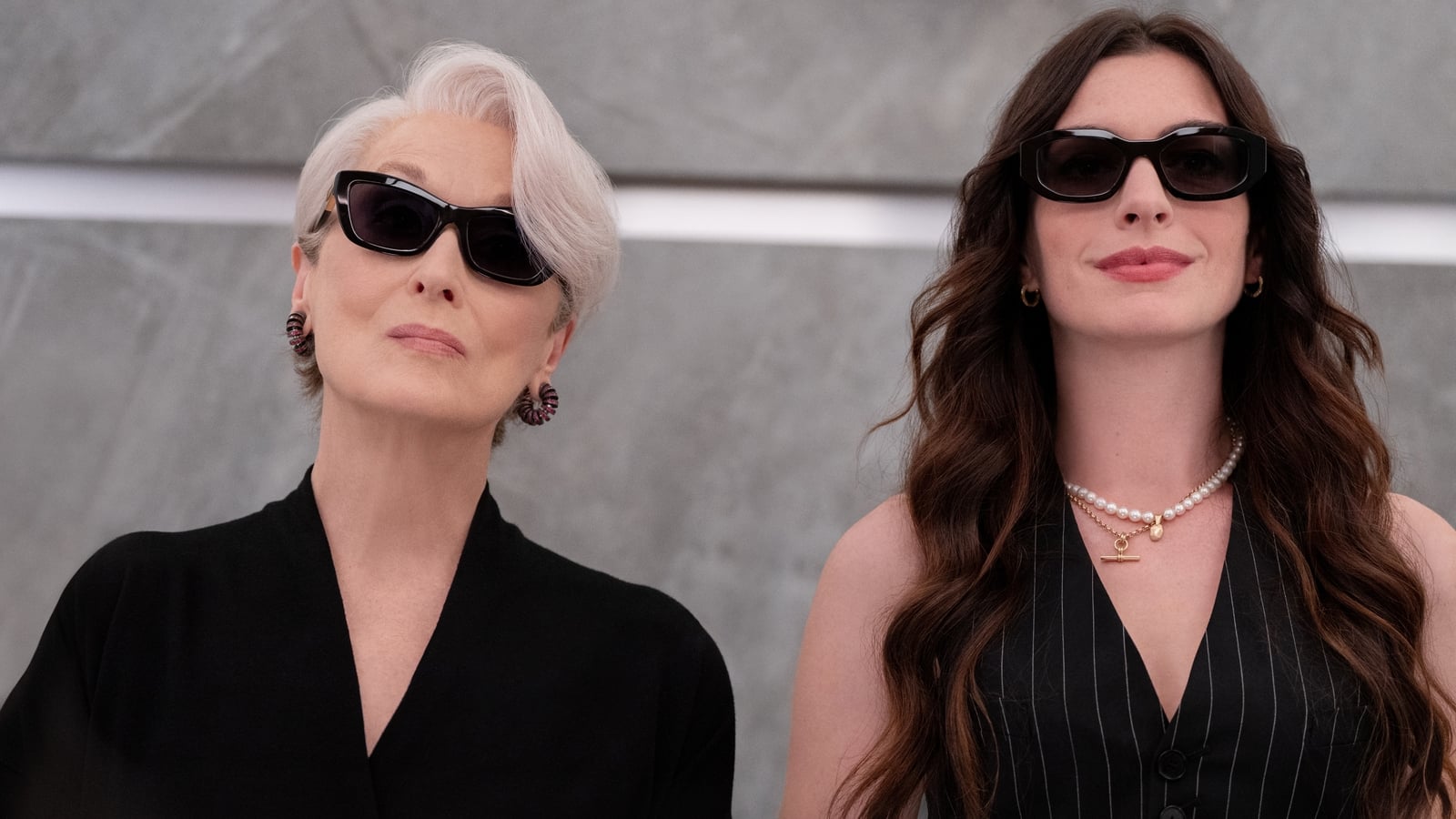
The Devil Wears Prada 2 arrives twenty years after the original, but its heroine, Andy Sachs, is no longer a wide-eyed aspirant climbing the ladder at Runway magazine. She is a 43-year-old award-winning journalist whose newspaper, the New York Vanguard, has just been abruptly closed by its billionaire owners. She is offered the features editor job at Runway, a magazine that is itself collapsing — its editor-in-chief, Miranda Priestly, now eats in the cafeteria and flies economy — and Andy spends much of the film trying to save her position. In one of the sequel's most striking scenes, Andy tells her former colleague Emily that she has eggs frozen at a doctor's office on 85th Street. 'Left New York for 15 years, not married – never found the right person,' she says. 'I just want you to have the apartment you deserve,' her friend Lily tells her, noting Andy's salary has doubled. 'For how long?' Andy replies.
The media industry's 'absolute bloodbath' forms the backdrop
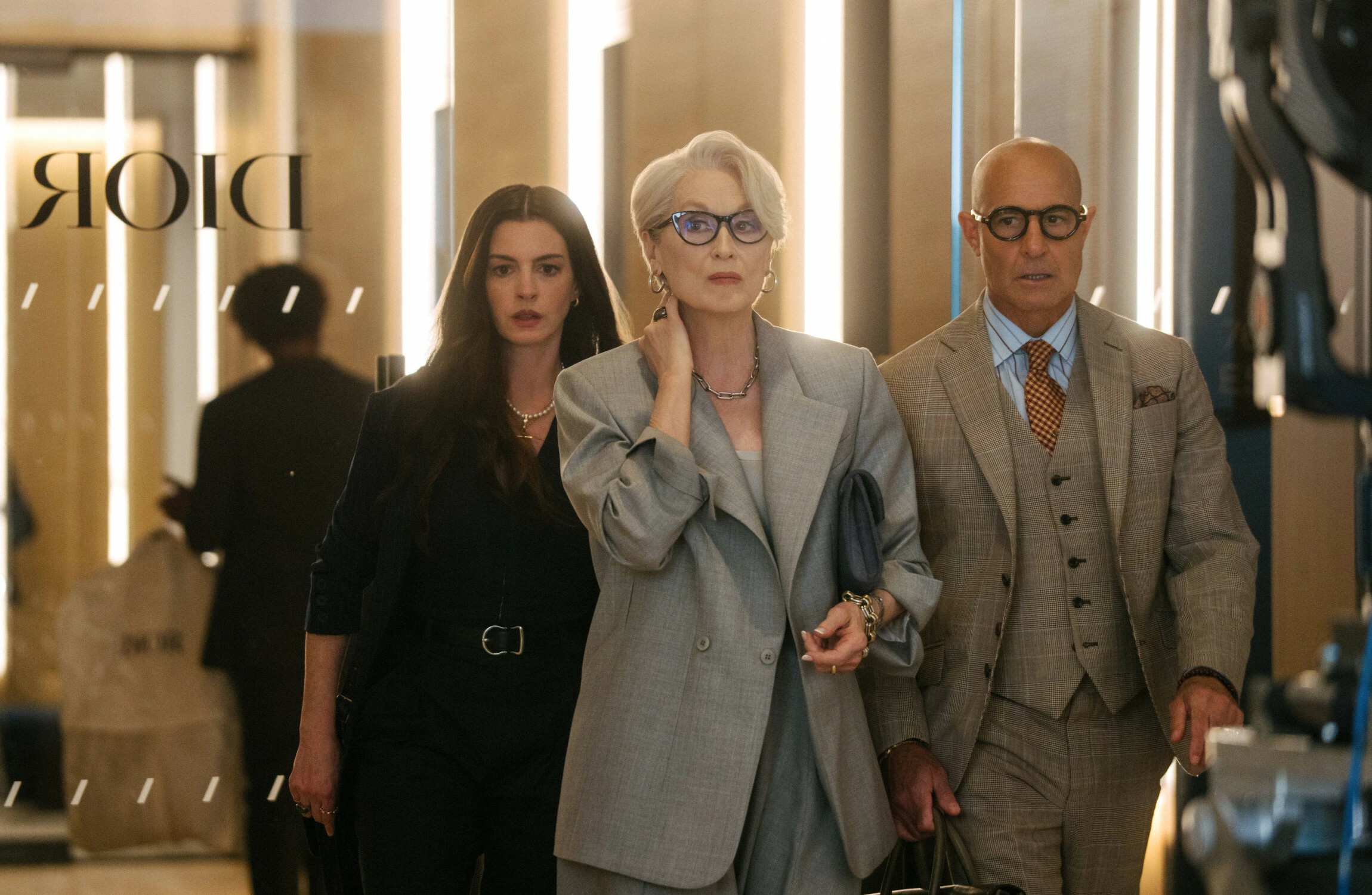
The film's setting mirrors a real-world industry in crisis. Last year, more than 3,000 journalism job losses were recorded across the UK and US. Promotions are scarce, budgets are slashed, and AI and influencers are replacing editorial staff. Condé Nast, the publisher on which the film's Elias-Clarke is based, recently shuttered Self magazine after 47 years. The Washington Post, under Jeff Bezos's ownership, underwent layoffs described as an 'absolute bloodbath.' Emily Charlton, who has moved from Runway to become a senior executive at Dior, snarls: 'Do you remember when magazines were a thing?' Dior's ads are now propping up Runway. The National 80% of journalists come from professional and upper-class backgrounds, underscoring the inaccessibility of the field Andy broke into with her 'bushy eyebrows and onion bagels.'
Andy's egg-freezing dilemma reflects a broader generational reckoning
The number of women freezing their eggs is at an all-time high, while the rate of people having babies is drastically dropping. Andy, with a middle-class background and a great career, still feels too financially insecure to consider starting a family. 'I have hope for the future,' she says. 'I might be able to unfreeze an egg!' The cost of the procedure excludes many, and the film presents her anxiety as emblematic of a generation that struggles to achieve stability. Screenwriter Aline Brosh McKenna said Andy 'had gone around the world and had adventures' and would have had many boyfriends in the intervening years. Her love interest in the sequel, a nice architect played by Patrick Brammall, is described as a 'beige accessory' who barely registers. The film celebrates Andy's confidence in her singlehood, rejecting the notion that she must be coupled up before having a baby.
Miranda Priestly remains a magnetic force amid new rules and HR departments
Meryl Streep's Miranda Priestly is still presiding over the fashion universe, but the internet, HR departments, and general chaos have taken centre stage. The iconic glare remains, and Streep delivers a razor-sharp performance full of one-liners. At one point, reflecting on her own role as a mother, Miranda says, 'There's a cost.' The sequel pivots from the original's focus on ambition to a story driven by metrics and digital media churn. Director David Frankel and screenwriter Aline Brosh McKenna avoid recycling nostalgia, instead building a narrative around the central triangle of Andy, Miranda, and Emily. Their chemistry still crackles, with rapid-fire exchanges and a sense that none of them are operating on the same level anymore.
New faces and cameos add freshness, but the romantic subplot falls flat
Simone Ashley steals scenes as Miranda's new first assistant. Justin Theroux and Lucy Liu play Benji and Sasha Barnes, a former power couple whose messy history proves crucial to Runway's future. The film is brimming with cameos from fashion and entertainment, including Amelia Dimoldenberg and a brief appearance by Rory McIlroy. However, the romantic subplot between Andy and Patrick Brammall's Australian property magnate never carries the weight needed to land. The film's real spark comes from its supporting cast and the way it acknowledges its grown-up fans: more women are choosing to be single and navigate financial independence, despite a world that doesn't fully support this.
Early reviews are mixed, but the film proves the shoe still fits
Early reviews have been mostly positive, with critics calling the sequel 'charming' and 'pleasant.' On Letterboxd, initial reactions describe it as 'sweet,' 'cheesy,' and 'nostalgic.' Some viewers, however, find it 'disappointing' and say it doesn't live up to the original. The film's storytelling is quietly confident and recaptures some of the original's bite, though it occasionally feels constrained by its own familiarity. The Devil Wears Prada 2 proves the wait was worth it, as one review put it: 'the shoe still fits, just with a different heel.' The sequel arrives in an era of frequent sequels and reboots, but it distinguishes itself by addressing the very real anxieties of its audience — a generation that once dreamed of Andy's life and now finds itself grappling with a precarious industry, personal choices, and the high cost of having options.
The bottom line
- Andy Sachs's egg-freezing anxiety is a central metaphor for millennial financial and reproductive insecurity.
- The sequel directly engages with the collapse of traditional media, referencing mass layoffs and the rise of AI.
- Miranda Priestly's power is diminished; she now flies economy and eats in the cafeteria, reflecting industry decline.
- Emily Charlton's move to Dior highlights the shift from editorial to commercial power in fashion.
- 80% of journalists come from privileged backgrounds, a statistic the film uses to critique industry access.
- The film celebrates singlehood and financial independence, rejecting the 'have it all' narrative of the original.

Drogheda United Host Sligo Rovers as League of Ireland Action Intensifies
Banksy Claims New London Statue of Flag-Blinded Man as His Work

British travel influencer Rachel Kerr vanishes in Agadir after nightclub visit
