AMD CEO Lisa Su Sees Server CPU Market Doubling to $120 Billion as Agentic AI Drives CPU Demand
In a significant shift, AMD now forecasts the server CPU total addressable market growing at 35% annually, up from 18%, as agentic AI workloads increase the need for CPUs alongside GPUs.

ISRAEL —
Key facts
- AMD CEO Lisa Su stated that agentic AI is increasing demand for server CPUs, with the CPU-to-GPU ratio potentially shifting from 1:8 toward 1:1.
- AMD raised its server CPU total addressable market forecast to $120 billion by 2030, up from a previous estimate of 18% annual growth.
- Investment bank UBS projects a $170 billion server CPU TAM by 2030, more optimistic than AMD's forecast.
- AMD has begun sampling its MI450 GPUs and engaged with customers on the MI500, with largest AI deployments focused on inference.
- AMD's EPYC Verano processor was built purely for AI workloads.
- Intel's shares closed 23% higher after its earnings report, where CEO Lip-Bu Tan emphasized the importance of CPUs in AI.
- Su described the additional CPU demand as 'largely additive' to the GPU TAM, not cannibalistic.
- Every major cloud provider expanded AMD's EPYC footprint for AI workloads, from general-purpose compute to agentic applications.
Agentic AI Reshapes Server Compute Demand
AMD CEO Dr. Lisa Su used the company's fourth-quarter earnings call to outline a dramatic shift in the server CPU market, driven by the rise of agentic artificial intelligence. She argued that the traditional ratio of CPUs to GPUs in data centers—often cited as roughly one CPU for every eight GPUs—is moving toward parity, with some agentic deployments potentially requiring more CPUs than GPUs. Agentic AI, which involves autonomous AI agents that perform tasks and spawn additional CPU-intensive processes, is fundamentally altering how cloud providers plan their computing infrastructure. Su explained that these agents generate CPU tasks that complement the GPU workloads needed to run foundational models, creating additive demand rather than cannibalizing GPU sales.
AMD Doubles Server CPU Market Forecast to $120 Billion
During the call, Su announced that AMD now expects the total addressable market for server CPUs to grow at a compound annual rate of 35%, reaching $120 billion by 2030. This marks a sharp upward revision from the 18% annual growth the company projected at its Financial Analyst Day in November. Investment bank UBS has been even more bullish, outlining a $170 billion server CPU TAM by 2030. The revised forecast reflects the industry's growing recognition that CPUs are becoming critical for AI workloads, particularly as agentic applications proliferate.
CPU Demand Seen as Complementary, Not Cannibalistic, to GPU Market
When asked whether the rising demand for CPUs might eat into the GPU market, Su was unequivocal: the CPU demand is largely additive to the GPU total addressable market. She explained that accelerators remain essential for running foundational models, while agents spawn CPU tasks that require additional processing power. Su illustrated the dynamic with a concrete example: 'If you're installing a gigawatt of compute, the percentage of CPU as part of that gigawatt will increase.' She noted that industry conversations are increasingly focusing on CPU-to-GPU ratios, a sign that CPUs are being planned alongside accelerators in new deployments.
Cloud Providers Expand EPYC Footprint for AI Workloads
Su reported that every major cloud provider has expanded their EPYC processor footprint to support a broad range of AI workloads. These include general-purpose compute, data processing, head nodes for accelerators, and emerging agentic applications. Head nodes are specialized clusters that manage resources and direct computing tasks, a role that CPUs are particularly suited for. The CEO highlighted that AMD's EPYC Verano processor was built purely for AI, underscoring the company's focus on capturing the growing CPU demand from AI infrastructure. AMD has also begun sampling its MI450 GPUs and engaged with customers on the next-generation MI500, with the largest AI deployments currently focused on inference.
Intel's Parallel Surge Reflects Industry-Wide CPU Renaissance
AMD's rival Intel saw its shares close 23% higher last month after its own earnings report, which featured a major profit beat and CEO Lip-Bu Tan explaining the importance of CPUs in today's AI landscape. The parallel gains underscore a broader industry trend: CPUs are experiencing a renaissance as AI workloads evolve. Both Su and Tan have emphasized that agentic AI is driving the need for more server CPUs, a shift that could reshape the competitive dynamics between the two chipmakers. While AMD has gained ground in recent years with its EPYC line, Intel's recent performance suggests it remains a formidable competitor.
Outlook: CPU Planning Now Integral to AI Deployments
Su concluded that the key win for AMD is that 'everyone is now planning and thinking about CPUs at the same time that they're thinking about their accelerator deployment, which is a good thing.' This shift in mindset could have lasting implications for data center architecture and chip demand. With AMD's revised forecast and UBS's even higher projection, the server CPU market appears poised for rapid growth. However, the company faces challenges in manufacturing capacity and competition from Intel, which could temper the pace of expansion. The coming quarters will reveal whether AMD can capitalize on the AI-driven CPU boom it has helped define.
The bottom line
- AMD raised its server CPU TAM forecast to $120 billion by 2030, citing agentic AI as a key driver of demand.
- CEO Lisa Su believes CPU demand is additive to GPU TAM, with CPU-to-GPU ratios shifting toward 1:1 in some deployments.
- Every major cloud provider has expanded AMD's EPYC footprint for AI workloads, including agentic applications.
- Intel's stock surged 23% after its earnings, reflecting industry-wide optimism about CPUs in AI.
- AMD is sampling MI450 GPUs and engaging customers on MI500, with AI deployments focused on inference.
- The industry is now planning CPUs and accelerators together, marking a fundamental shift in data center strategy.


AMD Stock Surges 15% as AI Chip Demand Drives Earnings Beat and $11.2B Forecast
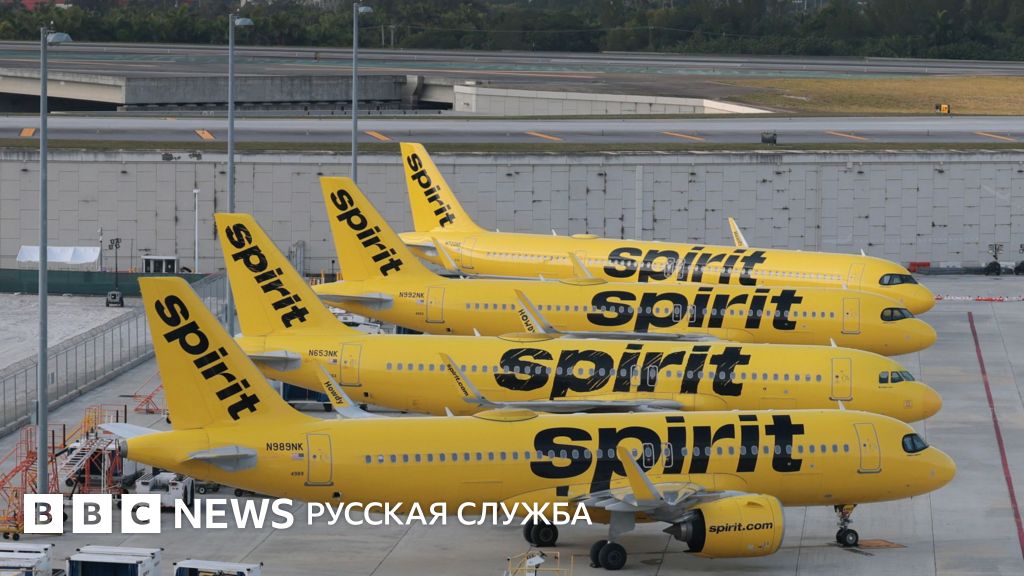
Spirit Airlines מפסיקה פעילות: הלואוקוסטר הגדול בצפון אמריקה קורס

גוש אוויר קר מביא גשמים וקור חריג; התחממות הדרגתית מאמצע השבוע
