Trump Launches 'Project Freedom' to Clear Strait of Hormuz as Asian Markets Rally
US military mobilizes destroyers and 15,000 troops to free stranded ships, as South Korean stocks hit record highs and oil prices rise.

INDIA —
Key facts
- Trump announced 'Project Freedom' to free ships stranded in the Strait of Hormuz.
- US Central Command will deploy guided-missile destroyers, over 100 aircraft, and 15,000 service members.
- South Korea's Kospi index surged 5.12% to a record 6,936.99 on Monday.
- Samsung Electronics and SK Hynix hit record intraday highs, gaining 5.44% and 12.52%.
- West Texas Intermediate crude rose 0.98% to $102.92 per barrel; Brent crude gained 1.07% to $109.31.
- US stock futures were mixed: S&P 500 futures up 0.11%, Nasdaq 100 futures up 0.33%, Dow futures down 0.1%.
- Japan and China markets were closed for public holidays.
- Australia's S&P/ASX 200 fell 0.37% to 8,697.10, the main laggard in Asia.
US Military Mobilizes to Reopen Strait of Hormuz
President Donald Trump announced Sunday that the United States would attempt to free ships stranded in the Strait of Hormuz since the outbreak of the Iran war, launching a military operation dubbed 'Project Freedom.' The effort, set to begin Monday Middle East time, aims to clear civilian vessels flagged in countries not party to the conflict from the contested waterway so they can 'freely and ably get on with their business,' Trump wrote on Truth Social. The US Central Command said shortly after the announcement that support for Project Freedom would include guided-missile destroyers, over 100 land- and sea-based aircraft, multi-domain unmanned platforms, and 15,000 service members. The operation marks a significant escalation of US military involvement in the region, as the closure of the strait has disrupted global shipping and energy markets since the start of hostilities.
Oil Prices Volatile as Markets Weigh Intervention
Oil prices fluctuated Monday as investors assessed the implications of Trump's plan. West Texas Intermediate futures for June delivery rose 0.98% to $102.92 per barrel in early US trading, while international benchmark Brent crude futures for July gained 1.07% to $109.31 per barrel. The gains came after a period of volatility as traders weighed the potential for a swift reopening of the strait against the risk of further military confrontation. The Strait of Hormuz is a critical chokepoint for global oil shipments, and its closure has contributed to elevated energy prices since the Iran war began. Analysts said the success of Project Freedom could ease supply concerns, but cautioned that any escalation could send prices higher.
South Korean Stocks Surge to Record on Tech Rally
South Korean stocks led Asian gains Monday, with the Kospi index soaring 5.12% to close at a record 6,936.99, following its strongest monthly rally in 28 years. The surge was driven by technology heavyweights Samsung Electronics and SK Hynix, which both hit record intraday highs, rising 5.44% and 12.52% respectively. The rally was fueled by positive sentiment from strong US tech earnings and hopes that the Middle East conflict might be contained. Other Asia-Pacific indexes were mostly higher. Hong Kong's Hang Seng index gained 1.26% in late afternoon trade, while India's Nifty 50 rose 0.44%. Markets in Japan and China were closed for public holidays. Australia's S&P/ASX 200 was the main laggard, declining 0.37% to 8,697.10.
US Futures Mixed After Record Wall Street Close
US stock futures traded mostly higher early Monday, though the Dow pointed lower. S&P 500 futures added 0.11%, and Nasdaq 100 futures rose 0.33%, while futures tied to the Dow Jones Industrial Average fell 48 points, or about 0.1%. The mixed performance came after Wall Street ended Friday on a high note, with the S&P 500 and Nasdaq Composite both closing at new all-time intraday and record highs. The S&P 500 rose 0.29%, and the Nasdaq climbed 0.89%, while the Dow slipped 152.87 points, or 0.31%. Investors are now focused on the unfolding situation in the Middle East and its potential impact on global markets. The success of Project Freedom could provide a boost to risk appetite, but any signs of military escalation may trigger a flight to safe havens.
Global Stakes and the Path Ahead
The Strait of Hormuz closure has already disrupted global supply chains and contributed to inflationary pressures worldwide. Trump's decision to intervene militarily marks a new phase in the conflict, with the US committing substantial naval and air assets to secure the waterway. The operation's outcome will have significant implications for energy markets, shipping costs, and the broader geopolitical landscape. As Project Freedom gets underway, the international community will be watching closely. Success could restore confidence in the stability of critical trade routes, while failure or escalation could deepen the crisis. For now, markets are cautiously optimistic, but the situation remains fluid.
The bottom line
- Trump launched 'Project Freedom' to free ships trapped in the Strait of Hormuz, deploying 15,000 troops and extensive naval assets.
- Oil prices rose modestly on Monday, with WTI at $102.92 and Brent at $109.31, as traders weighed the operation's potential impact.
- South Korea's Kospi hit a record high, led by tech stocks Samsung and SK Hynix, reflecting strong investor sentiment.
- US stock futures were mixed, with the S&P 500 and Nasdaq pointing higher but the Dow lower, after a record close on Friday.
- Markets in Japan and China were closed for holidays, limiting regional trading volume.
- The success of Project Freedom could ease supply chain disruptions and lower oil prices, but risks of escalation remain high.


Varun Chakravarthy's Spin Magic Propels KKR to Seven-Wicket Win Over SRH
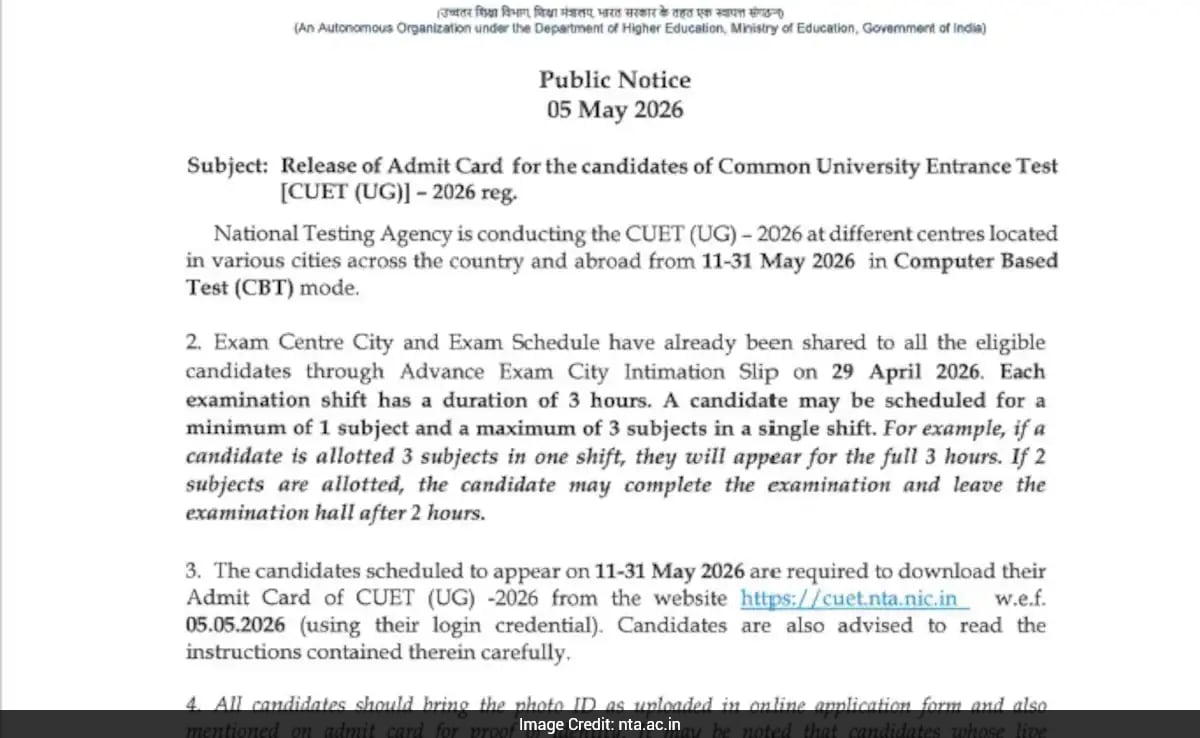
NTA Releases CUET UG 2026 Admit Card: Download from May 5, Exam Runs May 11–31
NEET UG 2026 Held Across 551 Cities in India and 14 Abroad as NTA Chief Assesses Arrangements