India to Launch Next-Gen Cell Broadcast Disaster Alert System on May 2, 2026
Union Home Minister Amit Shah will unveil the system, which integrates Cell Broadcast technology to deliver near-instantaneous, geo-targeted alerts during emergencies.

INDIA —
Key facts
- Union Home Minister Amit Shah will launch the system on May 2, 2026, alongside Communications Minister Jyotiraditya Scindia.
- The system uses Cell Broadcast technology, developed by C-DOT, to send alerts to all compatible devices in a target zone simultaneously.
- SACHET, the Integrated Alert System, has already sent over 134 billion SMS alerts in more than 19 Indian languages across all 36 States and Union Territories.
- Cell Broadcast messages are transmitted via mobile network towers, bypassing individual delivery to avoid delays during network congestion.
- The system operates on the Common Alerting Protocol (CAP) recommended by the International Telecommunication Union (ITU).
- Testing is currently underway nationwide; citizens may receive test messages on devices with Cell Broadcast test alerts enabled.
- The initiative is a collaboration between the Department of Telecommunications (DoT) and the National Disaster Management Authority (NDMA).
A New Era in Disaster Communication
On May 2, 2026, India will take a major step forward in public safety as Union Home Minister Amit Shah officially launches a next-generation mobile-based disaster communication system. The event, to be held in the presence of Union Communications Minister Jyotiraditya Scindia, marks the culmination of years of development by the Department of Telecommunications (DoT) and the National Disaster Management Authority (NDMA). The system integrates Cell Broadcast (CB) technology, a leap beyond traditional SMS-based alerts that have been the backbone of India's emergency communication. Unlike SMS, which can suffer delays when networks are congested during large-scale disasters, Cell Broadcast sends messages simultaneously to all compatible devices within a defined geographic area via mobile network towers. This ensures near-instantaneous delivery even when millions are trying to call or text at once.
The SACHET Backbone
At the heart of this initiative lies the Integrated Alert System, known as SACHET, developed by the Centre for Development of Telematics (C-DOT), the government's premier telecom R&D institution. SACHET is already fully operational across all 36 States and Union Territories, delivering geo-targeted SMS alerts during cyclones, floods, extreme weather, and other emergencies. The system is built on the Common Alerting Protocol (CAP), a global standard recommended by the International Telecommunication Union (ITU). This ensures interoperability and adherence to international best practices, allowing India's alert system to align with those of other nations. The indigenous development by C-DOT also reinforces India's push for self-reliant, secure communication infrastructure.
134 Billion Alerts and Counting
The scale of India's existing alert system is staggering. To date, disaster management authorities have used SACHET to send over 134 billion SMS alerts in more than 19 Indian languages. These alerts have been instrumental in issuing early warnings for cyclones, floods, lightning, heatwaves, and other natural disasters, helping to save lives and reduce risk at the grassroots level. Despite this success, officials acknowledge that SMS-based alerts can face delays during network congestion—a critical weakness when every second counts. The integration of Cell Broadcast technology directly addresses this vulnerability, providing a redundant, faster channel for emergency communication.
How Cell Broadcast Works
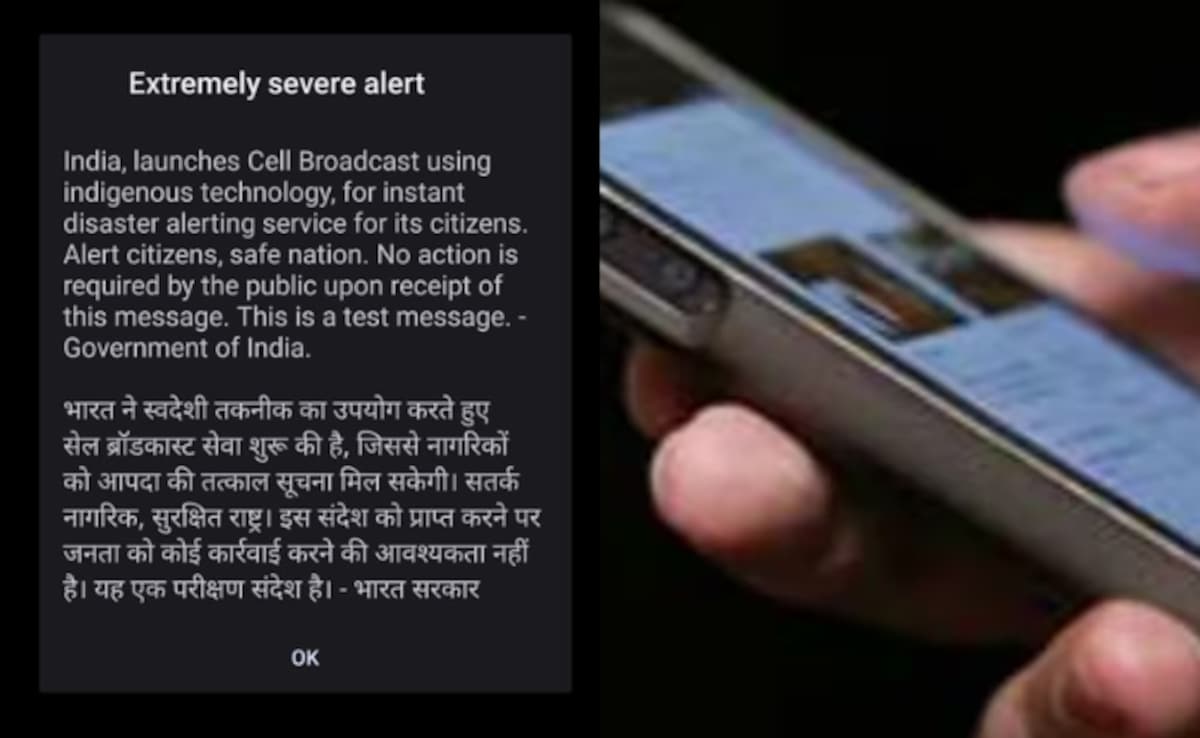
Cell Broadcast technology operates by sending alerts directly through mobile network towers to all compatible devices in a target zone. Unlike SMS, which requires individual message delivery to each phone number, CB broadcasts to every device within range, making it ideal for time-sensitive emergencies such as industrial accidents, gas leaks, or chemical hazards. During the current testing phase, citizens may receive test messages on their phones in English, Hindi, and regional languages. These messages will only appear on devices where Cell Broadcast test alerts are enabled, typically accessible via Settings → Safety & Emergency → Wireless Emergency Alerts → Test Alerts. The government is conducting extensive trials nationwide to validate the system's performance, reliability, and network integration.
A Self-Reliant Infrastructure
The entire system has been indigenously developed by C-DOT, underscoring India's commitment to self-reliance in critical communication technology. This approach not only enhances national security but also ensures that the system can be tailored to India's unique linguistic and geographic diversity. The collaboration between DoT and NDMA has been central to the project, combining telecommunications expertise with disaster management know-how. The launch on May 2, 2026, will be a public demonstration of this synergy, with both ministers highlighting the system's potential to transform emergency response.
What Comes Next
With testing underway, the government is expected to gradually roll out Cell Broadcast alerts for real emergencies after the official launch. The system will complement existing SMS-based alerts, providing a multi-layered approach to disaster communication. Citizens are advised to keep Cell Broadcast test alerts enabled on their devices to ensure they receive future emergency warnings. The success of this initiative will depend on public awareness and cooperation, as well as the seamless integration of the technology across all telecom networks in the country.
The bottom line
- India's new Cell Broadcast system launches on May 2, 2026, offering near-instantaneous, geo-targeted alerts during emergencies.
- The system builds on SACHET, which has already sent over 134 billion SMS alerts in 19+ languages across all 36 States and Union Territories.
- Cell Broadcast bypasses network congestion by broadcasting alerts via mobile towers to all compatible devices in a target zone.
- The technology is indigenously developed by C-DOT and adheres to the ITU-recommended Common Alerting Protocol.
- Current nationwide testing means citizens may receive test messages; they should ensure Cell Broadcast test alerts are enabled on their devices.
- The initiative marks a significant upgrade from SMS-based alerts, addressing delays during large-scale emergencies.






Colorado's Spring Storm Recedes, Promising a Sunny Weekend After Days of Rain and Snow

Saif Ali Khan’s Cop Drama ‘Kartavya’ to Stream on Netflix from May 15
India Launches Nationwide Cell Broadcast Emergency Alert System with 'Extremely Severe' Test Message