Timberwolves' Terrence Shannon Jr. faces bench threat despite offensive spark
Coach Chris Finch's cryptic comments on defensive lapses put the rookie's playoff role in doubt as Minnesota seeks to replace injured backcourt stars.

INDIA —
Key facts
- Terrence Shannon Jr. scored 15 points in 14 minutes off the bench in Game 5.
- Minnesota Timberwolves lost Game 5 125-113 to Denver Nuggets.
- Anthony Edwards and Donte DiVincenzo injured in first half of Game 4.
- Shannon averaged 27.3 points per game in final three regular-season games.
- Wolves committed 25 turnovers in Game 5.
- Finch said 'the only way I can clean him up is to sit him on the bench.'
- Shannon shot 6-of-10 from field, 2-of-4 from three in Game 5.
- Edwards and DiVincenzo combined for 41.0 points per game in regular season.
A puzzling critique amid a scoring crisis
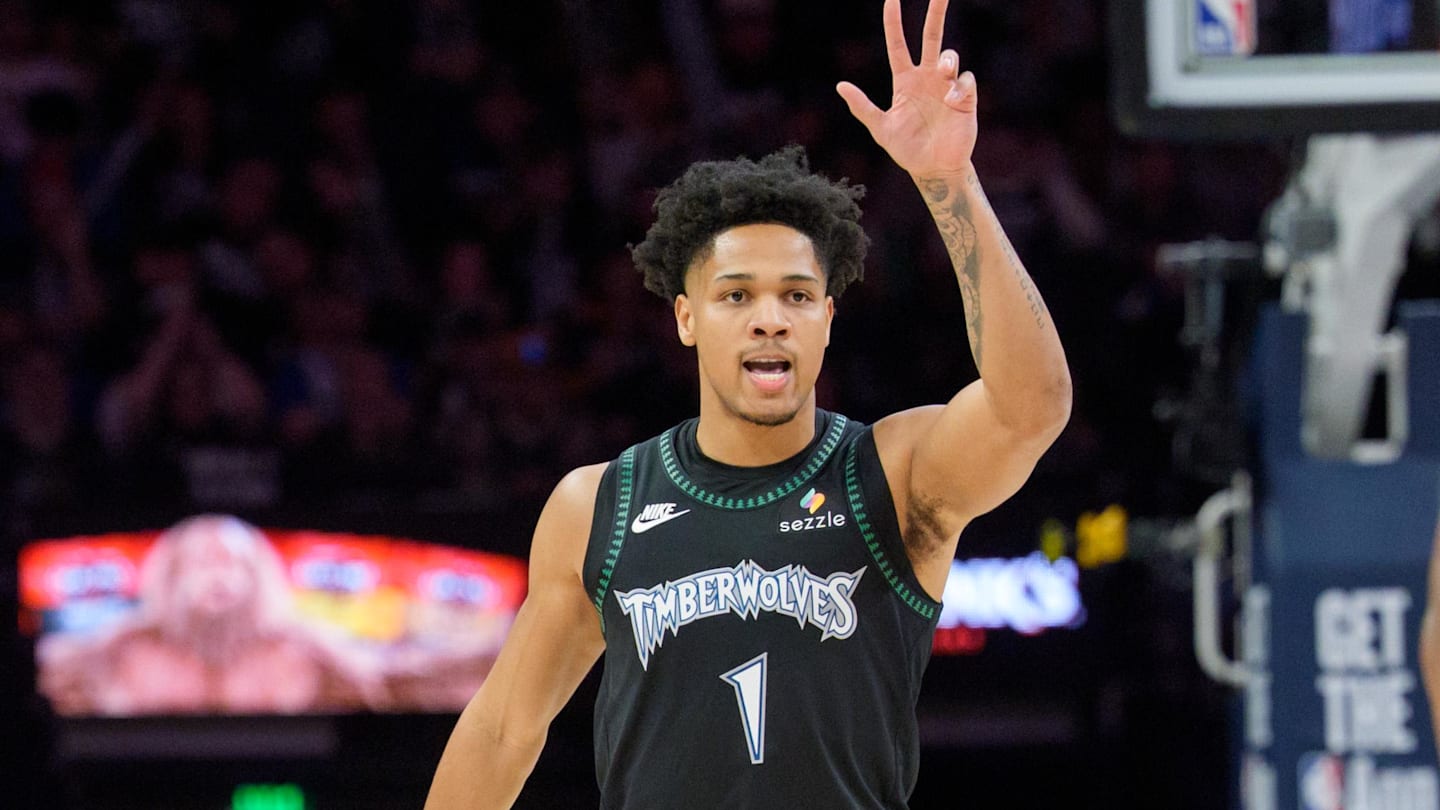
Chris Finch has quieted many critics during the Timberwolves' playoff run, but his latest comments on Terrence Shannon Jr. risk reigniting tensions. After a 125-113 Game 5 loss to the Denver Nuggets, Finch questioned the rookie's defensive commitment, saying, 'the only way I can clean him up is to sit him on the bench.' The remark came at a moment when Minnesota desperately needs offensive firepower, with starting guards Anthony Edwards and Donte DiVincenzo sidelined by injuries sustained in Game 4. Shannon, the 2024 first-round pick, had just delivered 15 points in 14 minutes, shooting 6-of-10 from the field and 2-of-4 from three-point range. It was the third time in his last five playoff games that he scored more than a point per minute. Yet Finch focused on defensive lapses, stating, 'He’s got to be ready, and he’s got to be ready to execute defensively, and there’s no reason he shouldn’t be a good defender with his body type and athleticism.'
The offensive void left by Edwards and DiVincenzo
Edwards and DiVincenzo combined for 41.0 points, 9.1 rebounds and 7.5 assists per game during the regular season. Their absence creates a gap that no single player can fill. Ayo Dosunmu has seen his role expand, averaging 7.0 more points per game than in the regular season, but that still leaves 34.0 points to replace. Julius Randle handled more playmaking duties in Game 5, but the team's 25 turnovers underscored the offensive disarray. Shannon's scoring burst in Game 5 followed a torrid end to the regular season, where he averaged 27.3 points per game over the final three contests. While replicating that output in the playoffs is unrealistic, even half of that production would be a significant boost. 'Offensively, he's proven that he can be a weapon for us,' Finch acknowledged after Game 5, before pivoting to defensive concerns.
Finch's defensive critique and its implications
Finch's comments on Shannon's defense have puzzled observers. 'It starts with gotta be ready, he’s gotta be engaged, he’s got to be fully committed to that side of the ball,' Finch said. He added that sitting Shannon on the bench was 'the only way' to address the issue. This stance contradicts the conventional wisdom that playing time is the best remedy for defensive deficiencies. Some fans and analysts interpreted the remarks as a lack of trust, potentially undermining Shannon's confidence at a critical juncture. A video compilation of Shannon's defensive possessions in Game 5, shared by a user on X, showed that while his performance was not flawless, it was not egregious either. The Wolves' defensive scheme against Denver's offense, particularly Jamal Murray, has been effective overall, but Shannon's individual lapses may be magnified in the playoffs.
Numbers that tell a different story
Shannon's offensive efficiency is hard to ignore. In Game 5, he scored 15 points on 10 shots, with a true shooting percentage of 68.8%. Over his last five playoff games dating back to last year, he has consistently produced at a rate exceeding a point per minute. In the regular season, he averaged 5.6 points per game, but that figure was depressed by early-season injuries. His late-season surge suggests untapped potential. Meanwhile, the Nuggets' offense found its rhythm in Game 5, scoring 125 points after struggling in previous games. The Timberwolves' defense, which had been a strength, faltered without Edwards and DiVincenzo on the floor. Jaylen Clark, another bench option, has shown promise in limiting Murray's effectiveness, but his offensive contributions are limited.
The rotation dilemma for Game 6
Finch faces a difficult choice for Game 6. If the Nuggets continue to score efficiently, Clark's defensive prowess may be necessary. But if the Timberwolves struggle to score, Shannon's offensive spark becomes indispensable. 'If both teams are struggling to score, or if it’s just the Timberwolves having trouble, then Shannon would be the better choice,' one analysis noted. The team's 25 turnovers in Game 5 highlighted the need for a player who can create his own shot and relieve pressure on Randle and Dosunmu. Finch's words may not match his actions. Despite his public critique, he may still turn to Shannon when scoring is needed. The rookie's ability to provide instant offense off the bench could be the difference between advancing to the next round or facing a Game 7.
A pivotal moment for player and coach
The Timberwolves are one win away from eliminating their biggest rival for the second time in three years, but the path has become steeper. Shannon's role in this series could define his early career and Finch's postseason legacy. The coach's handling of a young player's confidence is under scrutiny, especially when the team's offensive needs are so acute. Shannon has shown he can produce under pressure. Whether Finch trusts him enough to let him play through defensive mistakes will be a key subplot in Game 6. The outcome may hinge on whether the coach's actions align with his words, or if he opts to keep his most potent offensive weapon on the bench.
The bottom line
- Terrence Shannon Jr. scored 15 points in 14 minutes in Game 5, but coach Chris Finch criticized his defense and suggested benching him.
- The Timberwolves are without injured starters Anthony Edwards and Donte DiVincenzo, creating a 41-point-per-game scoring void.
- Shannon averaged 27.3 points per game in the final three regular-season games, showing his offensive potential.
- Finch's comments risk undermining Shannon's confidence at a critical moment in the playoffs.
- Minnesota committed 25 turnovers in Game 5, underscoring the need for reliable scoring options off the bench.
- Game 6 will test whether Finch prioritizes defense or offense in his rotation decisions.



-6b603189aea977d5f04e2fd789f72ce1.jpg)
Colorado's Spring Storm Recedes, Promising a Sunny Weekend After Days of Rain and Snow

Saif Ali Khan’s Cop Drama ‘Kartavya’ to Stream on Netflix from May 15

India Launches Nationwide Cell Broadcast Emergency Alert System with 'Extremely Severe' Test Message