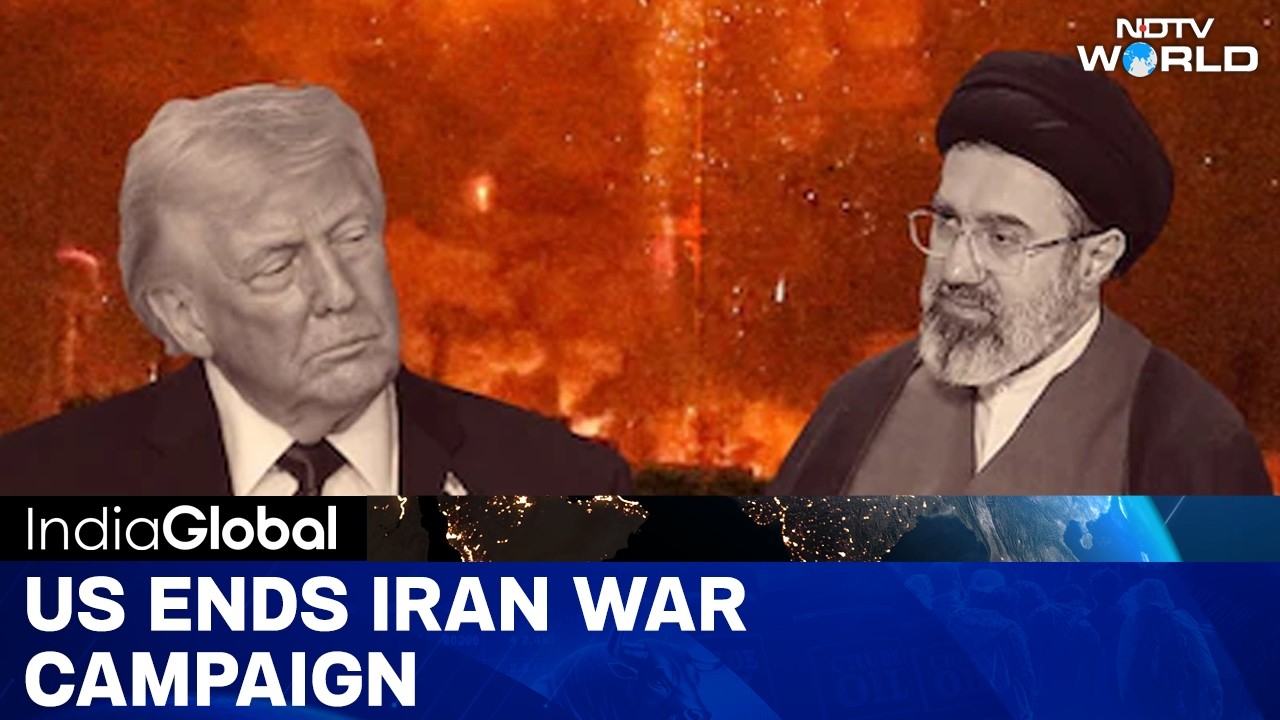
US Declares End to Iran Campaign, But Tensions Simmer
Secretary Rubio announces Operation Epic Fury is over, yet President Trump issues veiled threats, and Iran dismisses the claims as escalation.

INDIA —
Key facts
- Operation Epic Fury, a US-Israel war on Iran, commenced on February 28.
- US Secretary of State Marco Rubio stated Operation Epic Fury concluded Tuesday.
- President Donald Trump announced Project Freedom, a US military operation in the Strait of Hormuz, was paused Tuesday.
- Iran claims to have hit a US warship with drones.
- The US military's Central Command claims to have sunk at least six IRGC vessels.
- The UAE accused Iran of launching strikes on its Fujairah port.
- Pakistan has been attempting to arrange direct talks between Iran and the US.
Conflicting Signals on Iran Conflict's End
United States Secretary of State Marco Rubio declared on Tuesday that Operation Epic Fury, the US-Israel military campaign against Iran that began on February 28, has concluded. Rubio stated that the operation achieved its objectives and that Washington now favors "the path of peace." This announcement came on the same day that President Donald Trump revealed the pause of Project Freedom, a US military operation aimed at guiding ships through the Strait of Hormuz. However, the definitive stance on the conflict's end was immediately complicated by President Trump's own social media pronouncements. He indicated that Operation Epic Fury would cease only if Iran agreed to prior terms, warning that failure to do so would result in a significantly more intense resumption of hostilities. This divergence in messaging created immediate uncertainty regarding the true status of the conflict. Rubio, in a White House briefing, reiterated that the objectives of Operation Epic Fury had been met. He emphasized the administration's preference for a diplomatic resolution, referencing Pakistan's ongoing efforts to broker direct talks between Iran and the United States. The first round of these talks in Islamabad last month concluded without a breakthrough, though both nations have since submitted new proposals.
Project Freedom and the Strait of Hormuz Standoff
President Trump stated that Project Freedom was paused following requests from Pakistan and other nations, citing "Great Progress has been made towards a Complete and Final Agreement" with Iran. Project Freedom directly challenged Iran's effective blockade of the Strait of Hormuz, a critical chokepoint for global energy supplies. Since the US-Israel war commenced, Iran's threats against vessels have severely restricted passage through the strait, which normally handles 20 percent of the world's oil and liquefied natural gas. The situation escalated further on April 13 when the US imposed a naval blockade on Iranian ports, intensifying the standoff. Following Trump's announcement of Project Freedom, Iran responded by stating that any ships attempting to transit the strait without authorization from its Islamic Revolutionary Guard Corps (IRGC) would face fire, heightening fears of renewed conflict. This exchange triggered a war of words, with both the US and Iran trading claims of strikes. hitting a US warship with drones that allegedly ignored warnings to turn back. The US military's Central Command, however, denied any US vessel was struck and instead claimed to have sunk at least six IRGC vessels. Tehran subsequently released a new map expanding its claimed control over the strait, encroaching on the territorial waters of the United Arab Emirates and raising concerns of a wider regional confrontation.
Iran's Response and Regional Repercussions
Tehran has largely dismissed the US announcement of Operation Epic Fury's conclusion, accusing Washington of continued military escalation and coercion. Iran's stated desire is for guarantees that any cessation of hostilities marks a permanent end to the war, not merely a temporary pause. This demand underscores a fundamental divergence in objectives and trust between the two nations. The regional implications of the conflict remain a significant concern. The United Arab Emirates accused Iran of launching strikes on its Fujairah port, a location vital for an important oil pipeline, and causing a fire at an oil refinery. These accusations add another layer of complexity to the already volatile situation in the Persian Gulf. On Tuesday, the US operation was halted specifically to facilitate ongoing negotiations with Iran, framed as a diplomatic overture, stands in contrast to the aggressive rhetoric and actions reported from both sides, leaving the true trajectory of the conflict in doubt.
Diplomatic Efforts and Underlying Tensions
Pakistan has emerged as a key mediator, actively working to arrange direct talks between Iran and the US. The initial round of negotiations held in Islamabad last month failed to yield a resolution, highlighting the deep-seated disagreements. Since then, both parties have presented new proposals, indicating a continued, albeit difficult, engagement with the diplomatic process. Despite the stated pause in military operations, the underlying tensions remain palpable. Iran's insistence on guarantees for a final end to the war suggests a deep-seated mistrust of US intentions. The exchange of claims regarding naval engagements and the UAE's accusations against Iran point to a volatile environment where de-escalation is fragile. President Trump's conditional statements regarding the end of Operation Epic Fury, linking it directly to Iran's compliance with agreed terms, underscore the high stakes. The threat of significantly increased military action looms, underscoring the precariousness of the current pause and the potential for rapid escalation.
A Fragile Peace or a Prelude to Escalation?
The conflicting pronouncements from Washington and Tehran paint a picture of a deeply uncertain situation. While US Secretary of State Rubio has declared an end to military operations, President Trump's rhetoric suggests a readiness to unleash "overwhelming force" should negotiations falter. This ambiguity leaves regional actors and international observers on edge. Iran's response, characterized by accusations of continued US coercion and a demand for definitive peace guarantees, reflects its strategic position and concerns about long-term security. incidents involving alleged drone strikes and the US claims of sinking IRGC vessels, alongside the UAE's accusations, demonstrate the ongoing volatility and the potential for miscalculation. The pause in Project Freedom, presented as a concession to facilitate diplomacy, is a critical juncture. The success of these ongoing talks, mediated by Pakistan, will determine whether this moment represents a genuine step towards de-escalation or merely a temporary respite before a potentially more intense phase of conflict. The world watches closely as the complex dynamics between the US and Iran continue to unfold.
The bottom line
- The US has declared its military campaign against Iran, Operation Epic Fury, officially over, citing achieved objectives.
- President Trump's statements suggest the end of hostilities is conditional on Iran's agreement to terms, with a threat of intensified action.
- A US operation to secure the Strait of Hormuz, Project Freedom, has been paused to allow for diplomatic progress.
- Iran disputes the US narrative, accusing Washington of continued escalation and demanding guarantees for a lasting peace.
- Regional tensions remain high, with accusations of strikes on of naval engagements.
- Pakistan is mediating talks between the US and Iran, with both sides having submitted new proposals following an earlier failed round.


NTA Releases CUET UG 2026 Admit Card: Download from May 5, Exam Runs May 11–31

US and Iran Near Deal to End War, Sources Say
