Trump Pauses Hormuz Operation as Diplomacy Advances; Iran Tightens Strait Rules
The U.S. president halts a military-backed mission in the Strait of Hormuz amid talks with Tehran, while Iran expands its claimed control area and warns ships of consequences.

INDIA —
Key facts
- President Donald Trump paused a key military-backed operation in the Strait of Hormuz, citing diplomatic progress with Iran and requests from allies.
- The U.S. blockade remains active, but the halt in ship movement signals a potential shift toward negotiations.
- Secretary of State Marco Rubio accused Iran of 'economic arson,' maintaining that U.S. actions are defensive.
- Iran introduced new transit rules and expanded its claimed control area, warning ships of consequences.
- Defense Secretary Pete Hegseth stated that the ceasefire with Iran remains in place despite growing tensions in the Hormuz Strait.
- Iran declared that warship transit through the Strait constitutes 'a violation of ceasefire.'
- The U.S. military previously shot, boarded, and captured an Iranian ship in the Gulf two weeks ago.
- Global trade routes and geopolitical stability remain at risk as the situation stays volatile.
A Pause, Not a Withdrawal
President Donald Trump has ordered a halt to a key military-backed operation in the Strait of Hormuz, a move that stops the movement of U.S. and allied ships through the strategic waterway even as the naval blockade remains formally in place. The decision, announced amid reports of diplomatic progress between Washington and Tehran, came after requests from allied nations concerned about the escalating confrontation. Defense Secretary Pete Hegseth confirmed that the ceasefire with Iran remains intact despite the heightened tensions in the region. The pause in operations, he indicated, is intended to create space for negotiations rather than signal a retreat from U.S. objectives.
Iran’s Red Line and New Transit Rules
Iran responded to the U.S. move by tightening its grip on the Strait. Tehran declared that any warship transit through the waterway constitutes a violation of the existing ceasefire, effectively drawing a red line for naval movements. Iranian authorities introduced new transit rules and expanded the area under their claimed control, warning commercial and military vessels of consequences if they fail to comply. The expanded control zone and stricter rules represent a direct challenge to the U.S.-led naval presence. Iran’s warnings have heightened the risk of accidental clashes, as ships navigate a corridor that handles roughly one-fifth of the world’s oil supply.
Rubio’s Accusation and the Defensive Stance
Secretary of State Marco Rubio accused Iran of 'economic arson,' arguing that Tehran’s actions are designed to disrupt global energy markets and undermine regional stability. He maintained that all U.S. operations in the Strait are defensive in nature, aimed at protecting freedom of navigation and deterring Iranian aggression. Rubio’s remarks came as the administration sought to frame the pause in operations as a tactical shift rather than a concession. The accusation of economic arson reflects the broader U.S. narrative that Iran is the aggressor, even as Washington halts its own military activities.
A Timeline of Escalation
The current crisis has unfolded over several weeks. One month ago, Trump launched a rescue mission called 'Project Freedom' after Iran labeled a previous U.S. operation a truce violation. Three weeks ago, Iran’s foreign ministry warned that warship transit would breach the ceasefire, while U.S. allies rejected Trump’s naval blockade, supporting freedom of navigation instead. Two weeks ago, the U.S. military shot, boarded, and captured an Iranian ship in the Gulf, an incident that Trump shared details of publicly. One day before the pause, Trump had announced the Hormuz rescue mission, only to reverse course as diplomatic channels opened.
Global Markets and Geopolitical Stakes
The volatility in the Strait has kept global markets on edge, with oil prices fluctuating sharply as traders weigh the risk of supply disruptions. The waterway is a critical chokepoint for crude shipments from the Middle East, and any sustained disruption could send prices soaring. Beyond economics, the standoff carries profound geopolitical implications. Iran has signaled a desire for a 'comprehensive agreement' with the United States, while Trump has spoken of progress in talks. Yet the pause in operations is fragile: the blockade remains, Iran’s new rules are in effect, and both sides continue to accuse each other of bad faith.
What Comes Next: Negotiations or New Confrontation?
The coming days will test whether the pause can be transformed into a durable ceasefire. U.S. and Iranian envoys have reportedly met, with China also involved in diplomatic efforts. Trump has hinted at progress, and Rubio has suggested that the war may be 'over,' but such statements have been made before without lasting results. Iran’s demand for a comprehensive agreement and its insistence on the ceasefire’s terms will be central to any talks. The U.S., for its part, must decide whether to lift the blockade entirely or maintain pressure while negotiating. The stakes could not be higher: a miscalculation in the Strait could spark a broader conflict that draws in regional powers and disrupts the global economy.
A Precarious Balance
The pause in the Hormuz operation is a gamble. By stepping back from direct confrontation, Trump has opened a window for diplomacy — but he has also given Iran room to entrench its position. The new transit rules and expanded control zone suggest Tehran is using the lull to reshape the status quo in its favor. For now, the Strait remains a flashpoint. The ceasefire holds, but barely. The world watches as two adversaries test each other’s resolve, with the flow of oil and the stability of the region hanging in the balance. The next move — whether a handshake or a missile — will define the outcome of this high-stakes standoff.
The bottom line
- Trump paused a military operation in the Strait of Hormuz but kept the blockade active, citing diplomatic progress with Iran and allied requests.
- Iran expanded its claimed control area and introduced new transit rules, warning ships of consequences and declaring warship transit a ceasefire violation.
- Secretary of State Rubio accused Iran of 'economic arson' and framed U.S. actions as defensive, while Defense Secretary Hegseth affirmed the ceasefire remains in place.
- The U.S. military had shot, boarded, and captured an Iranian ship two weeks prior, and Trump had launched 'Project Freedom' a day before the pause.
- Global markets remain on edge due to potential oil supply disruptions, and geopolitical stability hinges on whether the pause leads to a durable agreement or renewed confrontation.
- Iran seeks a 'comprehensive agreement' with the U.S., but the expanded control zone and new rules suggest Tehran is consolidating gains during the diplomatic lull.




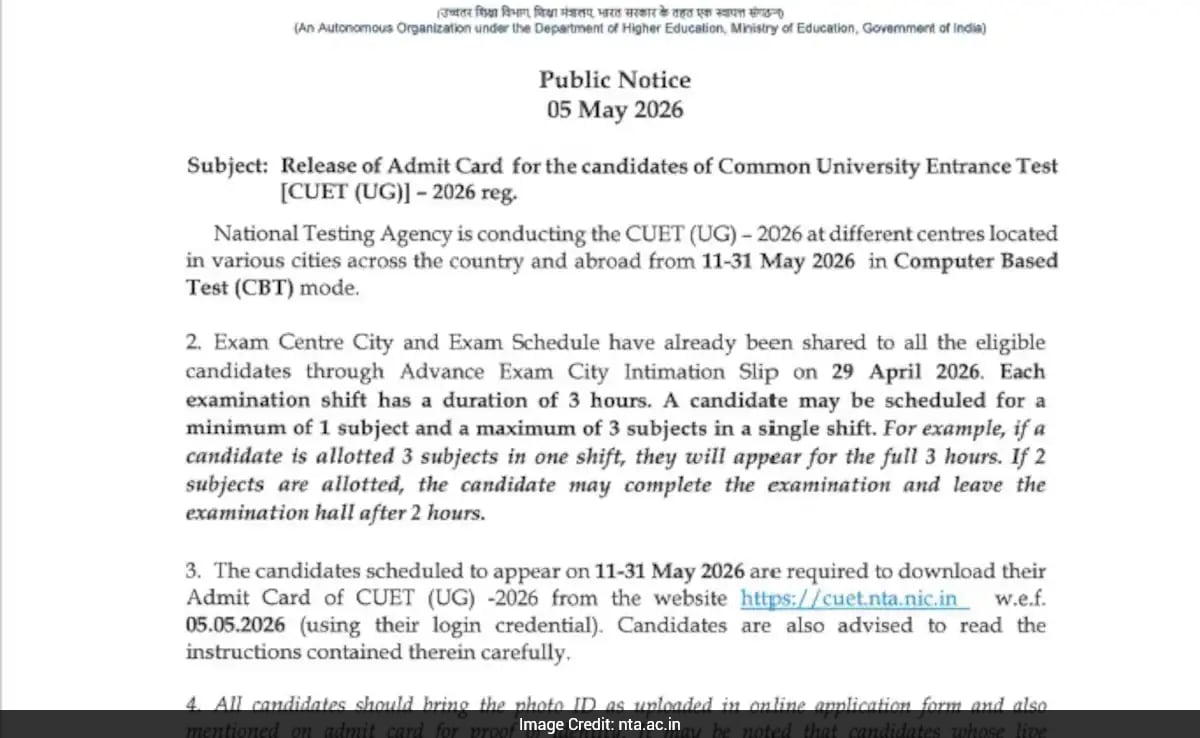
NTA Releases CUET UG 2026 Admit Card: Download from May 5, Exam Runs May 11–31
NEET UG 2026 Held Across 551 Cities in India and 14 Abroad as NTA Chief Assesses Arrangements
India Approves $1.9 Billion Credit Guarantee to Shield MSMEs and Airlines from West Asia Crisis