Kenya Grapples with 12% Wage Hike Dispute Amidst Economic Pressures
Labour unions and employers clash over the scope and implementation of a government-mandated pay increase, highlighting deep economic divisions.

KENYA —
Key facts
- The Kenyan government has announced a 12% increase in general minimum wages and a 15% increase for agricultural workers.
- Labour Cabinet Secretary Alfred Mutua signed legal notices formalising the wage adjustments on Thursday, May 7.
- President William Ruto initially directed the 12% general wage increase on Labour Day, May 1.
- The Federation of Kenya Employers (FKE) disputes the applicability of the increase to all workers, stating it applies only to statutory minimum wages.
- COTU Secretary General Francis Atwoli insists the 12% rise is a general adjustment intended for all workers.
- In May 2024, President Ruto approved a 6% minimum wage increase.
- Trade unions are pushing for a 23% rise in minimum wage, citing increased living costs.
Government Formalises Wage Adjustments Amidst Worker Demands
The Kenyan government has moved to formalise wage adjustments for its workforce, signing legal notices that implement a 12 per cent increase in general minimum wages and a 15 per cent rise for agricultural workers. Labour Cabinet Secretary Alfred Mutua announced on Thursday, May 7, that these changes, stemming from President William Ruto's Labour Day directive, will soon be gazetted and will directly impact employee earnings across various sectors. This move is presented as part of a broader government strategy to bolster incomes and shield citizens from the escalating cost of living. The revised wage structure is intended to guide employers in reviewing salaries and updating their payroll systems, which will be reflected in pay slips. Mutua stated that these adjustments set new minimums across sectors and would direct the private sector in reviewing staff remuneration. Once gazetted, both private and public sector employers are expected to align their employees' salaries with the new structures. For instance, an employee earning Ksh50,000 would see their salary increase by Ksh6,000 to Ksh56,000. The announcement follows President Ruto's May 1 directive during Labour Day celebrations in Vihiga County. The legal notices have been forwarded to the Attorney General’s office for the final gazettement process. The government's intention is to provide much-needed relief to workers grappling with economic pressures, a sentiment echoed by labour unions who have been advocating for higher pay.
Employers Challenge Scope of Wage Increase
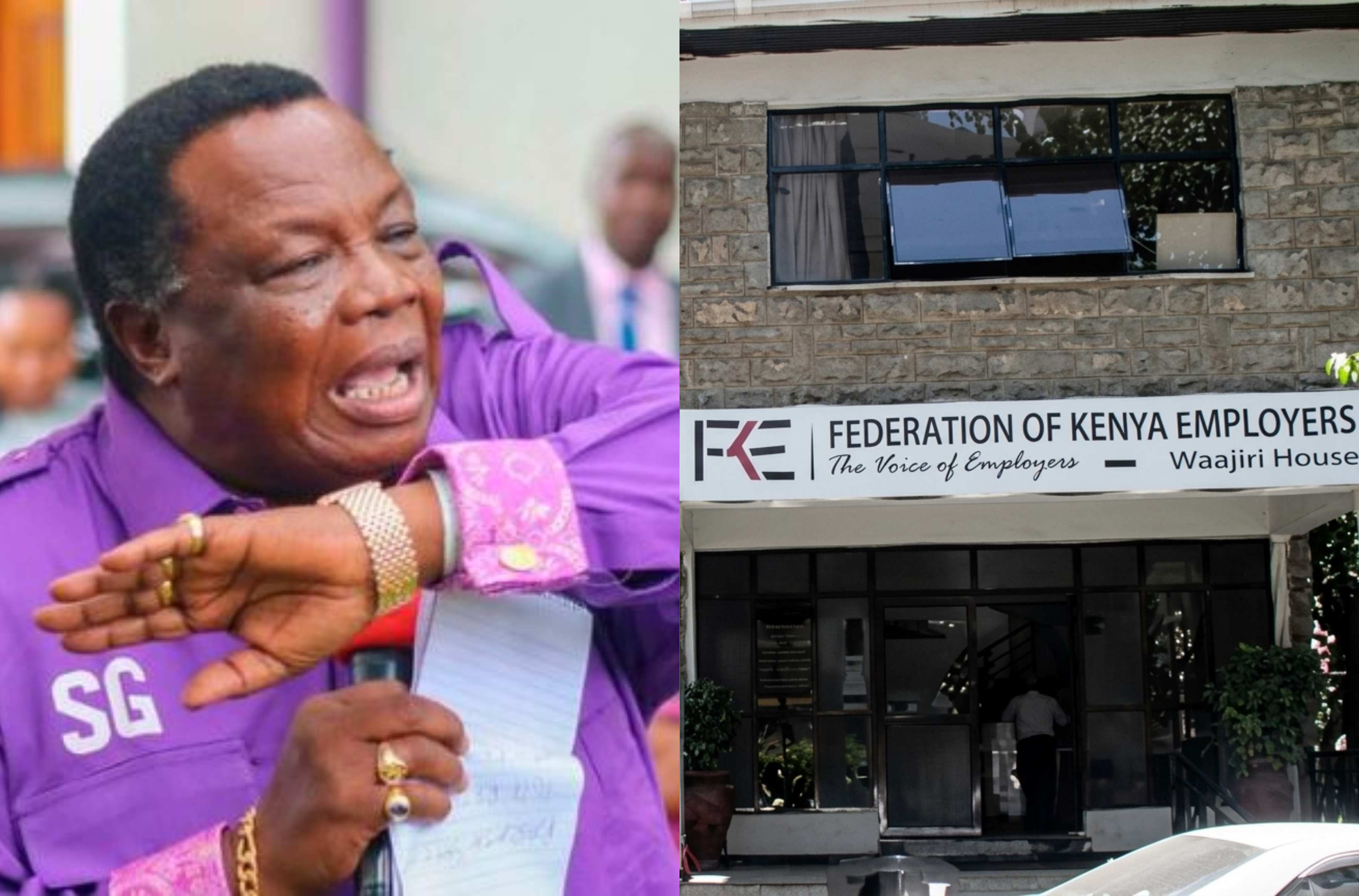
The Federation of Kenya Employers (FKE) has voiced strong opposition to the interpretation that the 12 per cent pay rise applies to all Kenyan workers. FKE Chief Executive Officer Jacqueline Mugo stated on May 4 that employers will only adjust statutory minimum wages, not general wages, in line with existing laws. The employers' body argues that government-directed wage adjustments are legally bound to statutory minimums set through Wages Councils and published in Regulation of Wages Orders. Kenyan law grants the government power only to regulate minimum wages, not general wages. Any adjustments must adhere to prescribed orders, and employers retain the legal discretion to set wages above these statutory minimums based on employment contracts, collective bargaining agreements (CBAs), productivity, and market dynamics. FKE cited provisions of the Labour Institutions Act, 2007, and the Labour Relations Act, 2007, asserting that claims of a general wage increase lack legal basis and risk creating industrial tension. This stance directly contradicts the position of COTU Secretary General Francis Atwoli, who has accused FKE of misrepresenting President Ruto's directive. Atwoli maintains that the 12 per cent increase is a general adjustment intended to improve workers' pay amidst rising living costs and will take effect once gazetted.
Union Leader Accuses Employers of Misinterpreting Directive
COTU Secretary General Francis Atwoli has vehemently rejected the FKE's interpretation, asserting that President Ruto's Labour Day pronouncement constitutes a clear policy directive aimed at enhancing workers' welfare. Atwoli stated that the President's message was "clear, unequivocal, and made in the full glare of the public," and is currently being operationalised into law. He accused the FKE of attempting to frustrate the implementation of the wage increase and deny workers essential relief by limiting the directive's scope. Atwoli argued that focusing solely on minimum wages ignores the broader policy intent behind the President's announcement. He emphasised the importance of Kenya's tripartite labour framework, warning that employers' failure to align with national policy could undermine industrial harmony. COTU-K has urged employers to implement the directive once it is formalised into law and to disregard what it terms as misleading interpretations from the FKE. The union leader's push for a 23 per cent increase in salaries during this year's Labour Day celebrations underscores the significant gap between worker demands and employer willingness to concede. In 2022, Atwoli's push for a 23.4 per cent rise resulted in a 12 per cent increase, met with opposition from the FKE.
Economic Pressures and Political Undercurrents Shape Debate
The current wage dispute unfolds against a backdrop of significant economic pressure on Kenyan workers, who are grappling with a rising cost of living. Labour unions have been actively lobbying for substantial pay rises, with COTU-K pushing for a 23 per cent increase this year, citing the escalating expenses for essential goods and services. This demand is amplified by workers' concerns over the impact of new or enhanced compulsory deductions for social healthcare, affordable housing, and retirement savings under President Ruto's administration. Employers, however, point to elevated operating expenses and structural challenges within the economy as reasons for their resistance to significant pay hikes. The FKE argues that addressing issues such as delays in tax refunds and outstanding payments from government entities would create a more sustainable business environment, enabling companies to grow and absorb higher wage bills. They advocate for fixing these economic challenges before implementing broad salary increases. The political sensitivity of minimum wage adjustments is also evident, with past double-digit increases coinciding with election cycles in 2013, 2017, and 2022. President Ruto, who approved a 6 per cent minimum wage increase in May 2024, now faces a delicate balancing act between supporting workers' demands and appeasing employers, with the stakes high ahead of future political considerations.
A Precarious Path Forward for Workers' Incomes
The immediate future for Kenyan workers hinges on the gazettement of the new wage orders and the subsequent actions of employers. While the government has formally announced a 12 per cent increase in general wages, the FKE's legal interpretation suggests a potential divergence in implementation, with statutory minimums being the primary focus for adjustments. This creates uncertainty for many employees whose current wages may exceed the statutory minimums but fall below the expected general increase. COTU-K's insistence on the directive applying broadly to all workers signals a potential for continued friction if employers do not comply fully. The union's commitment to revisiting collective bargaining agreements (CBAs) alongside minimum wage negotiations indicates a dual strategy to improve living standards and narrow income inequalities. The success of this approach will depend on the willingness of both employers and the government to engage constructively. Ultimately, the resolution of this dispute will have significant implications for industrial harmony and the economic well-being of a large segment of Kenya's workforce. The government's ability to mediate effectively between the competing interests of labour and capital will be crucial in navigating these complex economic and political currents.
The bottom line
- Kenya's government has mandated a 12% increase in general minimum wages and 15% for agricultural workers, formalised through legal notices signed on May 7.
- A significant dispute exists between the Federation of Kenya Employers (FKE) and COTU over whether the 12% increase applies to all workers or only statutory minimum wages.
- COTU Secretary General Francis Atwoli insists the directive is a general pay rise for all workers, while FKE maintains it is legally limited to statutory minimums.
- Employers cite economic challenges and structural issues as reasons for their resistance to broad wage increases, advocating for business environment improvements first.
- Trade unions are pushing for a larger 23% wage increase, driven by the rising cost of living and concerns over new deductions impacting workers' net pay.
- The outcome of this dispute carries political weight, as minimum wage adjustments have historically been sensitive during election cycles.


Crystal Palace Faces Shakhtar Donetsk in Crucial Conference League Tie
Amos Kimunya Retires from Politics After Corruption Case Acquittal

Kenya Ditches Physical Logbooks for Digital System June 10