DRAM ETF Surges 45% in Debut Month, Attracting South Korean Investors
The Roundhill Memory ETF, focusing solely on memory semiconductors, has delivered exceptional returns, drawing significant interest from overseas investors in South Korea.
SOUTH KOREA —
Key facts
- The Roundhill Memory ETF (ticker: DRAM) launched in New York on April 2, 2024.
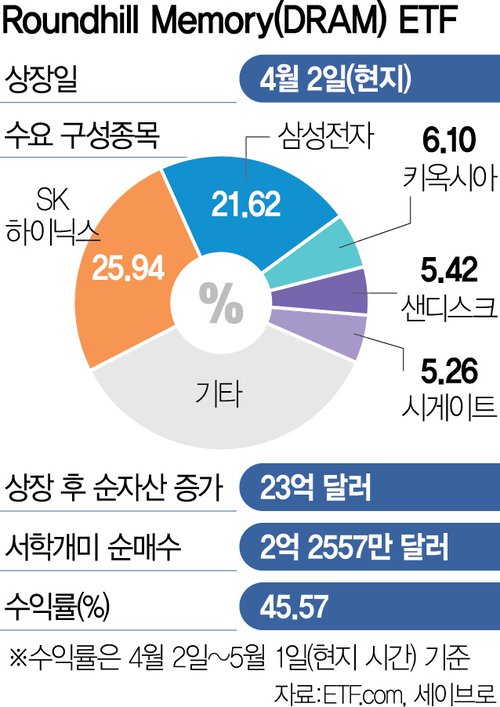
- The ETF achieved a 45.57% return within its first month.
- South Korean investors ('Seohakgaemi') net purchased $225.57 million of the ETF.
- This net purchase represents approximately 9.8% of the ETF's total inflows.
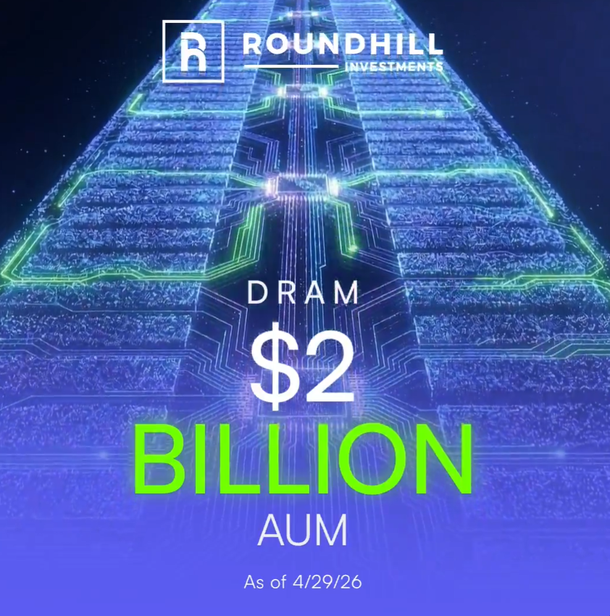
- The ETF's assets under management reached $2.48 billion (approximately 3.65 trillion won) by May 1.
- Samsung Electronics and SK Hynix constitute nearly half of the ETF's portfolio.
- The ETF is the first globally to exclusively invest in the memory semiconductor ecosystem.
Memory Semiconductor ETF Delivers Explosive Returns
A new exchange-traded fund (ETF) focused exclusively on the global memory semiconductor industry has achieved remarkable success in its inaugural month. The Roundhill Memory ETF, trading under the ticker DRAM on the New York Stock Exchange, has delivered a staggering 45.57% return since its launch on April 2, 2024. This performance has significantly outpaced domestic South Korean semiconductor ETFs, underscoring the strategic acumen of overseas investors. The fund's rapid ascent is not merely a matter of market timing but a testament to its specialized investment strategy. By concentrating solely on the memory semiconductor ecosystem, the DRAM ETF offers a targeted approach to a critical segment of the technology sector. This focus has resonated with investors seeking high-growth opportunities within this niche. The ETF's substantial gains have captured the attention of both institutional and retail investors. Its performance has validated the thesis that specialized, sector-focused funds can generate significant alpha, particularly in dynamic technological markets. The fund's early success suggests a strong demand for such tailored investment vehicles.
South Korean Investors Fuel ETF's Rapid Growth
A significant portion of the Roundhill Memory ETF's early success can be attributed to South Korean retail investors, often referred to as 'Seohakgaemi' (overseas stock investors). These investors collectively net purchased $225.57 million worth of the DRAM ETF within its first month of trading. This substantial inflow accounts for approximately 9.8% of the ETF's total assets under management (AUM), highlighting their pivotal role in its initial popularity. As of May 1, the DRAM ETF had amassed $2.48 billion in AUM, or roughly 3.65 trillion won, demonstrating its rapid expansion. The significant investment by South Korean investors indicates a strong conviction in the future prospects of memory chip manufacturers. This trend of South Korean investors venturing into overseas markets for high-yield opportunities is notable. The ETF's performance, even after accounting for the 22% capital gains tax on foreign stock trading profits, has proven more lucrative than many domestic investment options, reinforcing the appeal of global diversification.
Portfolio Concentration Drives Superior Returns
The exceptional performance of the DRAM ETF is rooted in its unique portfolio structure. Unlike diversified semiconductor funds, the DRAM ETF is the world's first to exclusively concentrate its investments within the memory semiconductor sector. This focused approach allows it to capitalize directly on the specific dynamics and growth drivers of memory chip manufacturers. Key holdings within the ETF include South Korean tech giants Samsung Electronics and SK Hynix, which together comprise nearly half of the fund's total assets. This significant weighting in two of the world's leading memory chip producers provides substantial exposure to the sector's performance. The strategic decision to focus solely on memory semiconductors, rather than a broader semiconductor index, has enabled the ETF to capture a greater share of the sector's upside. This specialization differentiates it from competitors and appeals to investors seeking targeted exposure to memory chip market trends.
Comparison with Domestic Semiconductor Funds
The Roundhill Memory ETF's 45.57% return in its first month significantly surpassed the performance of leading domestic South Korean semiconductor ETFs. For instance, the TIGER Semiconductors TOP10 ETF recorded a 36.87% return during the same period, while the KODEX Semiconductor ETF achieved 40.04%. This performance gap suggests that the specialized nature of the DRAM ETF, with its exclusive focus on memory semiconductors and significant allocation to global leaders like Samsung and SK Hynix, provided a distinct advantage. Investors in South Korea who opted for the DRAM ETF over local alternatives have seen demonstrably better results. The comparison highlights a potential shift in investment strategies, with investors increasingly seeking out niche funds that offer concentrated exposure to high-growth technology segments. The success of the DRAM ETF may encourage the development of similar specialized funds in the future.
Contrasting Investment Strategies Emerge
Intriguingly, the surge in investment into the memory-focused DRAM ETF by South Korean investors occurred concurrently with a massive allocation of funds into inverse semiconductor ETFs. The Direxion Daily Semiconductor Bear 3X Shares (SOXS), an ETF designed to profit from a 3x leveraged decline in semiconductor stocks, was the top net purchase among South Korean overseas investors over the past month, attracting $426.07 million. This dual strategy suggests a complex and perhaps hedging-oriented approach by some investors. While betting on the growth of memory semiconductors through the DRAM ETF, they simultaneously positioned themselves to profit from a downturn in the broader semiconductor market via SOXS. This behavior reflects a sophisticated understanding of market volatility and a willingness to employ diverse strategies to navigate the semiconductor landscape. It underscores the dynamic and often contrarian nature of modern investment.
Future Outlook for Memory Semiconductor Investments
The strong debut of the Roundhill Memory ETF signals a robust investor appetite for specialized exposure to the memory semiconductor market. As the demand for advanced computing, artificial intelligence, and data storage continues to grow, the importance of memory chips is only set to increase. Analysts will be closely monitoring the ETF's ability to sustain its performance amidst market fluctuations and evolving technological landscapes. The concentration in Samsung Electronics and SK Hynix makes its trajectory closely tied to the fortunes of these two giants. Furthermore, the success of the DRAM ETF may pave the way for other sector-specific funds, potentially broadening the investment universe for those seeking targeted exposure to critical technology sub-sectors. The ongoing evolution of the semiconductor industry promises continued opportunities and challenges for investors.
The bottom line
- The Roundhill Memory ETF (DRAM) has delivered exceptional returns of over 45% in its first month, outperforming domestic South Korean semiconductor ETFs.
- South Korean investors were significant contributors to the ETF's early success, net purchasing over $225 million.
- The ETF's strategy focuses exclusively on the memory semiconductor ecosystem, with major holdings in Samsung Electronics and SK Hynix.
- The fund's assets under management rapidly grew to $2.48 billion within its first month.
- Investor behavior shows a simultaneous interest in both memory semiconductor growth (DRAM ETF) and potential market downturns (inverse ETFs like SOXS).
- The ETF's performance highlights a growing demand for specialized, sector-focused investment products in the technology sector.



선발진 붕괴로 9위 추락한 한화, 18세 신인 강건우가 구세주 될까

Beyoncé Returns to Met Gala as Co-Chair Amid Bezos Controversy and $10 Million Donation

LAFC Eliminated from Concacaf Champions Cup After Crushing Semifinal Defeat