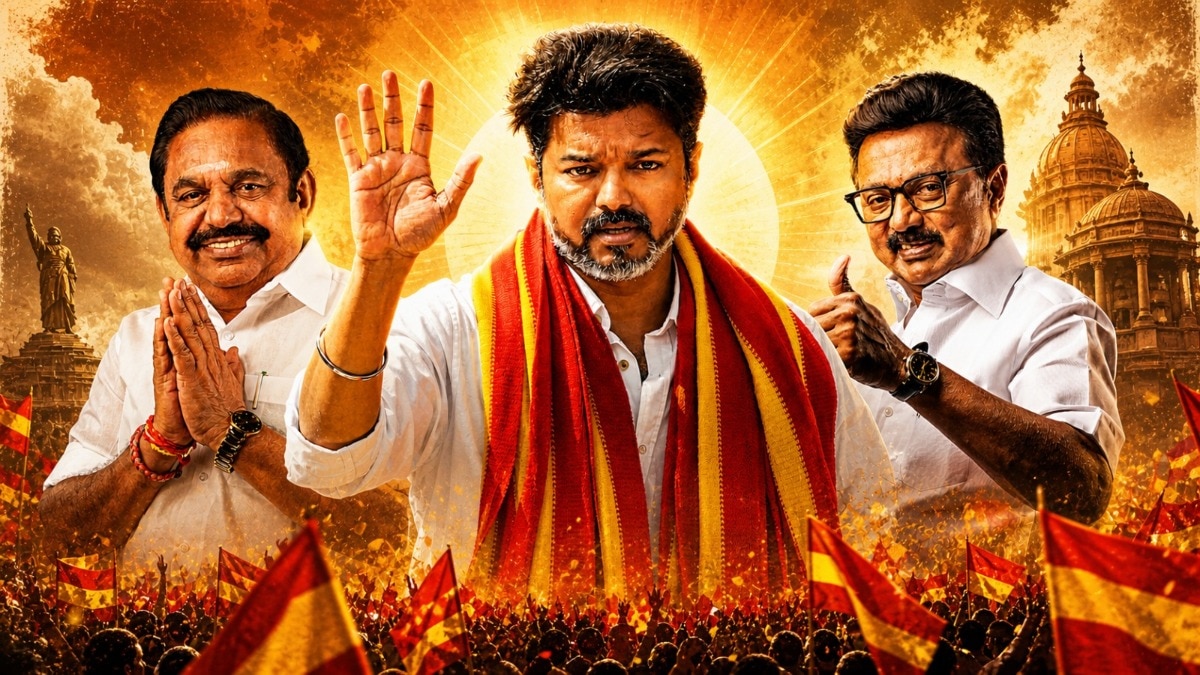
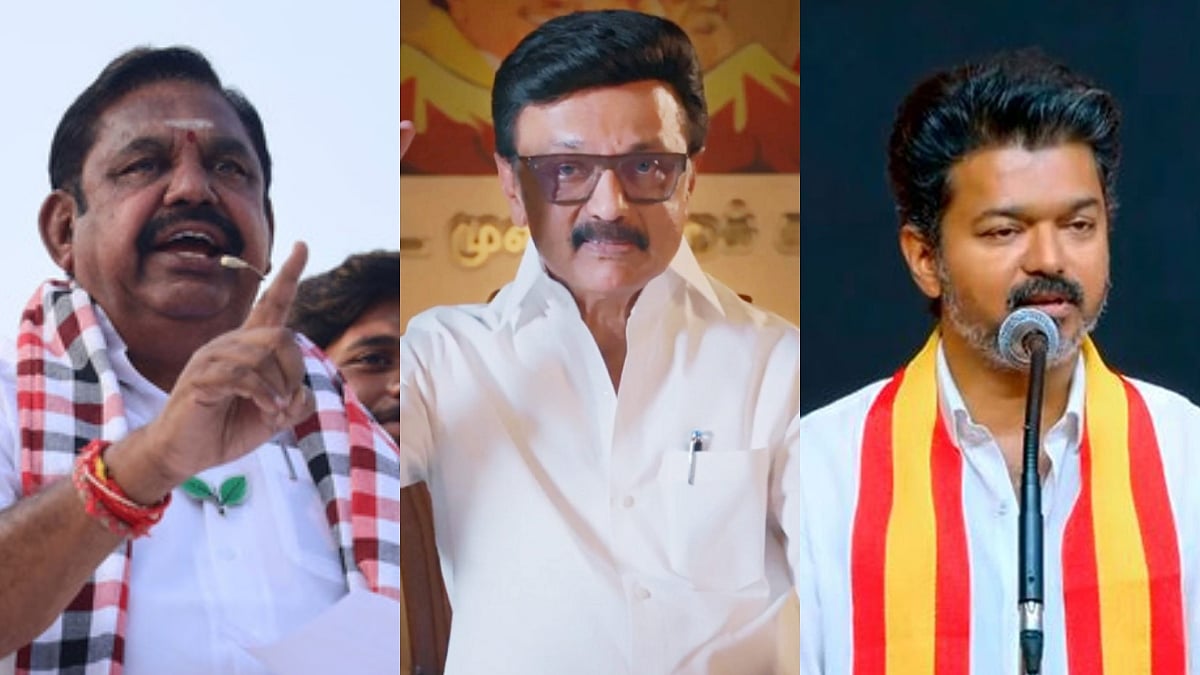
Vijay's TVK Breaks Dravidian Duopoly, Set to Form Government in Tamil Nadu
The actor-turned-politician's party wins 130 seats in its debut election, ending five decades of alternating DMK and AIADMK rule.

KUWAIT —
Key facts
- TVK leads or has won 130 seats in the 234-member assembly.
- DMK-led alliance secures 42 seats; NDA (AIADMK-BJP) gets 56.
- Vijay becomes first non-DMK, non-AIADMK chief minister since 1967.
- Veteran K A Sengottaiyan wins 10th term from Gobichettipalayam under TVK banner.
- DMK's Udhayanidhi Stalin wins Chepauk–Triplicane by 6,924 votes.
- DMK leader Palanivel Thiagarajan loses Madurai Central by 19,128 votes.
- TVK's M Sathya wins Krishnarayapuram by 1,300 votes.
- Over 84.80% voter turnout recorded in the April 23 election.
A Political Earthquake in Tamil Nadu
Actor-turned-politician Vijay has shattered the five-decade-old Dravidian duopoly in Tamil Nadu, with his Tamilaga Vettri Kazhagam (TVK) winning or leading in 130 seats in the 234-member assembly. The incumbent DMK alliance managed only 42 seats, while the NDA comprising AIADMK and BJP secured 56. Vijay is set to become the first chief minister from outside the DMK or AIADMK since 1967. The result marks a stunning debut for a party formed less than two years ago. TVK’s campaign, built on welfare promises, social justice messaging, and youth outreach, converted the actor’s massive fan base into electoral victory. The party has tapped into voter fatigue with the entrenched two-party system, offering a fresh alternative.
How the Rivals Misjudged the Threat
Both the DMK and AIADMK largely dismissed TVK as a serious contender during the campaign. The DMK, led by Chief Minister MK Stalin, focused on state autonomy and anti-delimitation rhetoric, while the AIADMK attacked the DMK over alleged corruption. The incumbent DMK also labeled the opposition “slaves of the BJP.” Neither anticipated the scale of TVK’s breakthrough. Exit polls had been divided, with some projecting a DMK win and others a close contest. The final outcome hinged on narrow margins in several constituencies, reflecting the multi-cornered nature of the fight. TVK’s ability to convert its grassroots network into votes proved decisive.
Key Winners and Losers Across the State
Among the notable results, TVK’s N Anand won from T Nagar, and TVK’s V.K.Ramkumar won Anna Nagar. In Krishnarayapuram, TVK’s M Sathya won by a narrow margin of 1,300 votes. DMK’s Udhayanidhi Stalin retained Chepauk–Triplicane with 6,924 votes, while DMK leader Palanivel Thiagarajan lost Madurai Central by a margin of 19,128 votes. Veteran leader K A Sengottaiyan, contesting for the first time under TVK at age 78, secured his historic 10th victory from Gobichettipalayam, defeating DMK’s N Nallasivam by nearly 13,000 votes. Aadhav Arjuna of TVK won Villivakkam with 17,419 votes. Congress MP Karti Chidambaram congratulated Vijay on his “spectacular electoral success.”
A Historic Voter Turnout and Counting Process
Counting of votes for all 234 constituencies began at 8 am on May 4 across 62 centers under tight security. The election saw a turnout of over 84.80%, adding uncertainty to closely fought seats. Early trends showed TVK leading in more than a hundred constituencies, eventually solidifying into a majority. The DMK, which had been in power, saw its seat count collapse to 42. The AIADMK-led NDA managed 56 seats, far behind TVK. MK Stalin himself lost his Kolathur seat, according to early updates, underscoring the scale of the DMK’s defeat.
TVK Joins the Ranks of Political Startups That Succeeded Quickly
TVK’s instant success places it alongside a handful of political startups that formed governments soon after their debut. The Aam Aadmi Party (AAP) formed a government with Congress support in 2013, the Asom Gana Parishad (AGP) came to power in 1985, and the Telugu Desam Party (TDP) swept Andhra Pradesh in 1983, winning 201 seats just a year after formation. However, such rapid success is rare. Many new parties take years to grow or fail to make a lasting impact. TVK’s achievement is particularly striking given the entrenched dominance of the DMK and AIADMK, which had alternated power since 1967.
What Comes Next for Tamil Nadu
With TVK set to form the government, Vijay will take office as chief minister, leading a party with no prior administrative experience. The party’s welfare promises will now be tested against fiscal realities. The DMK and AIADMK, reduced to opposition roles, face an uncertain future as they grapple with the loss of their traditional voter bases. The result also has national implications, as the BJP, part of the NDA, failed to make significant inroads. The anti-delimitation issue, which the DMK championed, did not resonate enough to save the incumbent. Tamil Nadu’s political landscape has been fundamentally altered, with voters signaling a desire for change beyond the old binaries.
The bottom line
- Vijay’s TVK wins 130 seats, ending five decades of DMK-AIADMK dominance.
- DMK alliance reduced to 42 seats; NDA gets 56; MK Stalin loses his seat.
- TVK’s debut success mirrors that of AAP, AGP, and TDP as instant political startups.
- High voter turnout of 84.80% and narrow margins in many seats reflect a fragmented electorate.
- Veteran K A Sengottaiyan wins 10th term under TVK, highlighting cross-generational appeal.
- The result signals a shift in voter preferences towards new alternatives, with implications for national politics.




Texas Supreme Court Blocks Extended Polling Hours in Dallas County Amid Primary Election Disputes

BJP Nears Majority in Bengal as TVK Surges in Tamil Nadu, ECI Results Show
In Pala, BJP Surge Reshapes Kerala's Electoral Arithmetic as UDF Holds Seat
