17 House of Reps Members Defect from ADC to NDC in Major Political Realignment
The mass defection, announced during Tuesday's plenary, signals a deepening crisis within the African Democratic Congress as lawmakers cite leadership and legal disputes.
NIGERIA —
Key facts
- 17 House of Representatives members defected from ADC to NDC on Tuesday.
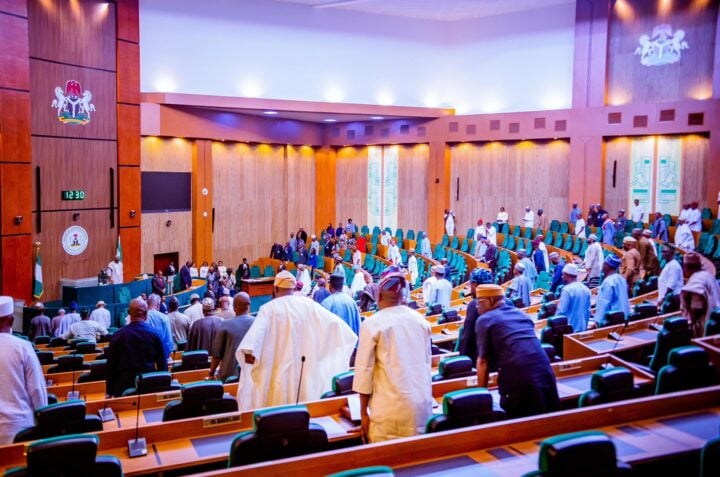
- Deputy Speaker Benjamin Kalu read the defection notices during plenary.
- Lawmakers represent 17 constituencies across Kano, Anambra, Lagos, Edo, and Rivers states.
- Leke Abejide defected from ADC to APC.
- Senate President Akpabio joked that ADC is 'dead' after a wave of defections.
- Senator Victor Umeh joined NDC, citing internal crises and litigation.
- Senator Enyinnaya Abaribe moved from ADC to Labour Party.
- Peter Obi and Rabiu Kwankwaso defected from ADC to NDC on Sunday.
Mass Exodus from ADC Reshapes House of Representatives
Seventeen members of Nigeria’s House of Representatives have abandoned the African Democratic Congress (ADC) for the Nigerian Democratic Congress (NDC), in a sweeping political realignment that underscores the ADC’s deepening internal turmoil. Deputy Speaker Benjamin Kalu read the defection notices during Tuesday’s plenary, marking one of the largest single-day party switches in recent parliamentary history. The defectors, who represent 17 constituencies across five states, include Yusuf Datti (Kura/Madobi/Garun Mallam, Kano), Harris Okonkwo (Idemili North/Idemili South, Anambra), Sani Adamu (Minjibir/Ungogo, Kano), Thaddeus Attah (Eti-Osa, Lagos), George Ozodinobi (Njikoka/Anaocha/Dunukofia, Anambra), Lilian Obiageli (Awka North/Awka South, Anambra), and Oluwaseyi Sowunmi (Ojo, Lagos). The list also features Peter Anekwe (Anambra East and West, Anambra), Zakari Mukhtari (Tarauni, Kano), George Olawande (Amuwo Odofin, Lagos), Murphy Omroruyi (Egor/Ikpoba Okha, Edo), Umezuruike Manuchim (Port-Harcourt I, Rivers), Emeka Idu (Onitsha North/South, Anambra), Jese Onuakalusi (Oshodi-Isolo, Lagos), Ifeanyi Uzokwe (Nnewi North/South/Ekwusigo, Anambra), Afam Ogene (Ogbaru, Anambra), and Kamilu Ado (Wudil/Garko, Kano). Leke Abejide, the lawmaker representing Yagba federal constituency in Kogi, took a different path, defecting from the ADC to the All Progressives Congress (APC). The lawmakers attributed their departures to leadership crises and legal battles within their former parties.
Senate President Declares ADC 'Dead' as Defections Spread to Upper Chamber
Senate President Godswill Akpabio injected a dose of dark humor into the unfolding drama, joking on Tuesday that the ADC was effectively dead after a fresh wave of defections that saw lawmakers move to the NDC and the Labour Party. Akpabio made the remark while presiding over plenary, shortly after the Senate formally announced the defection of Senator Victor Umeh, who joined the NDC citing internal crises and “unending litigation” within the ADC. “Resignation from ADC and declaration for Labour Party. Maybe all those defecting from ADC should just compile everything in one paper and bring, so that we don’t keep announcing, announcing, announcing. Because I think ADC is dead,” Akpabio said, drawing reactions in the chamber. He continued in a lighter tone, questioning the frequency of political defections by lawmakers. “How many times can you defect in a month? Once. But some have done three times,” he laughed. Akpabio suggested a more coordinated system for handling defections, adding that lawmakers should “compile” their movement lists rather than announce them individually on the floor. “So that it doesn’t look like a daily ritual. If you are defecting from Labour, you write all of you. If you are moving from ADC, you write all of you. If you are entering NDC, you write all of you,” he added.
High-Profile Defections Signal Broader Political Shifts Ahead of 2027
The mass defection in the House follows a similar move on Sunday by Peter Obi, the Labour Party’s 2023 presidential candidate, and Rabiu Musa Kwankwaso, the former Kano governor, both of whom left the ADC for the NDC. Both politicians subsequently urged their supporters to join the NDC, amplifying the momentum behind the party. During Tuesday’s Senate session, Akpabio also read a defection letter from Senator Enyinnaya Abaribe, noting his movement across parties in recent years. “Note that Senator Abaribe has moved from APGA to ADC, and now he has moved from ADC to Labour Party,” he said, before joking that future announcements would no longer be read individually. The green chamber has recorded a wave of defections since the beginning of the year, ahead of the 2027 general election. The trend suggests a fluid political landscape as parties jockey for position well before the next electoral cycle.
ADC's Leadership Crisis and Legal Woes Drive Exodus
Lawmakers who defected cited leadership and legal crises as the primary reasons for leaving the ADC. The party has been embroiled in internal disputes, with multiple factions claiming control and litigation dragging on in the courts. Senator Victor Umeh specifically pointed to “unending litigation” within the ADC as a key factor in his decision to join the NDC. The ADC’s troubles have been compounded by the departure of prominent figures like Peter Obi and Rabiu Kwankwaso, who were seen as stabilizing forces. Without their presence, the party appears increasingly fractured, raising questions about its ability to field candidates or mount a credible campaign in 2027. Senate President Akpabio’s lighthearted declaration that the ADC is “dead” may reflect a broader consensus among political observers that the party’s relevance is rapidly waning.
Implications for Nigeria's Political Landscape
The defections represent a significant realignment in Nigeria’s National Assembly, with the NDC emerging as a major beneficiary. The influx of 17 House members and at least one senator bolsters the NDC’s legislative strength and positions it as a key player in the run-up to the 2027 elections. For the ADC, the exodus is a severe blow. The party, which had hoped to build on its performance in the 2023 elections, now faces an existential crisis. With its parliamentary representation decimated and its leadership in disarray, the ADC may struggle to remain a viable political force. The moves also highlight the fluidity of party loyalty in Nigeria, where defections are often driven by personal ambition, factional disputes, and the pursuit of political advantage. As Akpabio noted, some lawmakers have defected multiple times in a single month, underscoring the transactional nature of political alliances.
What Comes Next: Consolidation and Legal Challenges
The NDC is expected to continue its consolidation efforts, with more defections possible in the coming weeks. Peter Obi and Rabiu Kwankwaso have already called on their supporters to join the party, and the NDC may seek to capitalize on the momentum to expand its base ahead of 2027. For the ADC, the immediate challenge is to stem further defections and resolve its internal crises. The party’s legal battles are unlikely to be resolved quickly, and without a clear leadership structure, it may find it difficult to retain its remaining members. The wave of defections also raises questions about the stability of Nigeria’s party system. With lawmakers switching parties with increasing frequency, the lines between political platforms are becoming blurred, and voters may struggle to hold representatives accountable to a consistent set of policies.
The bottom line
- 17 House of Representatives members defected from ADC to NDC, with one additional member moving to APC.
- Senate President Akpabio declared the ADC 'dead' after a series of defections, including Senator Victor Umeh and Senator Enyinnaya Abaribe.
- Peter Obi and Rabiu Kwankwaso defected from ADC to NDC on Sunday, urging supporters to follow.
- Lawmakers cited leadership crises and unending litigation within the ADC as reasons for leaving.
- The defections signal a major political realignment ahead of the 2027 general elections.
- The NDC emerges as a strengthened opposition force, while the ADC faces an existential crisis.



Trisha's 2004 CM Aspiration Clip Resurfaces as Vijay's TVK Leads in Tamil Nadu Elections
/https%3A%2F%2Fsportsmole-media-prod.s3.gra.io.cloud.ovh.net%2Fuploads%2F2025%2F12%2Ffotojet-2025-12-02t110401-157-692ebbdcac505757082526.jpg)
Porto Clinch 31st Primeira Liga Title with 1-0 Win Over Alverca

Bauchi Governor Bala Mohammed Defects to APM, Eyes Senate Seat in 2027