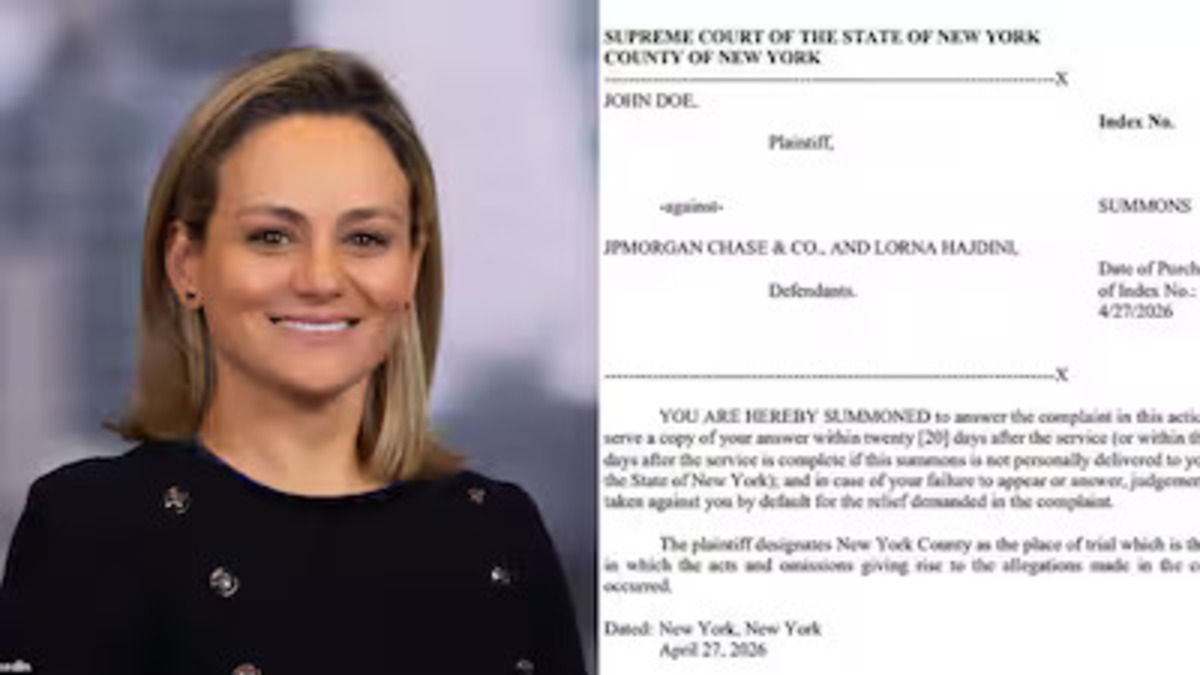
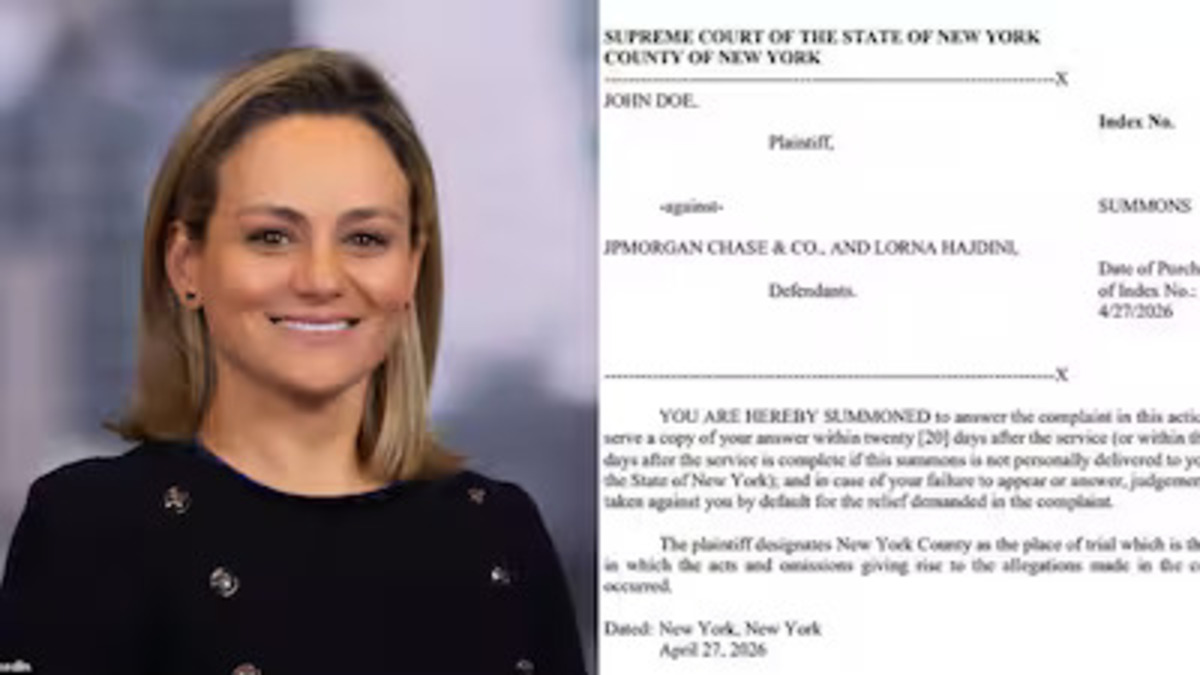
JPMorgan executive Lorna Hajdini accused of sexual abuse and racial harassment in New York lawsuit
A male junior employee alleges the senior banker threatened his career and made degrading remarks, including racial slurs, in a case that challenges assumptions about workplace power dynamics.
)
NIGERIA —
Key facts
- Lorna Hajdini, an executive director in JPMorgan's New York leveraged finance team, is accused of sexual abuse, coercion, and racial harassment.
- The lawsuit was filed in New York County Supreme Court under a pseudonym by a male junior employee of Indian origin.
- Allegations include unwanted sexual advances, threats such as 'If you don’t f*k me soon, I’m going to ruin you,' and racial remarks like 'my little Arab boy toy.'
- The plaintiff claims Hajdini administered a substance without consent and engaged in sexual acts despite his objections.
- JPMorgan Chase denies the claims, stating an investigation found no merit; the plaintiff refused to participate in the probe.
- Hajdini's lawyer has called the allegations 'fabricated' and said she has never been to the location of the alleged assault.
- A previous case of a male banker accusing a female boss ended with the accuser sentenced to 20 months in prison for lying.
The lawsuit and its allegations
A civil lawsuit filed in New York County Supreme Court accuses Lorna Hajdini, a 37-year-old executive director in JPMorgan Chase’s leveraged finance team, of sexually abusing, coercing, and racially harassing a junior male colleague. The plaintiff, identified under a pseudonym, alleges that Hajdini misused her senior position to pressure him into compliance, with the behavior escalating from inappropriate workplace remarks to repeated sexual advances and intimidation. The complaint includes explicit threats tied to the plaintiff’s career, with Hajdini allegedly telling him, “If you don’t fk me soon, I’m going to ruin you… never forget, I fking own you.” The plaintiff also claims that Hajdini administered a substance without his consent and engaged in sexual acts despite his pleas, such as “Don’t make me do this” and “I’m very uncomfortable, please… I’m begging you.” These allegations have not been proven in court.
Racial harassment and workplace dynamics
Beyond the sexual abuse claims, the lawsuit details a pattern of racial harassment. The plaintiff, of Indian origin, says he was subjected to offensive remarks linked to his ethnicity, including “Birthday BJ for the brown boy? My little brown boy” and “You’re gonna need to earn it, my little Arab boy toy.” The alleged conduct extended beyond the office, with Hajdini reportedly visiting the plaintiff’s residence uninvited and continuing the pressure there. The case highlights the vulnerability of employees, particularly those working abroad on visas, where their career and identity are tied to the job. The plaintiff’s reluctance to report the behavior initially—wondering if he was overthinking it—reflects a broader silence among men who face harassment, often met with confusion or ridicule rather than support.
JPMorgan’s response and the plaintiff’s refusal to cooperate
JPMorgan Chase has denied the allegations, with a spokesperson stating, “Following an investigation, we don’t believe there’s any merit to these claims. While numerous employees cooperated with the investigation, the complainant refused to participate and has declined to provide facts that would be central to support his allegations.” The bank’s statement suggests that the plaintiff’s lack of cooperation undermines the case, but the lawsuit proceeds in court. Hajdini, who did not respond to requests for comment, has her own legal representation. Her lawyer told the New York Post that the claims are “fabricated,” asserting that “she never engaged in any inappropriate conduct with this individual of any kind and has never even been to the location where the alleged sexual assault supposedly took place.” The legal proceedings are expected to continue in the coming months.
A precedent of skepticism: the Commerzbank case
The case echoes a previous incident in London, where Damilare Ajao, a former Commerzbank employee, claimed in 2019 that his female boss grabbed his crotch and ogled him. Ajao was fired and later sentenced to 20 months in prison after a court found he had intentionally lied about the alleged abuse. His female boss, who was not named, reportedly found the situation “insulting and painful” and began taking sleeping medication for stress. This history may fuel skepticism about Hajdini’s accuser, with some senior women at JPMorgan reportedly doubting the claims. One anonymous source said, “This sounds like nonsense.” However, the details in the lawsuit—including specific quotes and allegations of racial slurs—distinguish this case, and the burden of proof rests on the plaintiff.
The broader implications for male victims of workplace harassment
The case challenges societal norms about masculinity and victimhood. As one commentary noted, “You don’t grow up being told this can happen to you. Not as a man. Not at work.” Men who experience harassment often lack the vocabulary to describe it, and the instinct is to minimize or rationalize the behavior rather than report it. The power imbalance—a senior executive versus a junior employee—complicates the dynamic, making consent a murky issue. When power is involved, consent stops being a clean yes or no. The plaintiff’s alleged pleas and threats highlight how coercion can override apparent willingness. The case may prompt a broader conversation about how institutions handle complaints from male employees and whether the legal system is equipped to address such claims without bias.
What comes next
The lawsuit is in its early stages, with both sides preparing for a legal battle. JPMorgan has signaled it will contest the claims vigorously, while Hajdini’s lawyer has preemptively denied the allegations. The plaintiff, who remains anonymous, faces the challenge of proving his case in court, especially given the bank’s assertion that he refused to cooperate with its internal investigation. cases like this often fade from public attention, buried under corporate statements or dismissed as outliers. But the specific allegations—including racial slurs and threats—may keep the story alive. The outcome could set a precedent for how similar claims by male employees are treated, both in the financial industry and beyond.
The bottom line
- Lorna Hajdini, a JPMorgan executive director, faces a civil lawsuit alleging sexual abuse, coercion, and racial harassment of a junior male employee.
- The plaintiff claims Hajdini made threats, used racial slurs, and engaged in non-consensual sexual acts, including administering a substance without consent.
- JPMorgan denies the allegations, citing an internal investigation that found no merit; the plaintiff did not participate in that probe.
- Hajdini’s lawyer has labeled the claims 'fabricated,' stating she was never at the location of the alleged assault.
- The case highlights the challenges male victims face in reporting harassment, including societal skepticism and fear of career repercussions.
- A previous similar case involving Commerzbank ended with the accuser imprisoned for lying, which may influence public perception of this lawsuit.


)



Blue Cross Blue Shield to Begin $2.67 Billion Antitrust Settlement Payouts in May 2026

NELFUND Student Loan a 'Lifesaver' for First-Class Graduate, Spurring Academic Excellence

Peter Obi Abandons ADC Amid Fears of Legal Traps, Aligns with Kwankwaso