Austin Reaves’ woeful shooting night sinks Lakers in Game 1 loss to Thunder
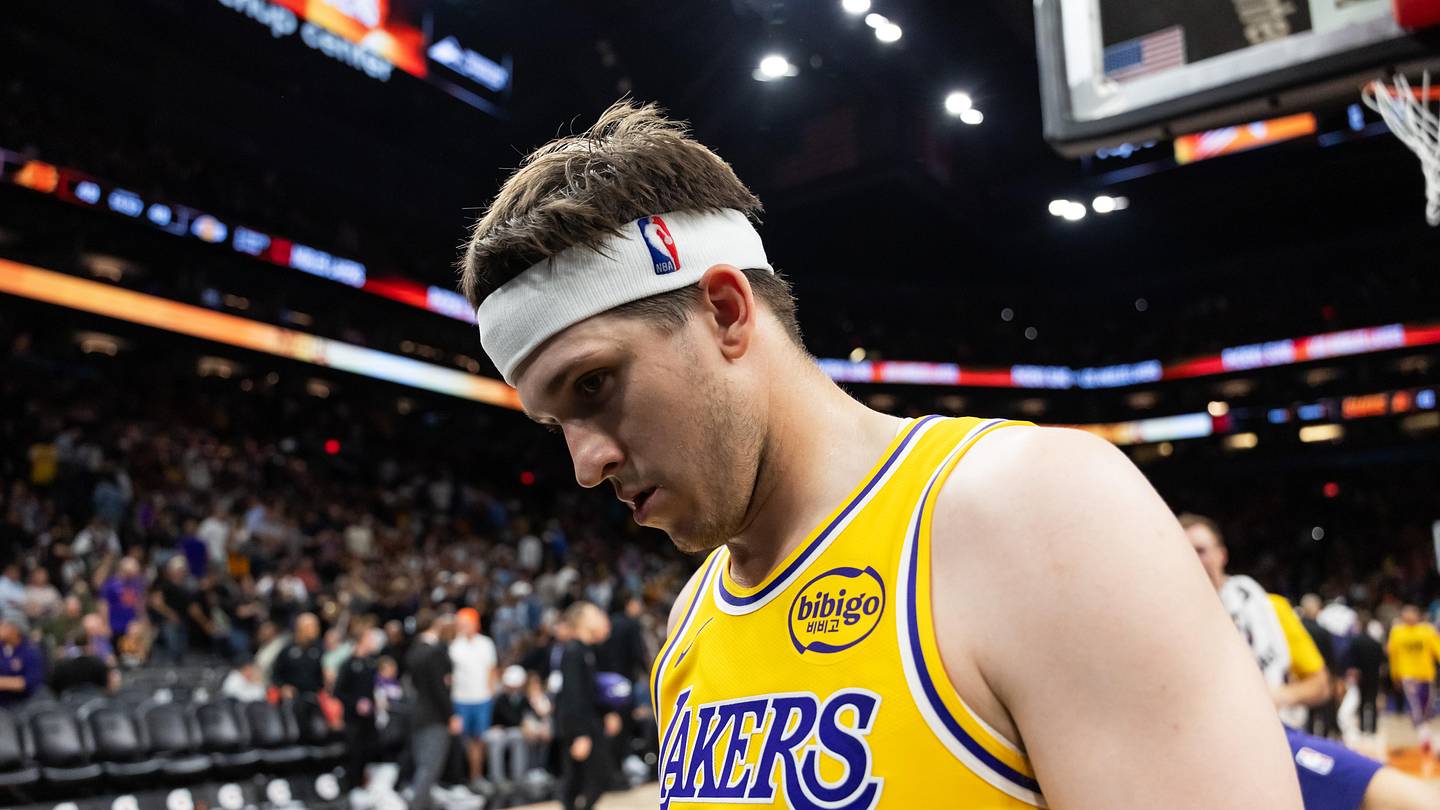
The guard scored just 8 points on 3-of-16 shooting as Los Angeles fell 108-90, exposing the team’s reliance on a hobbled secondary creator.
PHILIPPINES —
Key facts
- Austin Reaves scored 8 points on 3-of-16 shooting (0-5 from three) in Game 1 against the Thunder.
- Reaves had 6 assists and 4 turnovers in the 108-90 loss.
- LeBron James led the Lakers with 27 points on 12-of-17 shooting and 6 assists.
- Reaves is returning from a grade 2 oblique strain and has struggled since Game 5 of the first round.
- The Thunder’s perimeter defenders include Cason Wallace and Alex Caruso.
- Reaves is a soon-to-be free agent.
- The Lakers trailed by a manageable halftime deficit but could not overcome Reaves’ lack of production.
A star’s return falls flat
Austin Reaves, the Los Angeles Lakers guard expected to serve as the team’s secondary offensive engine, delivered a performance that all but doomed his side in Game 1 of the second-round series against the Oklahoma City Thunder. Reaves finished with just eight points on 3-of-16 shooting, missing all five of his three-point attempts, and committed four turnovers against six assists. The Lakers lost 108-90, and while LeBron James posted 27 points on 12-of-17 shooting, the absence of reliable help proved fatal. Reaves has been battling a grade 2 oblique strain that sidelined him for the final stretch of the regular season. He returned for Game 5 of the first round against the Houston Rockets, but his rhythm has been elusive. In Game 6 he showed marginal improvement, but Game 1 against the Thunder represented his worst outing since the injury.
LeBron carries the load, but the bench cannot
James, now in his 21st season, played with characteristic efficiency, scoring 27 points and adding six assists. When he was on the floor, the Lakers competed. But the 39-year-old forward cannot sustain that level for 48 minutes. In the minutes James sat, the Lakers needed a reliable playmaker to run the offense. That role belongs to Reaves, and in Game 1 he failed to fill it. The Lakers opened with strong energy and kept the deficit manageable at halftime. Yet as the game wore on, Reaves’ inability to create shots or protect the ball allowed the Thunder to pull away. The Lakers’ offense stagnated without James on the court, and the Thunder’s elite perimeter defenders — including Cason Wallace and Alex Caruso — exploited Reaves’ rust.
A hobbled creator against a defensive juggernaut
Reaves’ struggles are partly attributable to the Thunder’s defensive scheme. Oklahoma City boasts one of the league’s deepest rotations of wing defenders, and they targeted Reaves relentlessly. Even a fully healthy player would find it difficult to operate against Wallace and Caruso; for a player still regaining his conditioning, the task proved insurmountable. Reaves’ injury timeline compounds the challenge. He suffered the oblique strain in late March and missed the final seven games of the regular season. His return in the first-round series against Houston was tentative, and he has not yet shown the burst or shooting touch that made him a key contributor earlier in the season. The Lakers, who rely on Reaves to initiate offense when James rests, now face a critical decision: trust him to recover on the fly or adjust their rotation.
The numbers tell a stark story
Reaves’ 3-of-16 shooting night was his worst of the playoffs. His effective field goal percentage of 18.8 percent was the lowest among any Lakers player with at least 10 field-goal attempts in a game this postseason. His four turnovers matched his assist total in the first half alone, and the Lakers were outscored by 14 points during his 34 minutes on the floor. By contrast, James posted a plus-minus of +2 in his 38 minutes, indicating that the Lakers were competitive when he played. The bench unit, which includes Reaves as its primary ball-handler, was outscored by 16 points in the 10 minutes James sat. That margin proved decisive.
Injury recovery vs. playoff urgency
Reaves deserves some leniency given the quick turnaround from a grade 2 oblique strain, a muscle injury that typically requires two to four weeks of rest. He returned after just 10 days. The Lakers’ medical staff cleared him, but the on-court results suggest he is not yet at full strength. In his first game back, Game 5 against Houston, he shot 4-of-12. Game 6 was better — 6-of-13 — but still below his season average of 15.9 points per game on 48.6 percent shooting. The Lakers, however, cannot afford a prolonged recovery period. The Thunder are the top seed in the Western Conference, and the series schedule offers little respite. Game 2 is in two days. If Reaves cannot find his form quickly, the Lakers risk falling into an 0-2 hole from which few teams recover.
What comes next for the Lakers’ offense
The Lakers’ coaching staff, led by JJ Redick, must decide whether to continue relying on Reaves as the primary creator off the bench or to shift more playmaking duties to other guards such as D’Angelo Russell or Gabe Vincent. Russell, who scored 14 points in Game 1, has been inconsistent but could absorb some of the ball-handling load. Vincent, a defensive specialist, offers little on offense. Redick, in his first season as head coach, has emphasized pace and spacing, but Reaves’ struggles undermine both. The Thunder will likely continue to pressure Reaves with aggressive on-ball defense, daring the Lakers’ other players to beat them. If Reaves cannot punish that strategy, the Lakers’ offense will remain one-dimensional.
A series that could turn on one player’s health
The Lakers entered the series as underdogs, but they believed their experience and star power could compensate for the Thunder’s depth. Game 1 proved that belief rests on shaky ground. Reaves, who emerged as a playoff hero last season, is now a liability. His contract status — he will be a restricted free agent this summer — adds another layer of pressure. A poor series could cost him millions. For the Lakers, the path to a series win runs through Reaves’ recovery. If he can shake the rust and rediscover his shooting touch, the Lakers have a chance to compete. If not, the Thunder’s defensive machine will make this a short series. The next 48 hours will reveal which version of Austin Reaves shows up.
The bottom line
- Austin Reaves shot 3-of-16 (0-5 from three) in Game 1, scoring 8 points with 4 turnovers.
- LeBron James scored 27 points on 12-of-17 shooting but lacked secondary support when he sat.
- Reaves is returning from a grade 2 oblique strain and has not regained his pre-injury form.
- The Thunder’s elite perimeter defenders (Cason Wallace, Alex Caruso) exploited Reaves’ rust.
- The Lakers’ offense collapsed in the 10 minutes James rested, losing those minutes by 16 points.
- Game 2 is in two days; Reaves must improve quickly to avoid an 0-2 series deficit.

Eta Aquarid Meteor Shower Peaks May 5-6: Halley's Comet Debris Lights Up Pre-Dawn Sky

Pistons and Cavaliers Open Eastern Conference Semifinals with Bickerstaff Reunion
Eta Aquarid Meteor Shower Peaks May 5-6: Up to 60 Meteors Per Hour, but Moon May Obscure View