Magnitude 5.8 Earthquake Strikes Near Yilan, Taiwan, as Global Seismic Activity Intensifies
The quake, the strongest recorded today worldwide, adds to a week of heightened seismic unrest across the Pacific Ring of Fire.
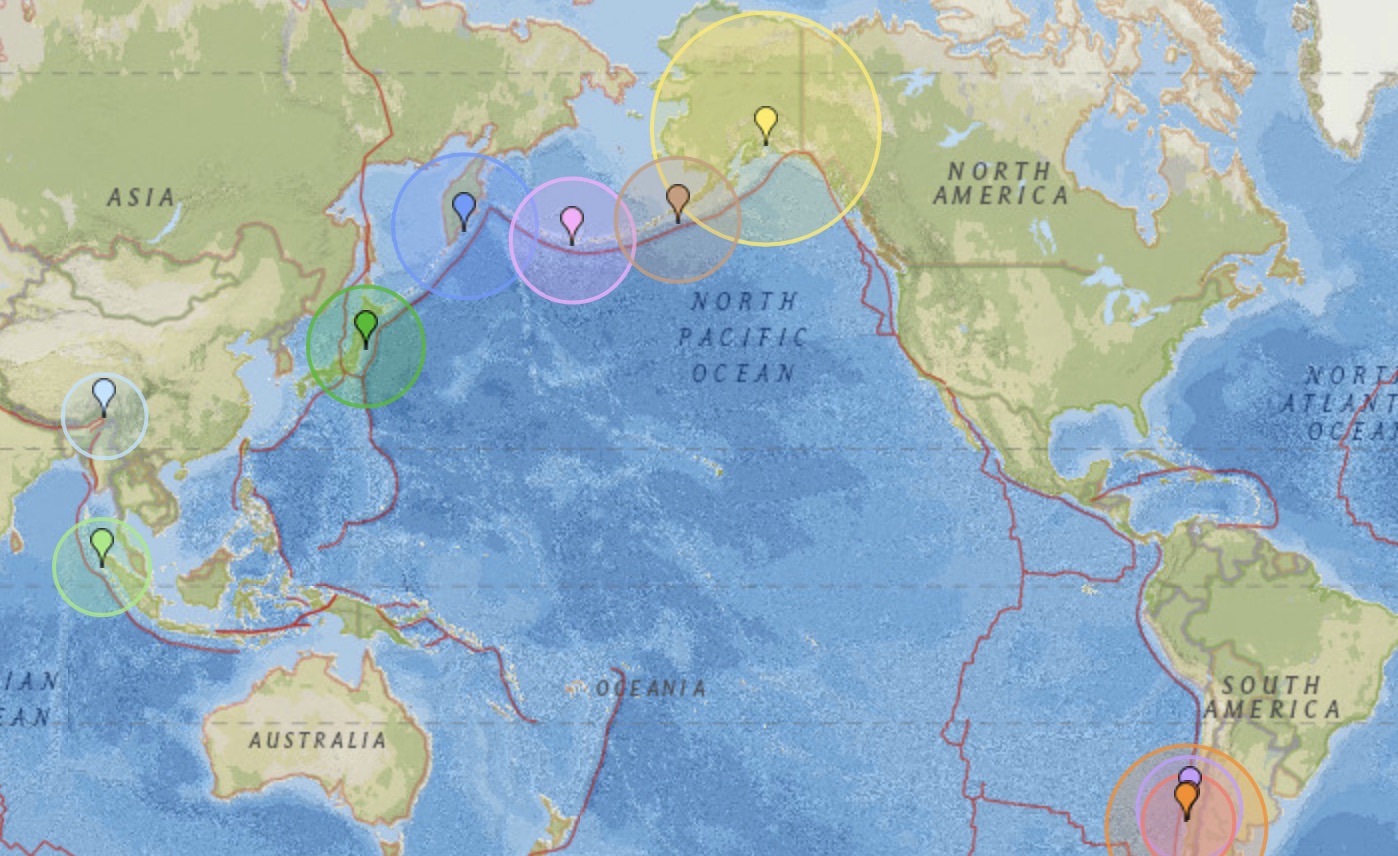
PHILIPPINES —
Key facts
- A magnitude 5.8 earthquake struck 29 km ENE of Yilan, Taiwan, today.
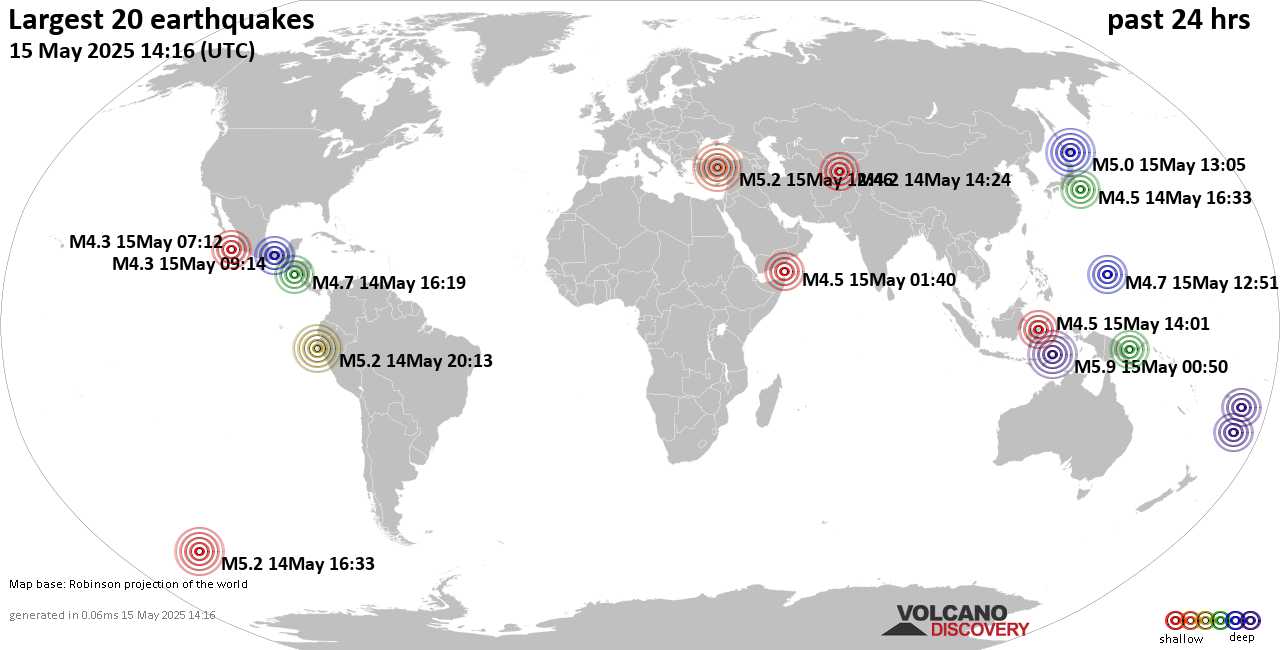
- 986 quakes were recorded globally in the past 24 hours.
- The strongest quake this week was a magnitude 6.1 in Naka-satsunai, Hokkaido, Japan.
- The strongest quake this month was a magnitude 7.4 in Tanohata, Iwate, Japan.
- The strongest quake this year was a magnitude 8.8 near Petropavlovsk-Kamchatsky, Russia.
- Over 53,000 earthquakes have been recorded worldwide in the past 365 days.
- Countries with the most quakes this week include Japan, Indonesia, and the United States.
- The USGS and EMSC provide real-time data, updated every 60 seconds.
Today's Strongest Quake Strikes Taiwan
A magnitude 5.8 earthquake struck 29 kilometers east-northeast of Yilan, Taiwan, today, making it the strongest seismic event recorded globally in the past 24 hours. The quake, which occurred at a depth yet to be specified, sent tremors across the northern part of the island, though no immediate casualties or major damage have been reported. Taiwan sits along the Pacific Ring of Fire, a zone of intense tectonic activity where the Philippine Sea Plate subducts beneath the Eurasian Plate. This region has experienced several significant quakes in recent months, including a magnitude 7.4 event in Japan last month. Local authorities are monitoring aftershocks and have urged residents to remain vigilant. The earthquake today adds to a growing list of seismic events that have rattled the region this year.
Global Seismic Activity in Numbers
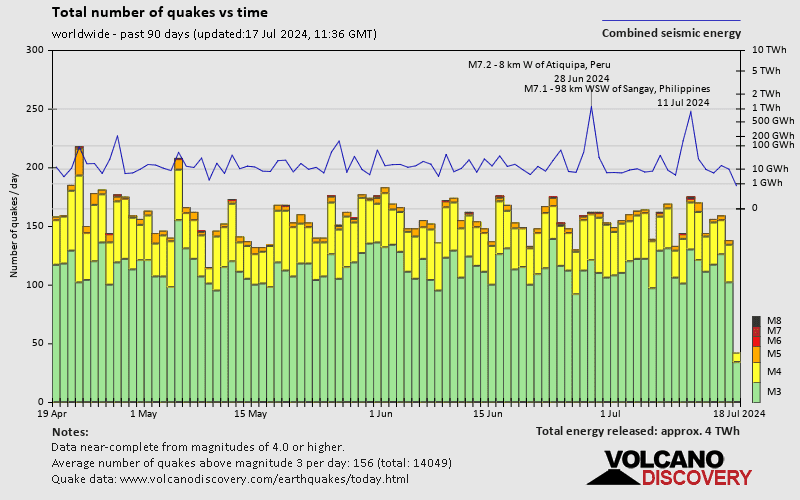
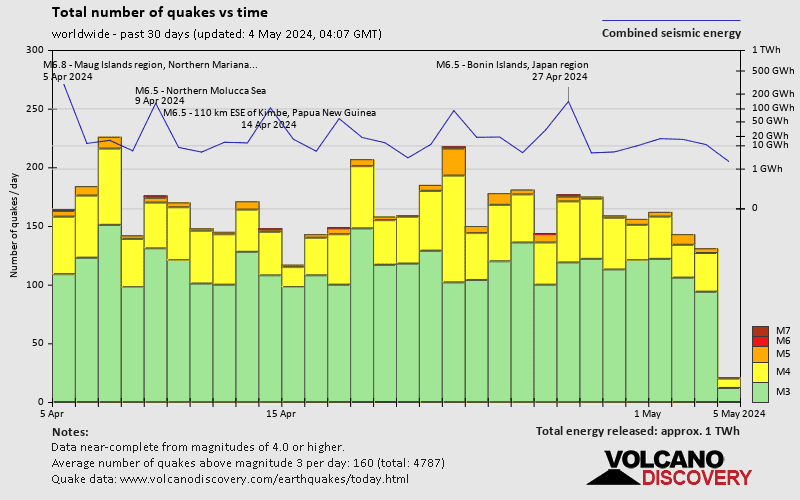
According to real-time data from the U.S. Geological Survey and the European-Mediterranean Seismological Centre, 986 earthquakes were recorded worldwide in the past 24 hours. Of these, 35 were between magnitude 4 and 5, 175 between magnitude 3 and 4, and 331 between magnitude 2 and 3. The vast majority—486 quakes—were below magnitude 2 and not felt by people. Over the past seven days, 8,422 quakes have been detected globally, with the strongest being a magnitude 6.1 event that struck 18 kilometers west of Sarabetsu, Hokkaido, Japan, on Monday. That quake occurred 140 kilometers east of Sapporo and was felt across the region. In the past 30 days, 5,485 earthquakes have been recorded, including a magnitude 7.4 quake on April 20, 2026, in the North Pacific Ocean, 164 kilometers east of Morioka, Iwate, Japan. The past 90 days saw a magnitude 9.0 quake on February 22, 2026, near Valleyview, Alberta, Canada—an unusually powerful event for that region.
Annual and Historical Trends
Over the past 365 days, 53,041 earthquakes have been recorded worldwide. The strongest this year was a magnitude 8.8 quake on July 30, 2025, in the North Pacific Ocean, 130 kilometers southeast of Petropavlovsk-Kamchatskiy, Kamchatka, Russia. That same event also stands as the strongest in the past decade. Statistically, the Earth experiences about 0.84 quakes of magnitude 8 or higher per year, or roughly one every 1.2 years. Magnitude 7 or higher quakes occur about 14.9 times per year. These figures underscore the persistent seismic activity that shapes the planet's geology. Countries with the most major (M7+) earthquakes in history include Japan, Indonesia, Chile, and the United States, all located along the Ring of Fire. This week, the countries recording the most earthquakes are Japan, Indonesia, and the United States, reflecting ongoing tectonic stress.
Real-Time Monitoring and Public Access
The USGS and EMSC provide real-time earthquake data through interactive maps and live feeds, updated every 60 seconds. Users can visualize quakes on satellite maps with color-coded markers by magnitude and depth, and filter events by time range and minimum magnitude. Every earthquake listed includes its magnitude, depth, exact coordinates, and the nearest city or region. For in-depth analysis, clicking on any event opens a dedicated detail page with tectonic context, safety tips, and a danger assessment based on the quake's characteristics. This system covers every seismically active region on the planet, from the Pacific Ring of Fire to the Anatolian Fault in Turkey and the Indonesian archipelago. It allows users to see today's quake count, the strongest event this week, and trends for the past 30 days.
What Comes Next
Seismologists expect aftershocks to follow today's magnitude 5.8 quake in Taiwan, though their frequency and intensity will depend on the fault's characteristics. The region has a history of significant seismic sequences, and residents should prepare for possible further tremors. Globally, the high number of quakes this week—8,422—suggests continued tectonic activity along plate boundaries. While most are minor, the potential for a major event remains, particularly in zones like Japan, Indonesia, and the western United States. Authorities worldwide are urging preparedness, including securing heavy objects and having emergency kits ready. The data from USGS and EMSC will continue to provide crucial information for both scientists and the public.
A Reminder of Earth's Restless Crust
Today's earthquake in Taiwan is a stark reminder of the planet's dynamic geology. With over 53,000 quakes recorded in the past year alone, seismic activity is a constant, if often unnoticed, feature of life on Earth. The magnitude 8.8 quake in Kamchatka last year and the magnitude 9.0 in Alberta earlier this year highlight the wide range of locations where powerful quakes can occur. Even regions not traditionally associated with high seismicity, like Canada, can experience rare but devastating events. As monitoring technology improves, the ability to detect and analyze these events in real time offers both a scientific resource and a public safety tool. For now, the people of Taiwan and the global community watch and wait, aware that the ground beneath them is never truly still.
The bottom line
- A magnitude 5.8 earthquake near Yilan, Taiwan, is the strongest quake recorded today globally.
- 986 earthquakes occurred worldwide in the past 24 hours, with most being minor.
- The strongest quake this week was a magnitude 6.1 in Hokkaido, Japan, and the strongest this month was a magnitude 7.4 in Iwate, Japan.
- The strongest quake this year was a magnitude 8.8 near Petropavlovsk-Kamchatsky, Russia, which also stands as the strongest in the past decade.
- Over 53,000 earthquakes have been recorded worldwide in the past year, averaging about 0.84 magnitude 8+ quakes annually.
- Real-time monitoring by USGS and EMSC provides updated data every 60 seconds, accessible to the public via interactive maps.


Knicks Seek Series Win in Game 6 as Hawks Fight to Survive

Colorado Rockies Brace for Up to Two Feet of Snow Amid Historic Drought

Mojtaba Khamenei Vows to Eliminate 'Enemy's Abuses' of Strait of Hormuz and Guard Nuclear Program
