Colorado Rockies Brace for Up to Two Feet of Snow Amid Historic Drought
Late-season storm brings winter warnings across southern Colorado, but experts say it will barely dent the worst snowpack deficit on record.

PHILIPPINES —
Key facts
- NOAA's Weather Prediction Center forecasts up to 2 feet of snow in highest Colorado Rockies elevations.
- Winter Storm Warnings are in effect from 6 a.m. Thursday through midnight Friday for Wet Mountains and Sangre de Cristo Mountains.
- Colorado's 2025-2026 snowpack was near or at record low for most locations, per meteorologist Joel Gratz of OpenSnow.
- Northwest Colorado is in exceptional drought, the most severe category.
- Arapahoe Basin and Copper Mountain plan to close Sunday, May 3; Arapahoe Basin typically stays open into June.
- Drought expert Brian Fuchs of the National Drought Mitigation Center called it one of the worst snow seasons on record.
A Snow Drought That Refuses to Break
After months of a snow drought, the Colorado Rockies are bracing for up to two feet of snow as May begins. The National Oceanic and Atmospheric Administration's Weather Prediction Center issued a forecast calling for significant snowfall in the highest elevations of the Colorado Rockies, with lesser amounts expected in the mountains of Wyoming and Montana. "This is a classic setup for mountain snow... in a region that could sorely use any precipitation of note," the WPC said in its forecast. But meteorologists and drought experts warn that the late-season storm, while welcome, will not come close to ending the severe drought gripping the region.
Winter Alerts Blanket Southern Colorado
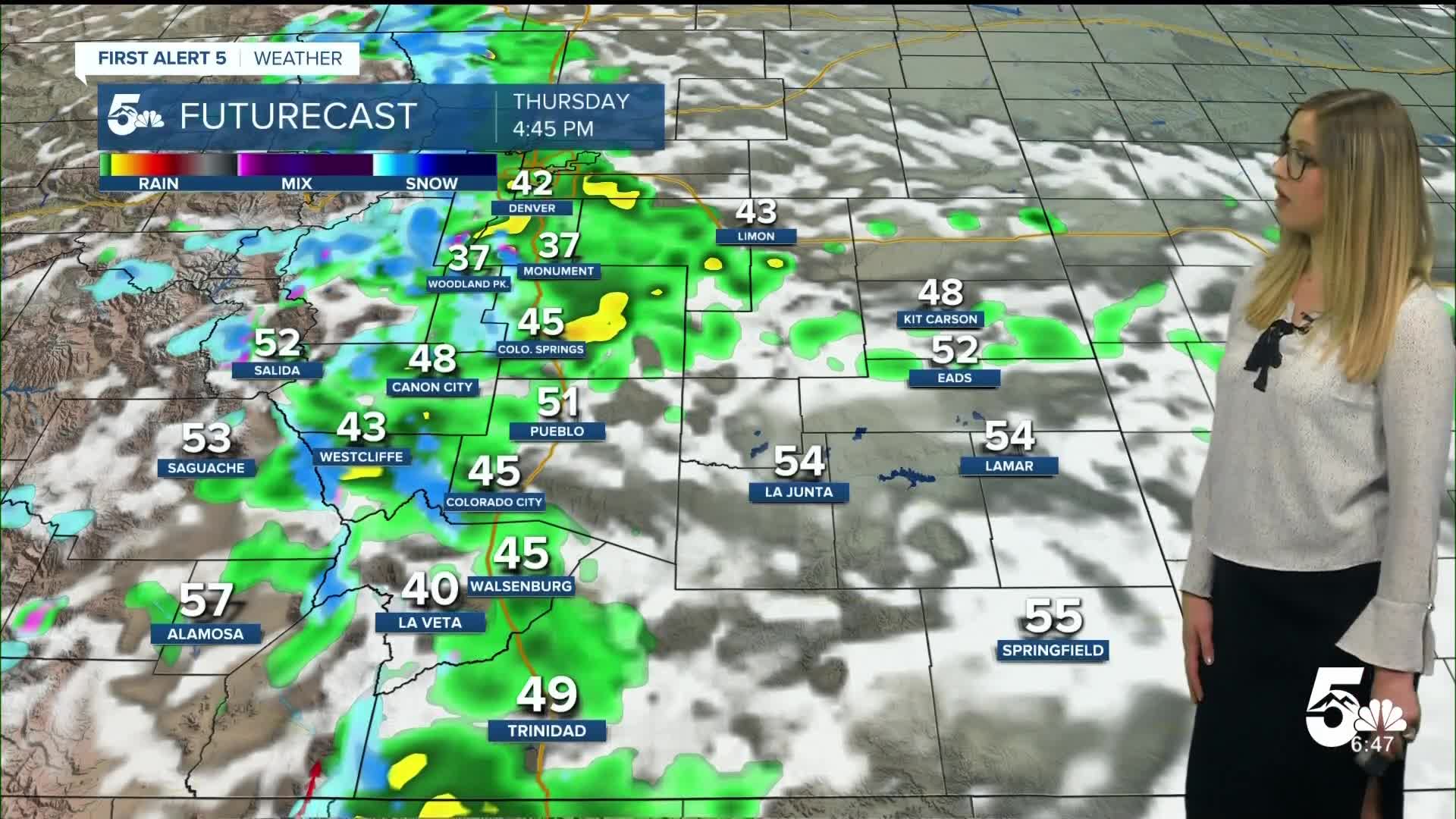
Winter storm warnings and winter weather advisories will go into effect at 6 a.m. Thursday for the mountains of southern Colorado. The warnings, which include the Wet Mountains and Sangre de Cristo Mountains, will remain active through midnight Friday night. Winter weather advisories cover the Wet Mountain Valley until noon Friday. In Woodland Park, a winter storm warning runs from 6 a.m. Thursday until noon Friday, with snow showers expected throughout the day. Roads are forecast to become snow-covered at night and during periods of heavy snowfall. The Tri-Lakes area may see a wintry mix transitioning to snow showers Thursday night, with potential icy roads.
Record-Low Snowpack and Exceptional Drought
The snowpack during the 2025-2026 season in Colorado was near or at a record low for most locations in the state and at most times during the winter, said meteorologist Joel Gratz of OpenSnow, a website devoted to Colorado snowfall. "This snow will help a little bit (every flake and drop helps) but it will not break the drought," Gratz said. Drought expert Brian Fuchs of the National Drought Mitigation Center echoed that assessment: "Depending on where you are in Colorado, this is one of the worst snow seasons on record with some locations actually recording their least amount of snow for the season." AccuWeather meteorologist Tom Kines noted that northwest Colorado is in an exceptional drought, the most serious category, and parts of the state have not had consecutive months of above-normal precipitation since 2024.
Late-Season Snow: A Drop in the Bucket
Additional snow could total 6 to 24 inches between April 28 and May 7.ow is not unusual, as Colorado's mountains often see significant snowfall through at least mid-May. However, Fuchs cautioned that it is hard to see lasting or accumulating snow this time of year due to warmer temperatures, so little is expected to be added to seasonal totals for the highest peaks. Kines said that while every little bit helps, the snow and precipitation over the next couple of weeks won't offer a lot of help. "It will help some in the short term but won't even come close to ending the long-term drought," he said.
Ski Season Cut Short
Most ski areas are already closed for the season, Gratz said. Arapahoe Basin and Copper Mountain remain open but plan to close on Sunday, May 3. "Often, Arapahoe Basin stays open into June, but not this season," Gratz noted, underscoring the severity of the snow deficit. The lack of snow has broader implications beyond recreation. Gratz emphasized that snow is another form of water storage, and much of the western United States is generally an arid climate where every drop and flake helps. "A lack of water impacts many aspects of life," he said.
What Comes Next for a Parched Region
The storm system moving through southern Colorado on Thursday and Friday will bring rain to the plains and a wintry mix or snow in the mountains. Forecasts for Colorado Springs, Pueblo, and Canon City call for cloudy skies with rain showers and isolated thunderstorms, with a possible transition to snow overnight. The plains will see scattered rain and thunderstorms. Despite the immediate precipitation, the long-term outlook remains grim. The snow drought and drought in general are very serious, Kines said, and the coming snowfall will not reverse the trend. The region faces a continued water shortage as the snowpack, a critical reservoir for the arid West, remains far below normal.
A Crisis of Accumulation
The convergence of a record-low snowpack and a late-season storm that cannot compensate highlights a deepening water crisis in the Colorado Rockies. Every flake counts, but the deficit is so profound that even a two-foot dump in the highest elevations will barely register in the seasonal totals. As the state moves into the warmer months, the lack of snow storage will strain water supplies, agriculture, and ecosystems. The storm serves as a reminder of what is missing — and how far the region is from recovery.
The bottom line
- Up to two feet of snow is forecast for the highest Colorado Rockies elevations, but it will not end the historic snow drought.
- Winter storm warnings are in effect from Thursday through Friday for southern Colorado mountains.
- Colorado's 2025-2026 snowpack was near or at record low for most locations, with northwest Colorado in exceptional drought.
- Most ski areas are closed; Arapahoe Basin and Copper Mountain will close on May 3, earlier than usual.
- Experts agree the late-season snow will provide only short-term relief and will not break the long-term drought.
- The snow deficit threatens water storage in the arid western U.S., impacting multiple aspects of life.




Knicks Seek Series Win in Game 6 as Hawks Fight to Survive
Magnitude 5.8 Earthquake Strikes Near Yilan, Taiwan, as Global Seismic Activity Intensifies

Mojtaba Khamenei Vows to Eliminate 'Enemy's Abuses' of Strait of Hormuz and Guard Nuclear Program
