Philippine Trench Triggers Magnitude 7.4 Earthquake in Davao Oriental, Killing One and Triggering Tsunami Alert
The Philippine Institute of Volcanology and Seismology warns that trenches can generate quakes exceeding magnitude 8, as the region remains one of the most seismically active in the world.
PHILIPPINES —
Key facts
- Magnitude 7.4 earthquake struck offshore Manay, Davao Oriental on Friday morning, October 10, 2025.
- The quake was caused by movement in the Philippine Trench, one of six active trenches in the Philippines.
- At least one person was killed; a tsunami alert was raised over seven areas and later lifted at 1:43 p.m.
- PHIVOLCS chief Dr. Teresito Bacolcol said trenches can generate earthquakes greater than magnitude 8.
- A magnitude 7.1 earthquake occurred in nearly the same area in 1992.
- The West Valley Fault's last major movement was recorded in 1658, with the next 'Big One' expected around 2058.
- A separate magnitude 6.0 earthquake struck Eastern Samar on May 4, 2026, at 2:09 p.m., centered 20 km northeast of San Julian.
- The Philippines sits on the Pacific Ring of Fire, making it one of the most earthquake-prone countries.
Deadly Tremor Strikes Offshore Davao Oriental
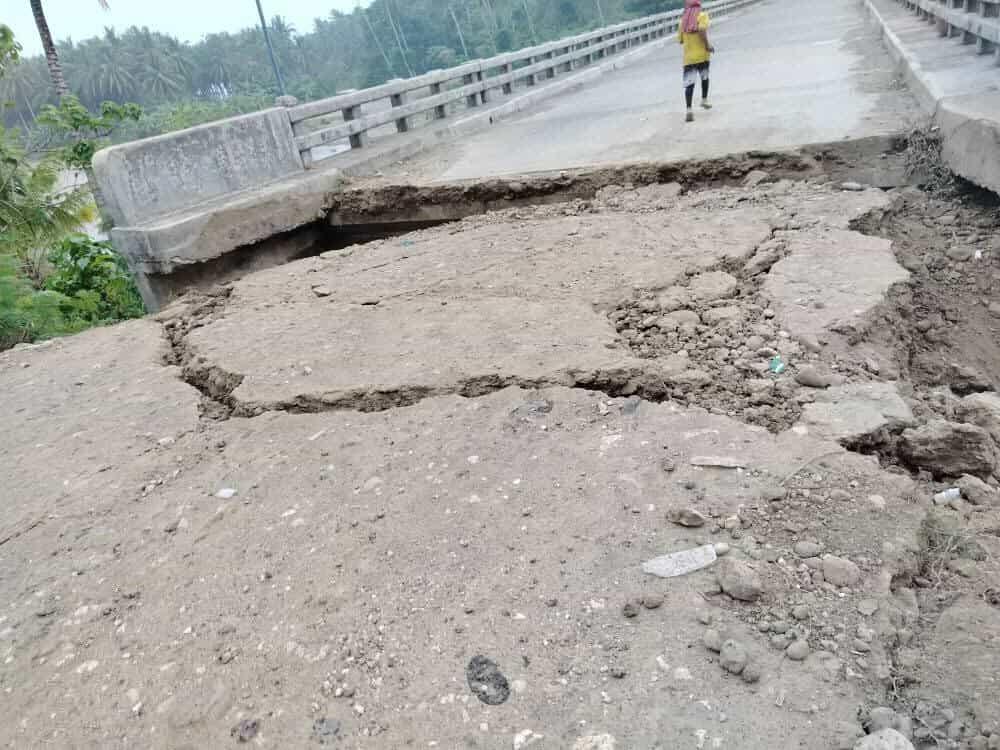
A powerful magnitude 7.4 earthquake struck offshore Manay, Davao Oriental on Friday morning, October 10, 2025, killing at least one person and prompting a tsunami alert across seven coastal areas. The Philippine Institute of Volcanology and Seismology (PHIVOLCS) attributed the quake to movement in the Philippine Trench, one of six active trenches that ring the archipelago. PHIVOLCS chief Dr. Teresito Bacolcol explained during a briefing that trenches are capable of generating “great earthquakes” exceeding magnitude 8, whereas faults produce quakes proportional to their length. The agency later lifted the tsunami warning at 1:43 p.m., but officials continue to monitor aftershocks.
The Philippine Trench: A Seismic Engine
Dr. Bacolcol described the mechanism: the seafloor subducts along the trench line, generating friction that, when released, causes earthquakes. “We have trenches around the Philippines. We have six active trenches… The Philippine Trench is the one that produced this one,” he said. He contrasted trenches with faults, noting that faults are fractures in the crust that displace rocks, while trenches involve the seafloor sliding downward. The same area experienced a magnitude 7.1 earthquake in 1992, underscoring the region’s recurrent seismic activity. Bacolcol emphasized that trenches generally produce stronger quakes than faults, with the potential for magnitude 8 or higher.
Tsunami Alert and Immediate Response
Following the quake, PHIVOLCS raised a tsunami alert over seven areas, urging residents along the coast to move to higher ground. The warning was lifted at 1:43 p.m. after no significant wave activity was observed. Local disaster response teams were deployed to assess damage, and at least one fatality was confirmed, though details of the victim and circumstances have not been released. Authorities continue to inspect infrastructure for cracks and structural weaknesses. PHIVOLCS has warned that aftershocks could occur in the coming hours or days, a typical pattern for such large events.
A Separate Quake in Eastern Samar
Just months earlier, on May 4, 2026, a magnitude 6.0 earthquake shook Eastern Samar at 2:09 p.m., centered about 20 kilometers northeast of San Julian. The shaking was felt most strongly in Tacloban City and parts of Eastern Samar, reaching Intensity 5, strong enough to wake people and cause hanging objects to swing violently. Students at the National University in SM City Cebu evacuated their building as a precaution. as far away as Iloilo, Albay, and Davao Occidental. PHIVOLCS noted that the earthquake was “moderately deep,” which allowed the tremors to travel further across the islands while causing less surface damage than a shallow quake of similar magnitude. No major damage or injuries were reported.
The Looming 'Big One' and Metro Manila's Risk
PHIVOLCS has also highlighted the threat posed by the West Valley Fault, whose last major movement was recorded in 1658. The agency warns that the probability of a “Big One” earthquake in Metro Manila increases as 2058 approaches, based on the fault’s historical recurrence interval. Such an event could cause catastrophic damage in the densely populated capital region. Eastern Visayas, where the Samar quake occurred, sits on the Philippine Fault Zone and near the Philippine Trench, making it one of the most active earthquake zones in the country. The Philippines, lying on the Pacific Ring of Fire, experiences frequent seismic activity, and preparedness remains a daily concern.
Outlook: Aftershocks and Preparedness
PHIVOLCS continues to monitor seismic activity in both Davao Oriental and Eastern Samar. Residents are advised to remain vigilant for aftershocks and to check buildings for structural damage. Local disaster officials are conducting inspections and reinforcing public awareness campaigns. The twin events serve as a stark reminder of the country’s vulnerability to earthquakes. With trenches capable of generating quakes above magnitude 8 and the West Valley Fault approaching its next expected rupture, the Philippines faces an ongoing challenge to mitigate seismic risk through early warning systems, building codes, and public education.
The bottom line
- The magnitude 7.4 Davao Oriental earthquake was caused by the Philippine Trench, which can generate quakes exceeding magnitude 8.
- At least one person died, and a tsunami alert was issued for seven areas before being lifted.
- A separate magnitude 6.0 earthquake struck Eastern Samar in May 2026, with no casualties reported.
- The West Valley Fault, last active in 1658, poses a major risk to Metro Manila around 2058.
- The Philippines' location on the Pacific Ring of Fire makes it one of the most seismically active countries, requiring constant preparedness.


NLEX and Converge Collide in High-Stakes PBA Duel with No. 1 Seed and Playoff Hopes on the Line

Strait of Hormuz Closure Drives Global Fuel Crisis as Oil Hits $110