New Glenn Grounded After Second Stage Failure; Blue Origin Faces Dual Crises
The FAA has indefinitely halted launches of Blue Origin’s New Glenn rocket after a second-stage engine malfunction stranded a commercial satellite in a low orbit, while a separate propellant tank incident at a critical testing facility raises broader safety questions.
RUSSIA —
Key facts
- The New Glenn NG-3 mission launched on April 19, 2026, from Cape Canaveral Space Force Station.
- The first stage booster, named 'Never Tell Me The Odds', successfully landed, marking the first reuse of a New Glenn booster.
- The second stage failed during its second vacuum burn; one of two BE-3U engines did not produce sufficient thrust.
- The payload, AST SpaceMobile’s BlueBird 7 satellite, was placed into an off-nominal orbit too low to sustain operations.
- Blue Origin CEO Dave Limp confirmed the engine underperformance on April 20 via social media.
- A pre-launch pressure test on or around April 9 caused a structural breach in the roof of the Second Stage Cleaning and Test (2CAT) facility.
- Independent satellite imagery analyzed by OSINT analyst Harry Stranger revealed the hole in the 2CAT facility roof.
- The FAA has issued an indefinite launch moratorium pending completion of the mishap investigation.
A Milestone Marred by Failure
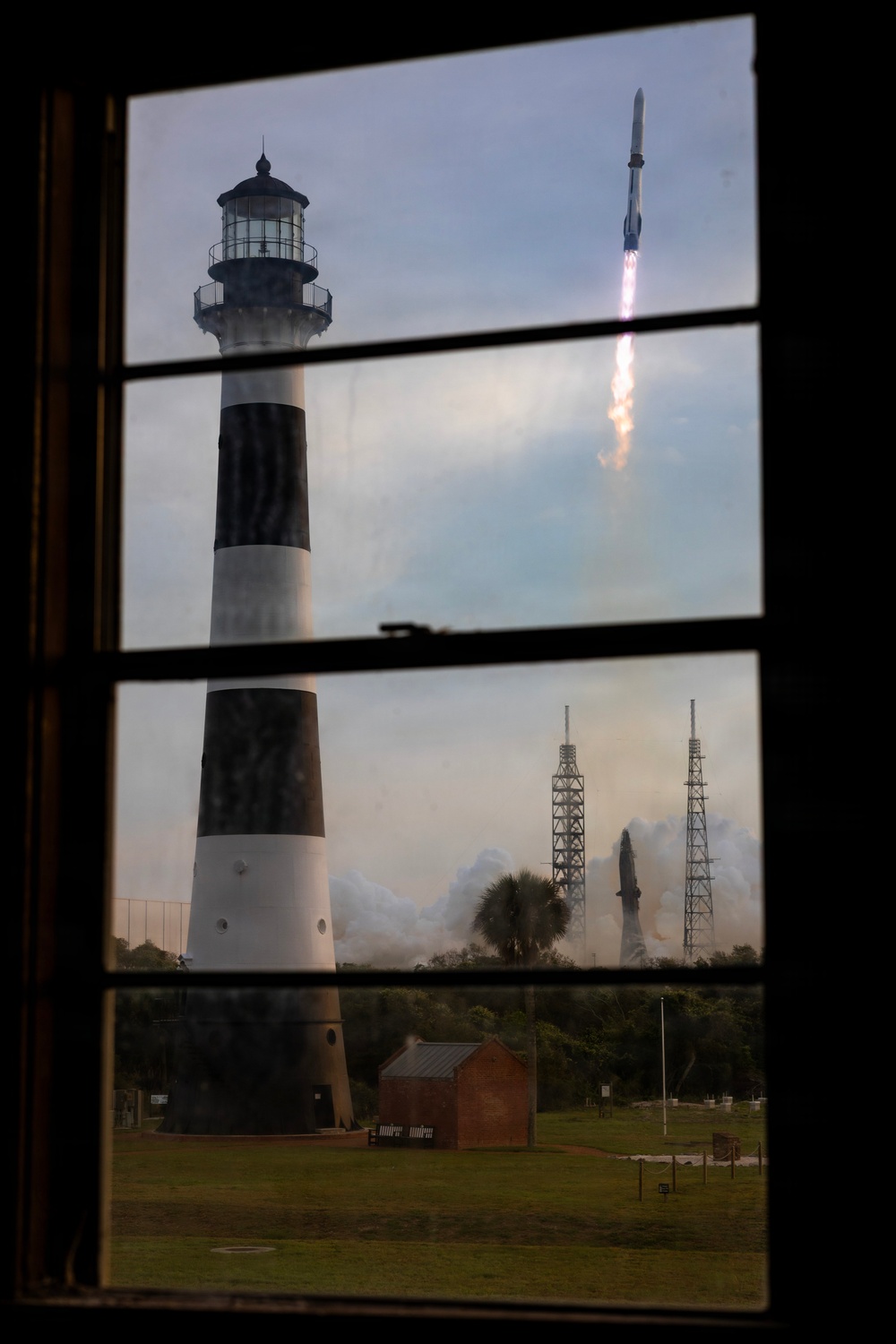
On April 19, 2026, Blue Origin’s New Glenn rocket lifted off from Space Launch Complex 36 at Cape Canaveral Space Force Station, carrying the BlueBird Block 2 FM2 mission. The flight achieved a historic first: the successful landing and reuse of the rocket’s massive seven-meter first-stage booster, named “Never Tell Me The Odds.” But the celebration was short-lived. During the second vacuum burn of the upper stage, one of two BE-3U engines failed to generate sufficient thrust, leaving the AST SpaceMobile BlueBird 7 satellite in an orbit too low to sustain operations. The Federal Aviation Administration immediately classified the event as a mishap and grounded the New Glenn vehicle indefinitely. Under federal regulations, Blue Origin cannot resume launches until the FAA determines that the systems and procedures related to the failure pose no risk to public safety. The grounding comes at a critical juncture for the company, which has been striving to establish New Glenn as a competitive heavy-lift launcher.
The Second Stage Anomaly and Immediate Fallout
Blue Origin’s live broadcast of the NG-3 mission initially focused on the booster landing, but went silent for over an hour after the expected time of the second upper-stage burn. Approximately two hours after liftoff, the company officially confirmed that the satellite had been placed into an “off-nominal” orbit. The next day, CEO Dave Limp took to social media to provide a technical explanation: “one of the BE-3U engines didn’t produce sufficient thrust.” This level of transparency, while notable, is standard once an FAA-mandated mishap investigation begins, as the classification requires federal oversight and public reporting. The FAA’s investigation will center on the upper stage’s propulsion and structural integrity. Blue Origin is legally obligated to implement corrective actions and have its final report approved before returning to flight. The agency’s oversight ensures that the root cause cannot be concealed; the results must be verified by federal authorities to guarantee public safety.
A Second Crisis: Damage at the 2CAT Facility
Before the launch, independent satellite imagery analyzed by OSINT analyst Harry Stranger revealed a significant hole in the roof of Blue Origin’s Second Stage Cleaning and Test (2CAT) facility at Exploration indicate that an “eventful” pressure test of a second-stage propellant tank occurred on or around April 9, resulting in the structural breach. The 2CAT building is a vital node in Blue Origin’s campus, serving as the final certification stop for upper stages before they are integrated with the first-stage booster at Launch Complex 36. At the time the images surfaced, Blue Origin was actively targeting an April 10 launch for the NG-3 mission. The company did not release a formal statement regarding the structural damage or the status of the second-stage hardware being tested, leading to local scrutiny and questions about launch safety and timelines. In contrast to its relatively rapid response to the orbital failure, Blue Origin initially withheld information about the facility incident, raising concerns about proactive disclosure.
Regulatory and Operational Stakes
The dual incidents place Blue Origin under intense regulatory and public scrutiny. The FAA’s indefinite grounding prevents any further New Glenn launches until the mishap investigation concludes and corrective actions are approved. The damage to the 2CAT facility, while not directly linked to the flight failure, underscores potential vulnerabilities in the company’s ground operations and testing protocols. For AST SpaceMobile, the loss of the BlueBird 7 satellite represents a setback in its plans to build a space-based cellular broadband network. The company had contracted Blue Origin to launch its satellites, and the failure may prompt a reassessment of launch partners. Blue Origin, meanwhile, faces the challenge of restoring confidence in its rocket’s reliability while addressing infrastructure issues that could affect future launch schedules.
What Comes Next
The FAA mishap investigation will proceed without a fixed timeline, meaning New Glenn’s return to flight is uncertain. Blue Origin must identify the root cause of the BE-3U engine underperformance, implement fixes, and demonstrate that the upper stage can operate reliably. The company also faces pressure to explain the 2CAT facility incident and ensure that its testing procedures do not compromise safety. Industry observers will watch closely to see how Blue Origin navigates these crises. The successful booster reuse demonstrated a key capability, but the second-stage failure and facility damage have cast a shadow over the program. For now, New Glenn remains grounded, and the path forward depends on the findings of the federal investigation and the company’s ability to address both technical and operational shortcomings.
The bottom line
- Blue Origin’s New Glenn rocket is grounded indefinitely by the FAA after a second-stage engine failure stranded the BlueBird 7 satellite in a low orbit.
- The first-stage booster achieved a historic first reuse, but the mission’s primary objective failed due to insufficient thrust from one of two BE-3U engines.
- A separate incident involving a propellant tank pressure test damaged the roof of the critical 2CAT facility, raising safety concerns about ground operations.
- CEO Dave Limp publicly attributed the failure to an engine underperformance, but the FAA’s mishap investigation will determine the root cause and required corrective actions.
- AST SpaceMobile’s satellite loss may affect its network deployment plans and its relationship with Blue Origin as a launch provider.
- New Glenn cannot return to flight until the FAA approves Blue Origin’s corrective measures, leaving the program’s timeline uncertain.

Landsat Turns Its Night Vision Toward Volcanoes, Wildfires, and a Warming Planet

Путин подписал закон об увеличении срока полномочий органов судейского сообщества до шести лет

«Байер» принимает «Лейпциг» в 32-м туре Бундеслиги: битва за Лигу чемпионов