Wall Street Wavers as Oil Slides on Fragile Iran Ceasefire, but Earnings Buoy Nasdaq to New High
A drone strike on an Emirati energy installation and the passage of US warships through the Strait of Hormuz test a shaky truce, even as strong quarterly results from Apple, Google, and DuPont push the S&P 500 higher.
SINGAPORE —
Key facts
- Brent crude jumped over 5% on Monday after a drone strike in Fujairah, then fell 3% on Tuesday to above $110 a barrel.
- The Dow Jones Industrial Average added 260 points (0.5%) on Tuesday, recovering from a 550-point drop on Monday.
- The Nasdaq Composite hit a new all-time intraday high on Tuesday, gaining 1%.
- Defense Secretary Pete Hegseth said the ceasefire 'certainly holds' and that two US commercial ships safely transited the Strait of Hormuz.
- About 85% of S&so far have beaten earnings expectations, per FactSet.
- Nationwide average US gas price rose to $4.483 a gallon, the highest since July 2022, AAA reported.
- JPMorgan analysts warned crude could move to $150 a barrel if the conflict extends into June.
Markets Rebound as Oil Retreats, but Middle East Tensions Linger
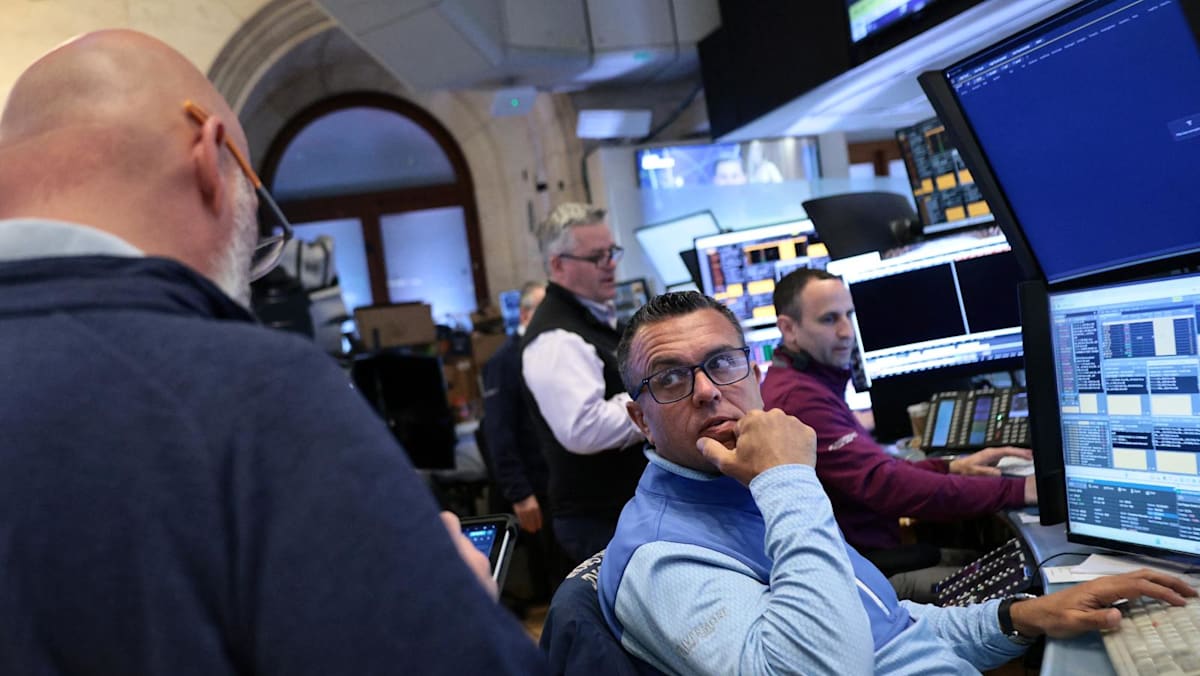
Wall Street staged a partial recovery on Tuesday, with the Dow Jones Industrial Average adding 260 points and the Nasdaq Composite climbing to a fresh all-time intraday high, as oil prices slid on cautious optimism that the fragile US-Iran ceasefire may hold. The S&P 500 rose 0.8%, erasing some of Monday's losses when the Dow tumbled 550 points. The turnaround was fueled by a retreat in crude prices: West Texas Intermediate futures dipped 4% to around $102 a barrel, while Brent crude lost 3% to trade above $110 a barrel. Yet the underlying geopolitical risk remains acute. On Monday, a drone strike sparked a fire at an Emirati energy installation in Fujairah, which the UAE defense ministry attributed to Iranian drone and missile attacks. The incident threatened a ceasefire that had been in place since the US-Israeli military campaign began on February 28. US Navy destroyers passed through the Strait of Hormuz over the weekend as part of a new shipping protection mission announced by President Donald Trump, after Tehran effectively closed the strategic waterway for oil and gas shipments.
Ceasefire Declared 'Holds' as US Ships Transit the Strait
Defense Secretary Pete Hegseth said Tuesday that the ceasefire between the US and Iran 'certainly holds' and that 'two US commercial ships, along with American destroyers, have already safely transited the strait, showing the lane is clear.' His statement followed President Trump's earlier pledge to 'guide' stranded ships through the waterway. The passage marks a tangible test of the truce, which remains fragile amid fresh attacks in the region. Analysts remain cautious. Patrick O'Hare of Briefing.com characterized Monday's sell-off as profit-taking, noting that rising Middle East tensions 'became a very good excuse to take some money off the table.' He added that 'at this point, the market isn't worried about a worst-case scenario unfolding in the Iran war.' Zachary Hill, head of portfolio management at Horizon Investments, said the market believes both sides 'want some sort of resolution to this conflict,' explaining why equities are trading near all-time highs despite the volatility.
Earnings Season Delivers Beats, Fueling Tech Rally
A wave of better-than-expected quarterly results has underpinned the market's resilience. Last week, Apple, Google, Microsoft, and forecasts that beat analyst estimates, rekindling interest in the artificial intelligence sector after the market tumult caused by the US-Israeli strikes on Iran in late February. 'Optimism that AI continues to mask the pain elsewhere,' said Ipek Ozkardeskaya of Swissquote. On Tuesday, DuPont de Nemours shares surged 8% after its first-quarter earnings and revenue exceeded expectations. US-listed shares of Belgian brewer Anheuser-Busch InBev also jumped 8% following its upbeat results. Palantir Technologies was a notable exception, falling 6% even after the company posted its fastest revenue growth since its 2020 public debut and raised its full-year guidance. roughly 85% of S&so far have beaten expectations. 'We've seen just incredible earnings from not just the megacap tech but also the broad-based S&P 500, or even the small-cap indices within the U.S.,' said Hill.
Asian Markets Rally as Tech Shares Surge
Asian markets mirrored the tech-driven optimism, with Seoul surging more than 5% and Taipei jumping over 4% to hit fresh records. South Korean chip giant SK hynix soared 12.5%, while rival Samsung added more than 5%. Taiwanese semiconductor leader TSMC rose 6.6%. The gains came even as oil prices climbed on Monday, with Brent crude for July delivery jumping more than 5% after the drone strike in Fujairah. European markets were less buoyant: Paris and Frankfurt each ended Monday down more than 1%. Tokyo, Shanghai, and London were closed for holidays. The divergence highlights how the conflict's economic impact is uneven, with Asia's export-driven tech sector benefiting from AI demand while Europe faces higher energy costs.
Gas Prices Hit Multi-Year Highs as JPMorgan Warns of $150 Oil
The ripple effects of the Middle East conflict are hitting American drivers. The nationwide average price for a gallon of regular gas rose 3 cents from Monday to $4.483, the highest since July 2022.$5.659 a gallon, 16 cents below its all-time high in June 2022. The spike reflects the US ramping up exports to allied countries to offset the impact of the conflict, which has pushed fuel prices higher in the US than in most regions except Southeast Asia. JPMorgan analysts warned Tuesday that if the conflict extends into June, crude oil prices could move to or through $150 a barrel. 'The U.S. has been ramping its exports to allied countries to offset the impact from the Middle East Conflict, part of the reason the economic damage in [Asia Pacific] has not been as large as expected and why the U.S. is experiencing the second highest spike in fuel prices, behind Southeast Asia,' they wrote in a note.
Outlook: Earnings vs. Geopolitics in a Fragile Balance
The market's ability to look past the Strait of Hormuz crisis hinges on continued strong earnings and the belief that neither Washington nor Tehran wants an escalation. 'The market is largely over the Strait of Hormuz situation,' said Hill. 'I think it would take a material change in the facts on the ground or a really large spike in the price of oil for the market to get re-engaged with the back and forth of that conflict.' from Disney, Pfizer, and McDonald's, which will test whether the broad-based earnings strength can persist. Meanwhile, the ceasefire remains fragile, and any new incident could quickly reverse the risk-on mood. The coming days will reveal whether the market's current equilibrium—buoyed by AI optimism and solid results—can withstand the geopolitical headwinds that sent oil prices and the Dow on a roller-coaster ride.
The bottom line
- The Dow recovered 260 points on Tuesday after a 550-point drop Monday, as oil prices fell on cautious hope the US-Iran ceasefire holds.
- The Nasdaq hit a new all-time high, driven by strong earnings from tech giants like Apple, Google, and Samsung, and broad-based S&P 500 beats.
- Defense Secretary Hegseth declared the ceasefire holds after two US commercial ships transited the Strait of Hormuz, but fresh drone attacks in Fujairah underscore fragility.
- US gas prices rose to $4.483 a gallon, the highest since July 2022, with JPMorgan warning crude could hit $150 if the conflict extends into June.
- Asian markets surged, with Seoul up 5% and Taipei up 4%, led by chip stocks SK hynix and TSMC, as AI optimism offset geopolitical fears.
- Analysts say the market is pricing in a resolution to the Iran conflict, but a material change on the ground or a sharp oil spike could reignite volatility.



Singapore Toto Jackpot Snowballs to $10M After Three Winless Draws

Knicks and 76ers Renew Rivalry in East Semifinals as Embiid Seeks Redemption

Mamata Banerjee Loses Bhabanipur Stronghold as BJP Seals 206 Seats in Bengal
