US Strikes Iran After Naval Exchanges, Trump Cites 'Ceasefire Going'
Tensions flare in the Strait of Hormuz as Washington claims defensive action against 'unprovoked' Iranian attacks.

SINGAPORE —
Key facts
- US Central Command conducted 'defensive strikes' on Iranian military facilities.
- The strikes followed 'unprovoked Iranian attacks' on three US Navy destroyers.
- Iran accused the US of violating a ceasefire by striking ships and civilian areas.
- President Trump stated the ceasefire with Iran remains in effect.
- The US is awaiting Iran's response to a proposal aimed at halting hostilities.
- A ceasefire was announced on April 7, pausing full-scale warfare.
- The Strait of Hormuz previously handled one-fifth of global oil and gas supply.
Naval Clash Ignites Tensions in Hormuz Strait
President Donald Trump declared on Tuesday that a ceasefire with Iran remains in effect, despite a significant exchange of fire in the critical Strait of Hormuz. The remarks came as the US military confirmed carrying out defensive strikes against Iranian assets. These actions were described by US Central Command as a response to "unprovoked Iranian attacks" targeting three American destroyers navigating the vital waterway. Trump downplayed the severity of the US military action, referring to it as a "love tap." However, the incident underscores the fragile nature of the truce, which was established last month. The exchanges highlight the persistent volatility in a region crucial for global energy transit. Iran's top joint military command, however, presented a starkly different narrative. Tehran accused Washington of violating the ceasefire by targeting an Iranian oil tanker and another vessel entering the Strait, as well as striking civilian areas. This divergence in accounts signals a deep mistrust and a potential for escalation. This is not the first instance of hostilities since the April 7 ceasefire. Just days prior, the destroying six Iranian small boats and intercepting missiles and drones as Iran attempted to disrupt a US naval operation aimed at reopening shipping routes through the Strait of Hormuz.
US Cites Self-Defense Amid Iranian Accusations
US Central Command stated that its forces eliminated inbound threats and struck Iranian military facilities responsible for the attacks. These targets included missile and drone launch sites, command and control locations, and intelligence, surveillance, and reconnaissance nodes. The military asserted that no US assets were hit during the Iranian assaults. US officials described the strikes as being executed in self-defence. Iranian assets, including numerous small boats, were "completely destroyed." The immediate impact of these strikes on the ongoing ceasefire remained unclear, adding another layer of uncertainty to the volatile situation. Iran's military command countered these claims, asserting that the US strikes constituted a violation of the ceasefire. They specifically mentioned the targeting of an Iranian oil tanker and another ship, alongside attacks on civilian areas, as evidence of this breach. This direct contradiction paints a complex picture of the events in the Strait. The US military confirmed that no American military assets sustained damage during the confrontations, a point that contrasts with the broader narrative of escalating hostilities. The precise nature and extent of the damage inflicted on Iranian facilities were not immediately detailed.
A Fragile Peace Proposal Hangs in the Balance
The recent clashes occur as Washington awaits Iran's response to a peace proposal designed to halt the ongoing hostilities. This initiative aims to formally end the conflict, which saw full-scale warfare paused by the ceasefire announced on April 7. However, the proposal leaves more contentious issues, such as Iran's nuclear program, unresolved for the time being. Crucially, the US-backed proposal does not address key American demands, including Iran's suspension of its nuclear work and the reopening of the Strait of Hormuz. This vital waterway, before the recent conflict, was responsible for transporting one-fifth of the world's oil and gas supply, underscoring its strategic importance. The administration's strategy appears to be a phased approach, seeking to de-escalate immediate military confrontations while deferring more complex diplomatic challenges. The success of this strategy hinges on Iran's willingness to engage with the proposal, despite the renewed military exchanges. President Trump's assertion that the ceasefire is "going" suggests a desire to maintain diplomatic channels open, even amidst the military actions. This delicate balancing act reflects the administration's efforts to manage the crisis without resorting to a full-scale conflict.
Strait of Hormuz: A Global Energy Chokepoint
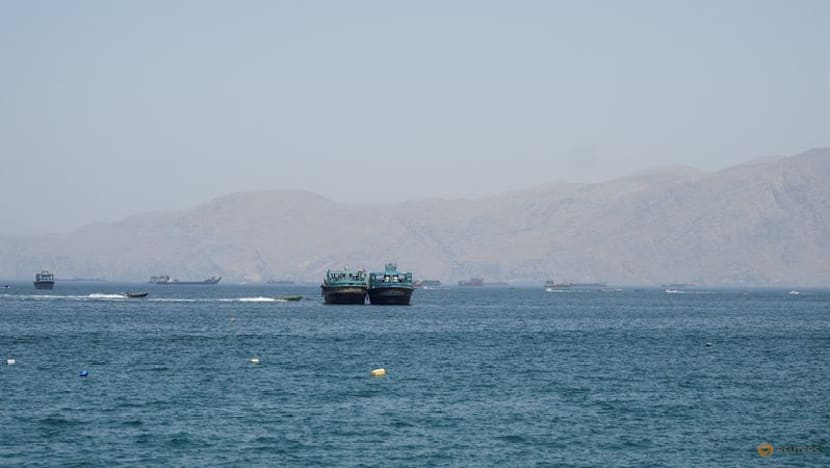
The Strait of Hormuz, the narrow waterway where the latest confrontations occurred, is one of the world's most strategically vital maritime passages. Its significance is underscored by the fact that it previously handled approximately 20% of global oil and gas supplies. Any disruption to shipping through the Strait can have immediate and far-reaching consequences for global energy markets, impacting prices and supply chains worldwide. The ongoing tensions in this chokepoint therefore represent a significant risk to international economic stability. The US naval presence in the Strait is aimed at ensuring the free flow of commerce and deterring aggression. Iran, conversely, views such a presence and efforts to control the waterway as a threat to its regional interests. This dynamic has made the Strait of Hormuz a persistent flashpoint, where military posturing and diplomatic maneuvering are constantly at play. The recent exchanges of fire serve as a stark reminder of the potential for miscalculation in this volatile environment.
Unresolved Issues Loom Over Future Stability
While the immediate focus is on de-escalating the current military exchanges, several fundamental issues remain unresolved. The core US demands for Iran to suspend its nuclear program and fully reopen the Strait of Hormuz are significant sticking points that the current proposal avoids addressing directly. This approach suggests a strategy of managing immediate threats while deferring the more complex and politically charged aspects of the bilateral relationship. The long-term implications of this strategy are uncertain, as the underlying causes of tension persist. Iran's response to the US peace proposal will be a critical indicator of its willingness to engage in further de-escalation. The outcome of these diplomatic efforts, coupled with the ongoing military readiness, will shape the future stability of the region. The international community watches closely, aware that any significant escalation in the Strait of Hormuz could have profound global economic and security ramifications.
The bottom line
- US forces conducted defensive strikes in the Strait of Hormuz following alleged Iranian attacks on naval vessels.
- President Trump stated that a ceasefire remains in effect, despite the military exchanges.
- Iran accused the US of violating the ceasefire and attacking civilian areas.
- A US proposal to halt hostilities is awaiting Iran's response, but does not resolve core issues like Iran's nuclear program.
- The Strait of Hormuz is a critical global energy chokepoint, with previous disruptions impacting global supply.
- The ongoing tensions highlight the fragility of the ceasefire and the potential for further escalation.






Mother’s Day Observance Dates and Origins Trace to Early 20th Century

Sheng Siong Raises Profit 12.6% as Analysts Lift Targets on Store Expansion Runway
US KC-135 Stratotanker Vanishes Over Qatar After Broadcasting Distress Signal