May Day protests erupt globally as workers rage against Iran war costs and Trump policies
From Manila to San Francisco, hundreds of thousands demand higher wages, peace, and an end to corporate dominance amid soaring energy prices.
SINGAPORE —
Key facts
- Police detained at least 15 protesters trying to reach Istanbul’s Taksim Square in defiance of a government ban.
- In the Philippines, Renato Reyes of Bayan called for 'louder call for higher wages and economic relief' due to fuel price spikes.
- The European Trade Union Confederation, representing 93 trade union organisations in 41 countries, said 'working people refuse to pay the price for Donald Trump’s war in the Middle East.'
- In Pakistan, inflation is estimated at about 16%, and daily wage earners like construction worker Mohammad Maskeen cannot afford to take May Day off.
- Organizers of the May Day Strong movement in the U.S., including 50501 and Indivisible, urge people to stay home from work and school and avoid shopping.
- San Francisco Supervisor Connie Chan was arrested while blocking a road at SFO during an ICE Out of San Francisco protest.
- In Mexico City, sex workers held a protest demanding dignity and protections.
- At least 93 police officers were injured and 354 protesters detained in past Berlin May Day rallies that turned violent.
A global wave of discontent
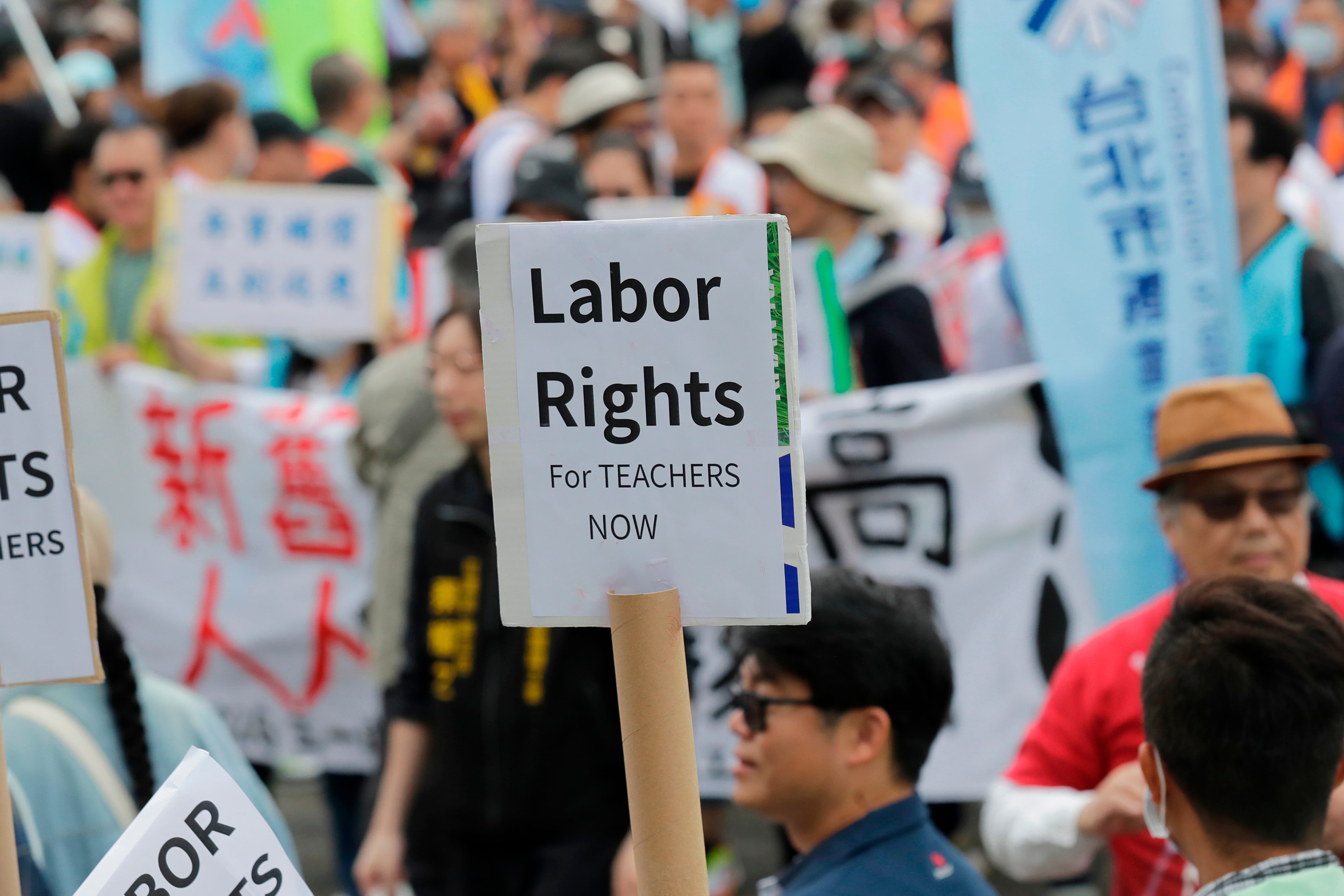
Activists worldwide held May Day rallies and street protests on Friday, calling for peace, higher wages and better working conditions as many workers grapple with rising energy costs and shrinking purchasing power tied to the Iran war. Demonstrations swept across Asia — from South Korea to Australia and Indonesia — to many European capitals. In the United States, activists opposing President Donald Trump’s policies also held marches and boycotts. May 1 is a public holiday in many countries to mark International Workers’ Day, or Labor Day, when workers’ unions traditionally rally around wages, pensions, inequality and broader political issues.
Clashes and arrests from Istanbul to San Francisco
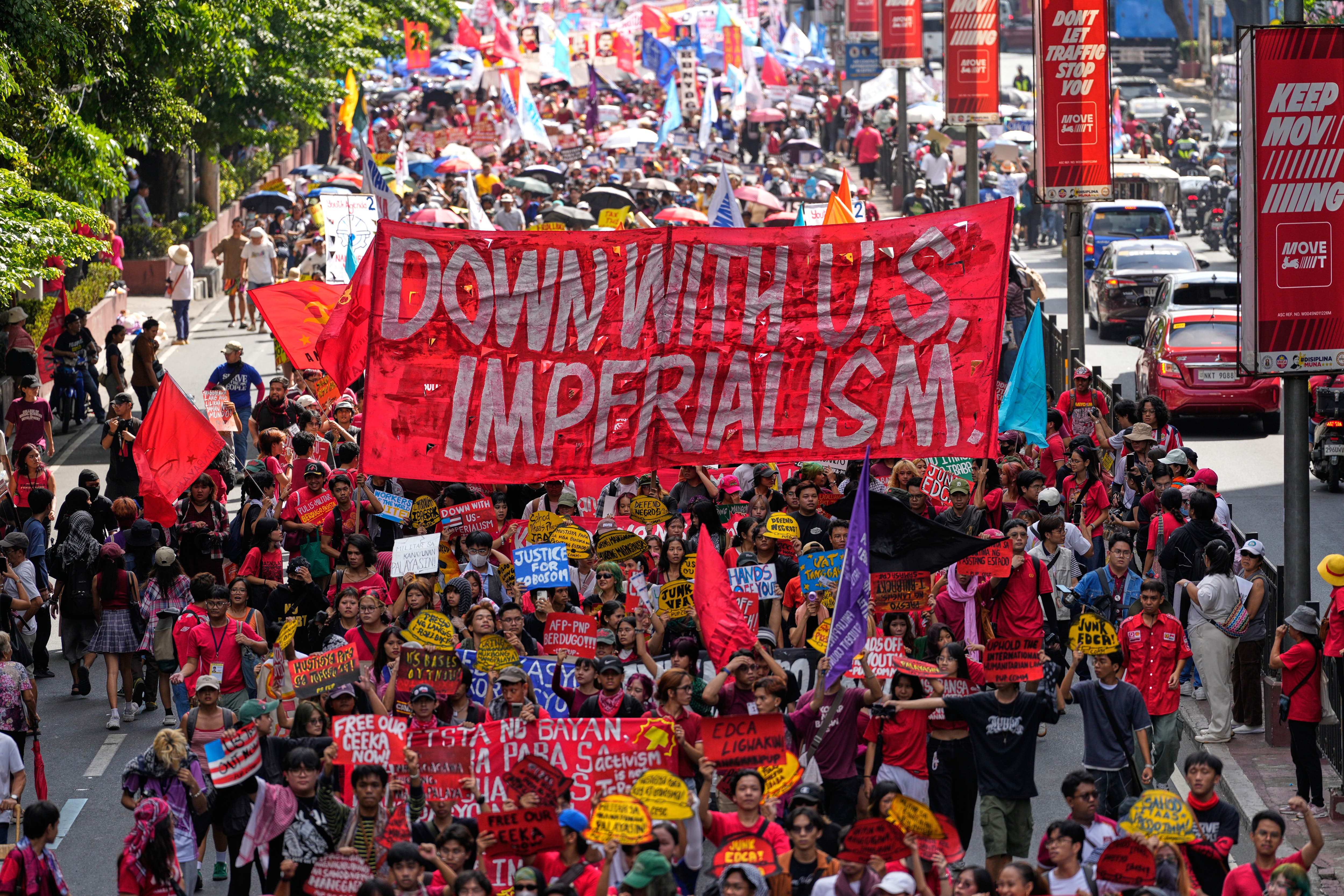
Police detained at least 15 protesters who were trying to reach Istanbul’s Taksim Square on Friday, the epicenter of landmark 2013 protests, in defiance of a government ban. In the Philippines, workers clashed with police near the US Embassy in Manila during their Labor Day protest. In Chile’s capital, some clashes broke out. In the United States, San Francisco Supervisor Connie Chan was arrested as she stood with other demonstrators blocking the road in front of San Francisco International terminal during an ICE Out of San Francisco protest at SFO.
Economic pain and the Iran war connection
Rising living costs linked to the conflict in the Middle East dominated the rallies. The European Trade Union Confederation (ETUC), representing 93 trade union organisations in 41 European countries, stated: 'Working people refuse to pay the price for Donald Trump’s war in the Middle East.' They added: 'Today’s rallies show working people will not stand by and see their jobs and living standards destroyed.' In the Philippines, Renato Reyes, a leader of the left-wing political group Bayan, told The Associated Press: 'There will be a louder call for higher wages and economic relief because of the unprecedented spikes in fuel prices.' Josua Mata, leader of the SENTRO umbrella group of labor federations, said: 'Every Filipino worker now is aware that the situation here is deeply connected to the global crisis.' In Indonesia, Said Iqbal, president of the Indonesian Trade Union Confederation, warned: 'Workers are already living paycheck to paycheck.'
May Day Strong: A U.S. boycott and walkout
In the United States, organizers behind the national May Day Strong movement — backed by hundreds of organizations including 50501 and Indivisible — called for protests, boycotts and walkouts across the country. They urged people to stay home from work and school and avoid shopping on May 1 as a show of solidarity to demand a nation 'that puts workers over billionaires.' Organizers also framed this year's actions as opposition to Trump administration policies, citing immigration enforcement actions (ICE) and the war in Iran as part of a broader movement to push back against corporate influence and federal labor decisions. On Friday, organizers said protesters across the country will demand 'that we tax the rich,' backed by a 71-page policy roadmap and affordability agenda, according to the official maydaystrong.org website.
Latin American and European demonstrations
Demonstrators turned out in Venezuela, Cuba, Ecuador and Argentina. In Mexico City, sex workers held a protest demanding dignity and protections. In France, protesters marched in Rennes and other cities. In Germany, past May Day rallies in Berlin turned violent, with at least 93 police officers injured and 354 protesters detained, according to the city’s top security official. In South Africa, members of trade unions took part in a May Day rally in Tsakane, east of Johannesburg.
Daily wage earners caught between protest and survival
In Pakistan, May Day is a public holiday marked by rallies, but many daily wage earners cannot afford to take time off. 'How will I bring vegetables and other necessities home if I don’t work?' said Mohammad Maskeen, a 55-year-old construction worker near Islamabad. Rising oil prices have fueled inflation, which the government estimates at about 16%, in a country heavily reliant on financial support from the International Monetary Fund and allied nations. The tension between participating in protests and meeting basic needs underscores the economic pressures driving this year’s May Day actions.
A 140-year-old tradition with a new political edge
May Day, also known as International Workers' Day, commemorates the historic struggles and gains made by workers and the labor movement. Its 140-year history shows an evolving focus beyond workers’ rights. In the United States and Canada, a similar observance — Labor Day — is the first Monday of September. But in recent years, May Day has taken on a political narrative in the U.S., with labor unions and advocacy groups using the date to launch rallies, marches and demonstrations. In 2025, scores of people filled the streets including in New York City, Washington DC, Philadelphia, Denver, Chicago and Los Angeles. This year, the convergence of the Iran war, inflation, and anti-Trump sentiment has given the day a particularly sharp edge.
The bottom line
- May Day 2026 protests are global in scale, driven by rising energy costs and inflation linked to the Iran war.
- In the U.S., the May Day Strong movement calls for a national boycott and walkout, opposing Trump administration policies on immigration and the war.
- Clashes and arrests occurred in multiple cities, including Istanbul, Manila, and San Francisco.
- The European Trade Union Confederation explicitly blamed the Iran war for destroying jobs and living standards.
- Daily wage earners in countries like Pakistan face a dilemma between protesting and earning a living, with inflation at 16%.
- May Day’s focus has expanded beyond traditional labor rights to include anti-war and anti-corporate themes.



RCB Aim to Extend Winning Streak as GT Seek Revenge in IPL 2026 Clash
Singaporean Man Arrested at Tuas Checkpoint for Smuggling Over 20 E-Vaporisers

China’s Hidden Front: The Labor of National Security
